South Africa’s Port Congestion Unmasked: A Systemic Infrastructure Crisis Laid Bare
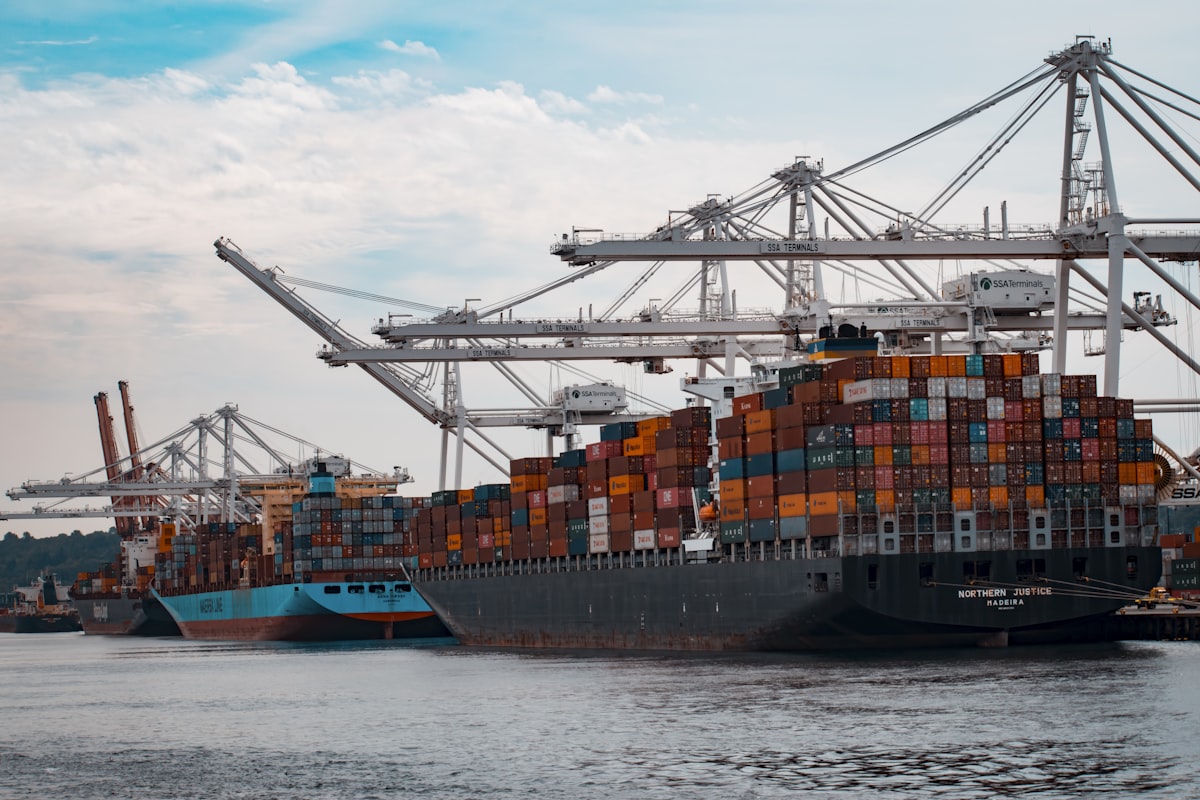
On February 14, 2026, Transnet Port Terminals took the unprecedented step of publishing complete real-time vessel berthing schedules across all ten South African terminal facilities. The data, compiled and analyzed by Container Management, covers Cape Town, Durban, Ngqura, Port Elizabeth, and Richards Bay—producing what the publication describes as “the most granular snapshot of South African port operations available anywhere.” The numbers are sobering: 79 ships carrying approximately 145,000 containers are queuing for berths over the next three weeks. This is not a seasonal spike or a temporary anomaly. It represents the culmination of years of underinvestment in equipment maintenance, persistent energy instability, and declining rail freight capacity that has forced increasing volumes onto congested road networks. South Africa’s ports handle over 60% of Southern Africa’s containerized import and export traffic, and their chronic inefficiency has placed them consistently at the bottom of global port performance rankings.
The causes are deeply structural. Transnet’s historic underinvestment in crane maintenance has left critical equipment with unacceptably high failure rates. Liebherr is currently executing a large-scale crane fleet rebuild, but the replacement cycle typically spans 18 to 24 months, offering no immediate relief. South Africa’s energy crisis, while partially eased in 2025, continues to create vulnerability—any load-shedding event can cascade through port operations. Meanwhile, the ongoing deterioration of rail freight capacity pushes more cargo onto roads, and road congestion in turn exacerbates the port’s hinterland connectivity bottlenecks. This compounding effect of multiple constraints explains why South African port efficiency remains stubbornly low despite incremental improvement efforts.
Perhaps the most significant signal is Transnet’s decision to publish detailed operational data at all. This transparency marks a departure from the “data black box” approach that has historically characterized South African port management, and it suggests that government and port leadership recognize that information openness is a prerequisite for attracting private capital into port reform. In an era where global supply chains increasingly demand visibility and data-driven decision-making, South Africa’s shift toward open data may prove more strategically consequential than any single infrastructure project.
ICTSI’s First Full Month at Durban Pier 2: Can Privatization Break Africa’s Port Efficiency Deadlock?
Official January 2026 throughput data confirms that 305,775 TEU were handled across the South African port system—and this was ICTSI’s first complete month of operations at Durban’s Pier 2. The entry of the Philippine port giant into Africa’s busiest container port represents the most significant milestone in Transnet’s privatization reform agenda. Durban’s annual throughput peaked at approximately 2.9 million TEU in 2019 but subsequently declined by more than 20% under the combined weight of pandemic disruptions, aging equipment, and management inefficiency. Whether ICTSI can reverse this trajectory is a question being closely watched by the global shipping and logistics industry.
ICTSI operates 34 port terminals across 20 countries and has extensive experience in emerging-market port operations. Its track record in Manila, Suape (Brazil), and Basra (Iraq) demonstrates that through advanced equipment deployment, process optimization, and performance-based management systems, emerging-market ports can achieve significant efficiency improvements within 12 to 18 months. However, South Africa presents unique complexities: powerful labor unions, stringent labor regulations, and the enormous capital requirements for equipment modernization mean that ICTSI’s challenge in Durban exceeds anything in its prior portfolio. Critically, Transnet retains ownership of port infrastructure while ICTSI holds only the operating concession—a “separation of ownership and operations” model being tested at scale in Africa for the first time, with implications for port reform across the continent.
ICTSI’s entry into Durban also reflects a broader strategic trend: global port operators are increasingly viewing Africa as the “last blue ocean” as Asian and European port markets approach saturation. DP World has already established an extensive network across Senegal, Somaliland, and Mozambique, while CMA CGM’s Terminal Link is expanding across multiple African nations. For Chinese enterprises with growing operations on the continent—bilateral trade exceeded $280 billion in recent years—improvements in African port efficiency translate directly into lower logistics costs and more reliable supply chains serving the African market.
Beira Port Doubles Capacity: Southern Africa’s Multi-Port Competition Reshapes Regional Logistics
Against the backdrop of persistent South African port congestion, Mozambique’s Beira Port is accelerating its expansion, having already doubled capacity with the explicit goal of capturing cargo diverted from South African terminals. This development signals a profound shift in Southern Africa’s port competitive landscape. Historically, Durban and Cape Town held a near-monopoly on the region’s containerized trade, but sustained efficiency failures are compelling shippers and carriers to seek alternatives. Beira’s strategic location on Mozambique’s central coast gives it direct corridor access to landlocked countries including Zimbabwe, Zambia, and Malawi, offering these nations an alternative maritime gateway that bypasses South Africa entirely.
Beira’s expansion extends beyond raw capacity growth to encompass a comprehensive upgrade of multimodal transport systems. The Mozambican government, working with international partners, is modernizing the Beira Corridor railway while improving road networks connecting to inland markets. This “port-plus-corridor” development model aligns with the broader infrastructure investment trend across Africa, where connectivity rather than standalone facilities determines logistics competitiveness. As Beira’s capacity grows, enterprises operating in Africa gain more diversified logistics options and enhanced supply chain resilience.
Simultaneously, Namibia’s Walvis Bay, Tanzania’s Dar es Salaam, and Kenya’s Mombasa are all advancing their own expansion programs. This multi-port competition creates unprecedented pressure on South African terminals, but from a regional perspective the trend is overwhelmingly positive. It signals a transition from “single-gateway dependence” to a “multi-node network” model for Southern and East African logistics—one that will significantly improve overall regional supply chain resilience and efficiency.
From $15.5 Billion to $20.6 Billion: Five Growth Engines Powering South Africa’s Freight Market
According to Mordor Intelligence, South Africa’s freight and logistics market grew from $14.7 billion in 2025 to $15.55 billion in 2026 and is projected to reach $20.59 billion by 2031 at a compound annual growth rate of 5.78%. This trajectory reflects sustained investment and structural transformation in Africa’s largest economy. Rail network access reform stands as the most consequential policy driver. By allowing qualified private operators to run trains on national rail infrastructure, South Africa has broken Transnet Freight Rail’s long-standing monopoly. Pilot data shows private operators outperforming state-owned services on dwell times and cost efficiency along export corridors, though cable theft and aging rolling stock continue to constrain system-wide reliability.
Postal liberalization and the explosive growth of courier, express, and parcel (CEP) services represent another critical growth engine. South Africa’s rapidly expanding e-commerce market has generated enormous demand for last-mile delivery, with micro-fulfillment centers deploying near urban consumer clusters and automated parcel lockers proliferating in commercial districts. Cold-chain logistics for agricultural exports is also surging—solar-powered modular cold rooms are helping rural producers reduce spoilage and meet export compliance, while IoT temperature loggers provide pallet-level monitoring throughout the supply chain.
The African Continental Free Trade Area (AfCFTA) provides an additional growth dimension, driving demand for multimodal services as intra-regional trade volumes increase. Freight forwarders are expanding temperature-controlled networks into neighboring countries, offering hybrid truck-air solutions for time-sensitive cargo. While currency convertibility and cross-border payment friction remain constraints, digital trade finance solutions are steadily improving settlement processes, clearing the path for deeper supply chain integration across the region.
East Africa’s $37.8 Billion Logistics Vision: Lamu Port, LAPSSET, and AI-Driven Digital Transformation
IMARC Group’s latest report projects the East African logistics market to grow from $25.1 billion in 2025 to $37.8 billion by 2034, representing a CAGR of approximately 4.67%. This growth is underpinned by massive infrastructure upgrades and accelerating digital adoption across the region. In February 2026, Kenya’s Transport Cabinet Secretary Davis Chirchir confirmed the full operationalization of Lamu Port, marking a critical milestone for the ambitious LAPSSET (Lamu Port-South Sudan-Ethiopia Transport) Corridor. The first phase of the LAPSSET highway upgrade has also commenced, integrating smart logistics technologies expected to significantly reduce transit times from East Africa to landlocked interior nations.
Ongoing upgrades to the Northern Corridor (Mombasa-Nairobi-Kampala) and the Central Corridor (Dar es Salaam-Kigali-Bujumbura) are reshaping East Africa’s trade geography. Port modernization, railway extensions, and dry port development are substantially reducing transit times and costs, attracting multinational manufacturers and retailers to establish regional distribution hubs. DHL and Maersk have deployed AI-powered automated customs clearance and shipment tracking systems across East Africa, significantly reducing border delays and improving client visibility. Kenya’s Digital Superhighway project and Rwanda’s Smart Logistics Strategy are creating supportive policy environments for technology adoption, enabling smarter freight management and lower operational risks.
Notably, the United States is also actively positioning itself in African trade corridor development. At the February 2026 African Union Summit in Addis Ababa, U.S. officials proposed identifying a new cross-border infrastructure corridor as a “strategically viable first project”—a proof of concept that could be scaled across the continent. The U.S.-backed Lobito Corridor linking Angola, Zambia, and the Democratic Republic of Congo has already achieved substantial progress. This great-power competition in African infrastructure development ultimately benefits the continent’s logistics modernization, though it adds geopolitical risk considerations for enterprises operating in the region.
From “Permacrisis” to Strategic Restructuring: Six Trends Defining Africa’s Supply Chain in 2026
SAPICS, the leading Southern African supply chain industry body, notes in its 2026 outlook that after five years of “permacrisis,” the focus is shifting “from survival to structure, and from reaction to strategy.” This assessment aligns with the Association for Supply Chain Management’s (ASCM) 2026 trends report but carries distinctive meaning in the African context. The first key trend is AI’s transition from pilot projects to core infrastructure—by synthesizing real-time data on weather, port status, energy availability, and market signals, AI enables faster, better-informed decisions in high-complexity, low-margin-for-error environments. SAPICS emphasizes this is not about replacing people but augmenting human judgment where complexity is highest.
The second trend is the evolution of “China+1” into a broader supply chain diversification movement, creating a historic strategic opportunity for Africa. As global enterprises seek to distribute sourcing and production across multiple geographies, Africa’s role in manufacturing, mineral resources, and agricultural supply chains is being fundamentally reassessed. The third trend sees climate resilience move from abstract concept to operational reality—extreme weather, water scarcity, and energy instability are already impacting daily operations, and organizations integrating sustainability into network design, sourcing, and logistics will be better positioned to manage both risk and reputation. The fourth trend is precision cost management replacing blunt cost-cutting, with leading firms adopting strategies that balance efficiency, resilience, and sustainability. The fifth is accelerating regionalization, with AfCFTA driving intra-African trade volumes steadily higher. The sixth is talent transformation—supply chain professionals must invest in data literacy, systems thinking, scenario planning, and cross-functional leadership to build future-ready supply chains that support inclusive growth.
Taken together, Africa’s supply chain stands at a historic inflection point in 2026. South Africa’s port privatization reforms, East Africa’s massive corridor upgrades, deepening regional trade integration, and accelerating digital technology adoption collectively paint a picture of African supply chains transitioning from reactive crisis management to proactive strategic shaping. For global supply chain professionals, overlooking these structural changes on the African continent would be a strategic oversight of the first order.
Source: container-mag.com