A Constitutional Reckoning: The Supreme Court Dismantles IEEPA Tariff Authority
On February 20, 2026, the United States Supreme Court delivered one of the most consequential trade policy rulings in decades, striking down President Trump’s “reciprocal tariffs” imposed under the International Emergency Economic Powers Act (IEEPA) in a decisive 6-3 decision. Chief Justice John Roberts, writing for the majority, stated unequivocally: “Based on two words separated by 16 others in IEEPA—’regulate’ and ‘importation’—the President asserts the independent power to impose tariffs on imports from any country, of any product, at any rate, for any amount of time. Those words cannot bear such weight.” Roberts further noted that IEEPA “contains no reference to tariffs or duties” and that “until now no President has read IEEPA to confer such power.” The ruling represents a landmark application of the major questions doctrine, with Roberts joined by Justices Gorsuch and Barrett in articulating that Congress must provide clear authorization when delegating powers of vast economic and political significance to the executive branch.
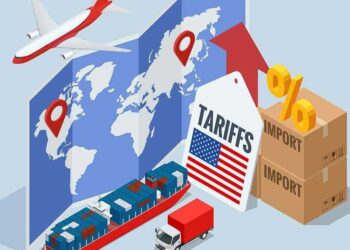
The immediate legal implications are staggering. Since 2025, the Trump administration had leveraged IEEPA to impose two distinct sets of tariffs: the “trafficking tariffs” targeting China, Canada, and Mexico over fentanyl concerns, and the broader “reciprocal tariffs” imposing a baseline 10% duty on imports from nearly every country, with significantly higher rates for dozens of nations. All of these tariffs have now been declared unconstitutional. Importers have paid an estimated $200 billion in IEEPA tariffs during the enforcement period, and the question of refunds remains entirely unresolved—the Court notably declined to address whether or how the federal government should provide restitution. In his dissent, Justice Kavanaugh warned that the government “may be required to refund billions of dollars to importers who paid the IEEPA tariffs” and cautioned that the ruling “could generate uncertainty regarding various trade agreements” with nations including China, the United Kingdom, and Japan.
Trump’s Immediate Countermove: A New 10% Global Tariff and Deepening Policy Uncertainty
Within hours of the ruling, President Trump announced a new global 10% tariff under alternative legal authorities, signaling that the administration’s protectionist trade agenda would continue regardless of the Supreme Court’s constraints. This rapid response has created an unprecedented layer of uncertainty for North American supply chain operators. Companies that had spent months adapting procurement strategies, renegotiating supplier contracts, and restructuring inventory positions around the IEEPA tariff framework now face the prospect of yet another fundamental shift in the cost calculus of cross-border trade. The volatility itself has become the primary risk factor: it is not any single tariff rate that threatens supply chain stability, but the inability to plan with confidence beyond a matter of weeks.
The timing could hardly be worse for North American supply chains. The year 2026 marks the mandatory six-year review of the United States-Mexico-Canada Agreement (USMCA), and the Supreme Court ruling’s collision with this review process has compounded the region’s trade policy complexity to an extraordinary degree. With IEEPA tariffs now invalidated, the “trafficking tariffs” on Canadian and Mexican goods lose their legal basis, but Section 232 duties on steel and aluminum remain fully in force. This means Canadian aluminum imports still face a 50% tariff, and Mexican steel products continue to bear 25% duties. For industries that depend on seamless cross-border component flows—automotive, aerospace, electronics manufacturing—the “dual-track” tariff reality creates compliance challenges that existing enterprise resource planning systems were simply not designed to handle.
Automotive Industry Under Siege: GM’s $4 Billion Tariff Bill and the North American Production Network
The automotive sector stands at the epicenter of this tariff upheaval. Under Section 232, the United States maintains 25% tariffs on imported vehicles and certain auto parts, justified on national security grounds. While bilateral agreements with the United Kingdom and Japan have reduced some rates to 10-15%, the core tariff structure remains intact for the North American market. General Motors has projected tariff costs of $3 billion to $4 billion for the full year 2026, while Ford Motor estimates a net tariff impact of approximately $2 billion, roughly flat with the prior year. KPMG’s U.S. automotive lead, Lenny LaRocca, captured the industry mood in his response: “With today’s decision out and subsequent developments, there remain many unknowns and important questions still to be answered. This is not a moment to ease up. Automakers should continue planning for multiple scenarios and keep supply chain considerations top of mind as the trade and tariff landscape continues to evolve.”
What makes the North American automotive supply chain uniquely vulnerable is its deeply integrated cross-border architecture. A single vehicle assembled in the United States may contain components stamped in Mexico, cast in Canada, and shipped back across borders multiple times before final assembly. USMCA’s rules of origin require 75% regional value content for vehicles to qualify for duty-free treatment, and the overlay of Section 232 tariffs makes compliance calculation extraordinarily complex. Adding further uncertainty, the U.S. International Trade Commission (ITC) announced on February 19 that it would launch a formal review of USMCA automotive rules of origin—a process that could tighten regional content requirements and force automakers to restructure their supplier networks. For Asian auto parts suppliers with significant manufacturing capacity in Mexico, any tightening of origin rules would directly threaten their primary pathway into the U.S. market.
Aluminum, Steel, and Semiconductors: The Section 232 Wall Reshaping Material Supply Chains
The Section 232 tariff framework constitutes a formidable and enduring barrier across North American supply chains. Aluminum duties have reached a historic 50%, sending shockwaves through industries ranging from beverage packaging to aerospace manufacturing. Consumer goods giants including Coca-Cola, PepsiCo, and Keurig Dr Pepper face meaningfully higher costs for aluminum can production, while Reynolds and other foil manufacturers contend with surging raw material prices. Canada, as the largest source of U.S. aluminum imports, possesses globally leading clean-energy smelting capabilities—Quebec’s hydroelectric-powered facilities produce some of the lowest-carbon aluminum on the planet—yet the 50% tariff wall has severely undermined its price competitiveness, forcing downstream buyers to absorb higher costs or seek alternative, often less sustainable, supply sources.
Steel tariffs at 25% have persisted for nearly eight years since their initial imposition in 2018, fundamentally reshaping North American steel trade flows and domestic production economics. While the IEEPA ruling provides partial relief for some imported products, the steel and aluminum tariff regime remains firmly in place. The semiconductor sector faces perhaps the most complex dynamic of all: Section 232 chip tariffs operate alongside the CHIPS and Science Act subsidies, creating a paradoxical policy landscape where the government simultaneously subsidizes domestic manufacturing and taxes imported components essential for that same manufacturing. For Asian semiconductor companies operating advanced packaging and testing facilities in North America, persistent import duties on equipment and materials represent a meaningful offset to CHIPS Act incentives, potentially slowing the very reshoring objectives the subsidies were designed to accelerate.
Pharmaceuticals and Furniture: The Tariff Escalation Spiral Tests Supply Chain Resilience
The pharmaceutical industry, while not yet directly impacted by implemented tariffs, operates under an escalating threat environment. The Trump administration has repeatedly floated duties as high as 250% on pharmaceutical imports and has initiated a Section 232 investigation into the national security implications of drug import dependence. A December 2025 agreement with major pharmaceutical companies—including Merck, Bristol Myers Squibb, and Novartis—provided a three-year tariff exemption in exchange for voluntary price reductions and increased U.S. manufacturing investment, but the durability of this arrangement remains uncertain. The global pharmaceutical supply chain’s deep dependence on active pharmaceutical ingredient (API) production in India and China means that any significant tariff imposition would ripple through drug pricing, availability, and potentially patient outcomes across the United States.
The furniture industry has already experienced the tangible consequences of tariff escalation. Current 25% Section 232 duties on sofas, kitchen cabinets, vanities, and related products are expected to rise to 50% in 2027, creating an accelerating cost spiral that is reshaping the industry’s competitive landscape. The bifurcation between large-scale operators capable of absorbing higher costs through supply chain diversification and smaller companies struggling to survive has reached a critical inflection point. The late-2025 bankruptcy of American Signature Furniture, parent company of the Value City Furniture chain, stands as a stark marker of the industry’s tariff-driven consolidation. For North American furniture importers sourcing from Vietnam, China, and other Asian manufacturing hubs, the relentless tariff escalation is driving an accelerated push toward Mexican nearshoring and domestic U.S. production, though the time and capital required for such transitions remain formidable constraints.
The $200 Billion Refund Question and Strategic Recalibration for North American Supply Chains
The ruling’s most significant unresolved question involves the $200 billion-plus in IEEPA tariffs already collected from importers. The Supreme Court conspicuously avoided addressing refund mechanics, creating a legal vacuum that will likely require months or years of additional litigation to resolve. For North American supply chain enterprises, the practical reality is sobering: regardless of whether refunds materialize, the tariff payments have already fundamentally altered trade flows and corporate decision-making over the past year. Companies that accelerated procurement shifts from China to Mexico and Canada in response to IEEPA tariffs are unlikely to reverse completed supply chain migrations simply because the legal basis for those tariffs has been invalidated. The nearshoring trend has acquired its own economic logic and organizational momentum, independent of any single policy driver.
From a broader strategic perspective, the ruling marks a pivotal recalibration of America’s trade policy toolkit. IEEPA, the executive branch’s most flexible instrument for imposing trade measures, has been removed from the tariff arsenal by the nation’s highest court. Future tariff actions will require either explicit Congressional legislation or reliance on authorities like Section 232 that carry their own legal and political constraints. For every participant in North American supply chains—domestic U.S. manufacturers, Mexican nearshore facilities, Canadian resource suppliers, and Asian and European companies accessing the U.S. market through the USMCA framework—the imperative is clear: build robust multi-scenario planning capabilities that can accommodate the triple uncertainty of an unresolved USMCA review, persistent Section 232 duties, and the potential for new tariff measures under alternative legal authorities. The era of optimizing supply chains for a single, stable policy environment is definitively over. What remains is the harder discipline of maintaining operational resilience across multiple possible futures simultaneously.
Source: cnbc.com | scotusblog.com