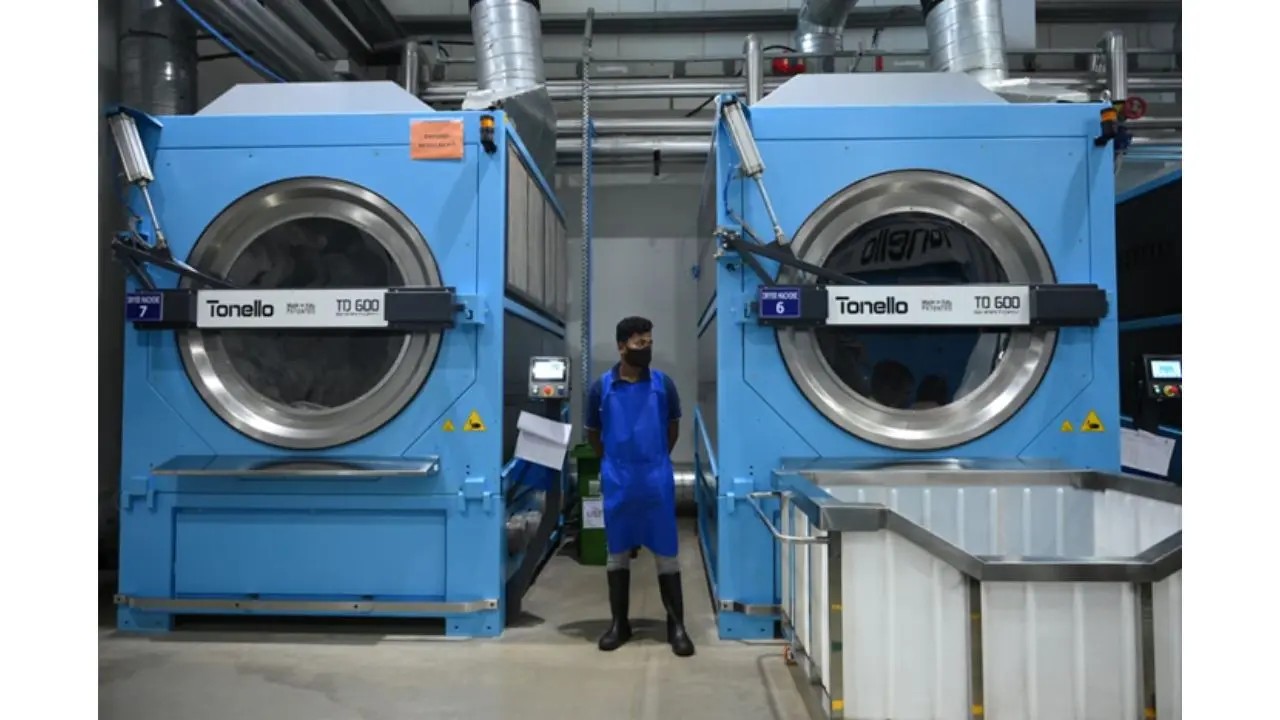
According to www.mid-day.com, Epic Group has inaugurated its US$100 million Trimetro Manufacturing Campus in Khordha, Odisha — billed as India’s first fully net-zero carbon and net-zero water garment manufacturing facility.
A Landmark Investment in Sustainable Apparel Manufacturing
The Trimetro campus, spread across 40 acres, represents a US$100 million commitment by Epic Group — one of the world’s leading vertically integrated apparel manufacturers. The facility was formally inaugurated by Shri. Sampad Chandra Swain, Honourable Industries Minister, alongside Mr. Ranjan Mahtani, Founder & Chairman, Epic Group, and attended by senior leadership from Epic Group, key industry stakeholders, and government officials.
Scale, Sustainability, and Strategic Significance
Designed as one of India’s most future-ready garment manufacturing facilities, the campus is engineered to produce 20 million garments annually for global markets. Its dual net-zero certification — for both carbon and water — sets a new benchmark for sustainable industrial development in India’s textile and apparel sector, an industry that accounts for approximately 7% of the country’s total exports and employs over 45 million people (per Ministry of Textiles, Government of India, 2023 data).
This initiative aligns with broader global supply chain shifts toward ESG-compliant manufacturing. Major brands including H&M, Inditex, and PVH have publicly committed to science-based targets (SBTi) and water stewardship goals under the CEO Water Mandate — increasing pressure on Tier-2 and Tier-3 suppliers to demonstrate verifiable decarbonization and water recycling capabilities. Epic Group’s Trimetro campus provides a scalable model for how vertically integrated manufacturers can meet these upstream sustainability requirements without compromising output capacity or regional economic contribution.
From a supply chain practitioner perspective, the facility signals growing operational readiness for near-real-time environmental performance tracking: net-zero water status implies closed-loop wastewater treatment with ≥95% reuse (a threshold consistent with ZDHC Wastewater Guidelines), while net-zero carbon requires comprehensive Scope 1–2 emissions elimination plus verified carbon removal or offsetting for residual Scope 3 upstream inputs — demanding granular supplier data integration and energy procurement transparency.
Source: www.mid-day.com
Compiled from international media by the SCI.AI editorial team.