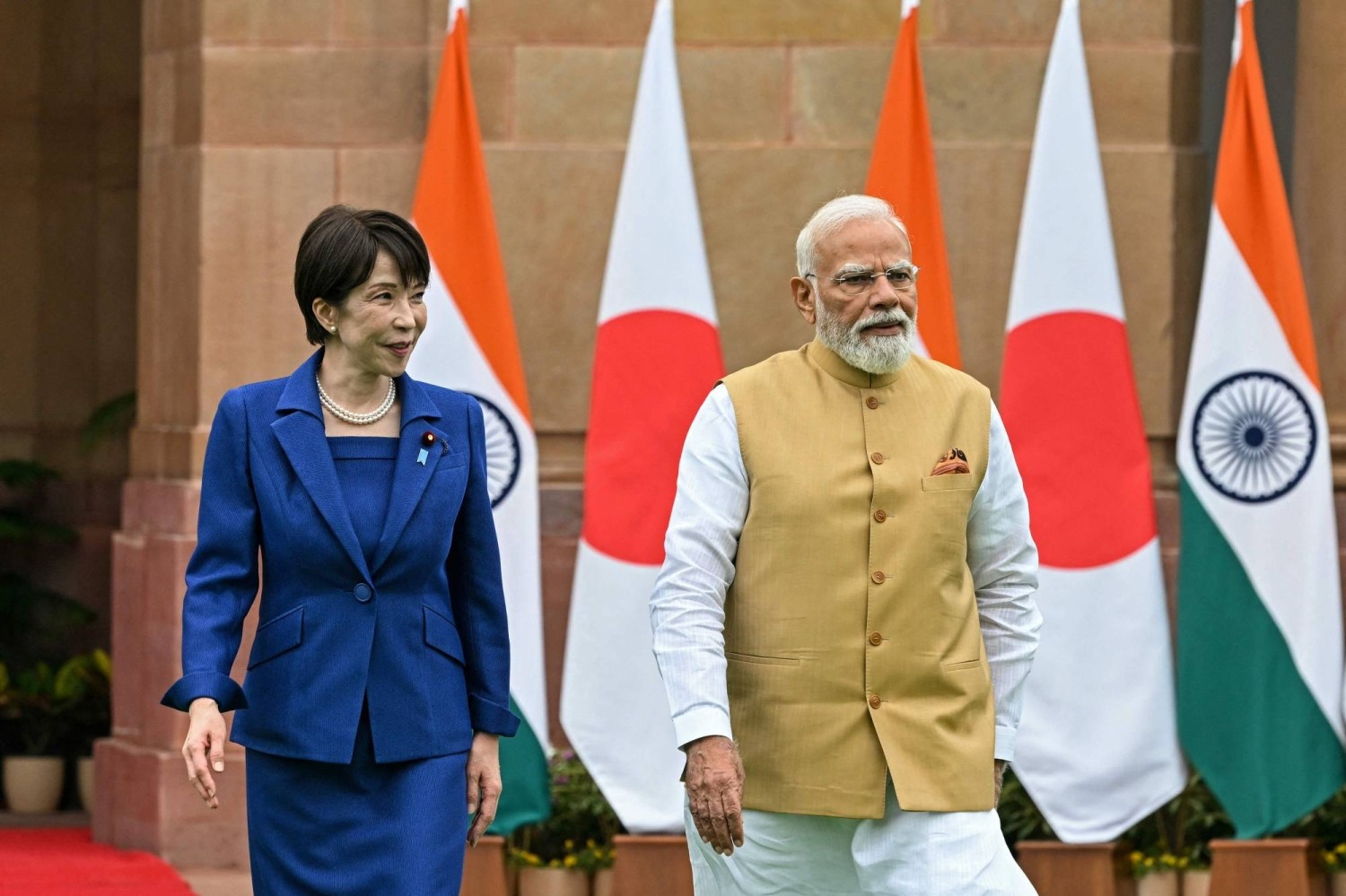
According to www.japantimes.co.jp, Japanese Prime Minister Sanae Takaichi and Indian Prime Minister Narendra Modi held a bilateral summit in New Delhi on Thursday, July 2, 2026, to strengthen strategic coordination amid intensifying supply chain vulnerabilities and energy security challenges.
Strategic Alignment Amid Geopolitical Shifts
The summit took place at Hyderabad House in New Delhi — a venue historically used for high-level diplomatic engagements between Japan and India. It marks the first in-person meeting between the two leaders since Modi’s August 2025 visit to Tokyo, during which both governments adopted a 10-year cooperation roadmap covering technology, infrastructure, and security domains. With China’s expanding regional influence cited explicitly as a shared concern, the leaders emphasized deepening economic security frameworks to reduce dependency on single-source suppliers — particularly for critical components in semiconductors and battery materials.
Four Pillars of Cooperation
The joint statement identified four priority areas: artificial intelligence, economic security, clean energy, and defense collaboration. On AI, both nations agreed to establish a joint working group by Q4 2026 to harmonize regulatory approaches and co-develop testing protocols for generative AI applications in public services and manufacturing. In clean energy, they pledged to jointly deploy at least five solar-plus-storage microgrids across rural districts in Gujarat and Kyushu by March 2027, leveraging Japan’s grid-integration expertise and India’s decentralized renewable rollout capacity.
In defense, the agreement includes expanded naval interoperability exercises in the Bay of Bengal and Arabian Sea, with the first joint maritime patrol scheduled for October 2026. Economic security measures include mutual recognition of trusted supplier certifications and alignment of export control lists for dual-use technologies — steps expected to reduce average customs clearance time for qualifying goods by 35% within 18 months.
Leadership Statements and Shared Vision
During the joint press conference following the summit, Prime Minister Sanae Takaichi underscored interdependence as a strategic imperative. She stated:
“By drawing on each other’s strengths, Japan and India can become stronger and more prosperous together.” — Sanae Takaichi, Prime Minister of Japan
She added that “amid a turbulent international environment, building such a mutually complementary partnership has become increasingly important.” Prime Minister Narendra Modi echoed this sentiment, highlighting India’s growing role as a reliable alternative manufacturing node — noting that Japanese foreign direct investment in India rose 22% year-on-year in fiscal 2025, reaching $4.8 billion.
Supply Chain and Energy Security Drivers
The timing reflects acute operational pressures. Japan’s Ministry of Economy, Trade and Industry reported in June 2026 that semiconductor component lead times from East Asia had extended to 24 weeks, up from 14 weeks in early 2024. Concurrently, India’s Ministry of Power confirmed that coal imports — accounting for 37% of its thermal generation fuel — surged 18% in volume during Q1 2026 due to domestic mining constraints and global price volatility. These figures directly informed the summit’s focus on diversifying sourcing routes and accelerating clean energy deployment.
For supply chain professionals, the outcomes signal concrete near-term actions: standardized data-sharing protocols for inventory visibility between Japanese Tier-1 automotive suppliers and Indian electronics contract manufacturers; a new bilateral fast-track visa category for certified logistics engineers effective January 2027; and coordinated investment in port infrastructure upgrades at Chennai and Yokohama to handle increased container volumes carrying AI hardware and EV battery precursors.
Source: japantimes.co.jp
Compiled from international media by the SCI.AI editorial team.