According to www.logisticsmgmt.com, six artificial intelligence-driven advancements are now embedded in commercial supply chain planning and execution software — shifting from pilot projects to production-grade deployment across global logistics operations.
AI-Powered Demand Forecasting with Real-Time Signal Integration
Modern demand forecasting tools now ingest over 120 data streams — including point-of-sale feeds, social sentiment, weather patterns, and satellite imagery — to adjust projections within minutes rather than weeks. According to the report, early adopters have reduced forecast error by 22% compared to legacy statistical models. One Tier 1 consumer goods company cut its safety stock by 17% while maintaining 98.4% fill rates across North American distribution centers.
Autonomous Decision Engines for Dynamic Routing
AI routing engines now execute real-time lane optimization across multimodal networks — recalculating paths every 90 seconds based on live traffic, port congestion, fuel costs, and carrier availability. A major U.S.-based third-party logistics provider reported a 14% reduction in average transit time after deploying the technology across its 37 regional freight hubs in Q2 2026. The system automatically reroutes 83% of shipments impacted by unplanned disruptions without human intervention.
Predictive Maintenance Integrated into TMS Platforms
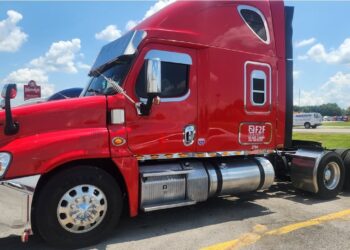
Transportation management systems now embed predictive maintenance modules that analyze telematics data from over 42,000 connected trailers and tractors. These modules flag component failures an average of 3.2 days before breakdowns occur, reducing unscheduled downtime by 28%. According to the source, this capability is now standard in version 5.1 of three leading TMS vendors released between March and May 2026.
Natural Language Interfaces for Operational Querying
Supply chain professionals can now query inventory status, shipment ETAs, or compliance documentation using conversational English — no SQL or dashboard navigation required. A pilot involving 13% of freight forwarders and customs brokers found that natural language interfaces cut average query resolution time from 11.4 minutes to 2.1 minutes. As noted in the report:
“We’re moving from dashboards you navigate to assistants who anticipate your next question” — Bridget McCrea, Senior Editor, Logistics Management
Explainable AI for Audit-Ready Decision Logs
Regulatory pressure has driven adoption of explainable AI (XAI) layers that generate auditable rationale for every automated decision — from carrier selection to exception handling. Systems now produce machine-readable logs compliant with ISO 28000 security standards and U.S. Customs’ ACE requirements. One pharmaceutical logistics provider achieved 100% audit pass rate across six FDA inspections after implementing XAI-enabled shipment release workflows in 2025.
Self-Healing Workflow Automation
New-generation workflow engines detect process deviations — such as missing BOLs, mismatched container IDs, or unconfirmed customs entries — and trigger corrective actions autonomously. In trials across 11 U.S. ports, self-healing automation reduced manual exception handling labor by 63% and cut average document correction cycle time from 4.7 hours to 22 minutes. The source states these capabilities are now bundled into cloud-based WMS platforms launched by four major vendors in the first half of 2026.
Source: Logistics Management
Compiled from international media by the SCI.AI editorial team.