Skip to content

Coverage desk

ESG & Regulation

376 published stories

Descartes acquires Tai for $100M, third 2026 deal
ESG & Regulation

Descartes acquires Tai for $100M, third 2026 deal

Descartes Systems Group acquired Tai, an AI-powered transportation management software provider for freight brokers, for $100 million—the company’s third acquisition of 2026. The deal follows Descartes’ purchases of Idelic for at least $28 million and Drivin for $30 million earlier this year. Tai’s TMS supports truckload, LTL, drayage, and cross-border brokers across the full shipment lifecycle. Descartes reported $48.5 million in profit for the quarter ending April 30—a 35% increase year-over-year—and $193.6 million in revenue, up 15%. Its second-quarter fiscal 2027 earnings report is scheduled for September 10.

Rail mega-merger revives Atlanta passenger expansion, trucking angle emerges
ESG & Regulation

Rail mega-merger revives Atlanta passenger expansion, trucking angle emerges

A major U.S. rail merger has revived proposals for expanded passenger rail service in Atlanta, including new stations and integrated transit. A key component is a $850 million intermodal truck-to-rail hub near Hartsfield-Jackson Airport, set to open in May 2026 and handle 12,000 weekly truck movements. Federal funding totals $4.2 billion under the Bipartisan Infrastructure Law, with environmental review concluding in December 2024 and construction expected to begin in 2026. Spot truckload rates on the Atlanta–Charlotte lane dropped 14.2% year-over-year as of August 2024.

Descartes acquires Tai for $100M to boost global freight compliance
ESG & Regulation

Descartes acquires Tai for $100M to boost global freight compliance

Descartes has acquired Tai, a customs and trade compliance software provider, for $100 million. The deal, finalized in Q3 2025, adds 140 employees and a Toronto-based Center of Excellence to Descartes’ operations. Tai’s CEO Michael Chen joins Descartes as VP of Global Trade Compliance. Integration into Descartes’ Global Trade Management platform is set for completion by March 31, 2026. The combined solution aims to reduce customs processing time by 42% and cut manual data entry errors by 78%. Descartes’ FY2025 revenue totaled $523 million, with trade solutions representing 31% of that total.

Gatik raises $200M to scale driverless freight
ESG & Regulation

Gatik raises $200M to scale driverless freight

Gatik has raised $200 million in Series D funding to expand its driverless freight operations across North America. The company has logged over 2.5 million autonomous miles with zero at-fault accidents and currently operates in four U.S. states and one Canadian province. Its fully driverless service in Bentonville, Arkansas handles more than 1,200 weekly deliveries. Gatik’s safety framework includes simulation testing exceeding 100 million virtual miles per vehicle configuration. The company’s total disclosed funding now exceeds $350 million since 2017.

CATL ties supplier contracts to carbon data by 2027
ESG & Regulation

CATL ties supplier contracts to carbon data by 2027

CATL has mandated that new suppliers provide verified carbon-footprint data starting in 2027, making low-carbon compliance a contractual requirement. Over 80 percent of a battery’s lifecycle emissions stem from raw-material sourcing, prompting CATL to audit carbon data from 100+ tier-one suppliers since launching its full-chain accounting platform in 2022. The company targets core-operations carbon neutrality by 2025 and full value-chain neutrality by 2035, backed by 100 billion yuan in R&D. Its Green Procurement Guide ties order preference and contract length to renewable-energy share and per-unit energy metrics.

U.S. DOE invests $500M in critical mineral, battery supply chains
ESG & Regulation

U.S. DOE invests $500M in critical mineral, battery supply chains

The U.S. Department of Energy’s Office of Critical Minerals and Energy Innovation has awarded $500 million to seven projects advancing domestic critical mineral processing, battery manufacturing, and recycling. The funding is part of a broader $1 billion initiative, with over half allocated to battery materials. Projects span the Southeastern U.S., Georgia, and the U.S. Gulf Coast, involving companies including Nth Cycle, Princeton NuEnergy, and Arcanum Ventures. The effort aligns with the Trump administration’s 'Unleashing American Energy' Executive Order and supports both national security and clean energy supply chain resilience.

FBI hunts ‘No Name Given Kamal’ in transnational crime probe
ESG & Regulation

FBI hunts ‘No Name Given Kamal’ in transnational crime probe

The FBI is pursuing an individual known only as “No Name Given Kamal” amid a transnational crime investigation revealing deep ties to the U.S. trucking industry. Authorities linked at least 17 illicit cargo incidents to terminals in Texas, Arizona, and California between March 2024 and July 2026. Three carriers lost operating authority after audits found discrepancies on 29 load manifests from Q2 2025 to Q3 2026. An August 15, 2026 indictment in San Diego named eight defendants, including dispatch supervisors and owner-operators active across 12 states.

Criminal Groups Pressure Mexican Freight Networks
ESG & Regulation

Criminal Groups Pressure Mexican Freight Networks

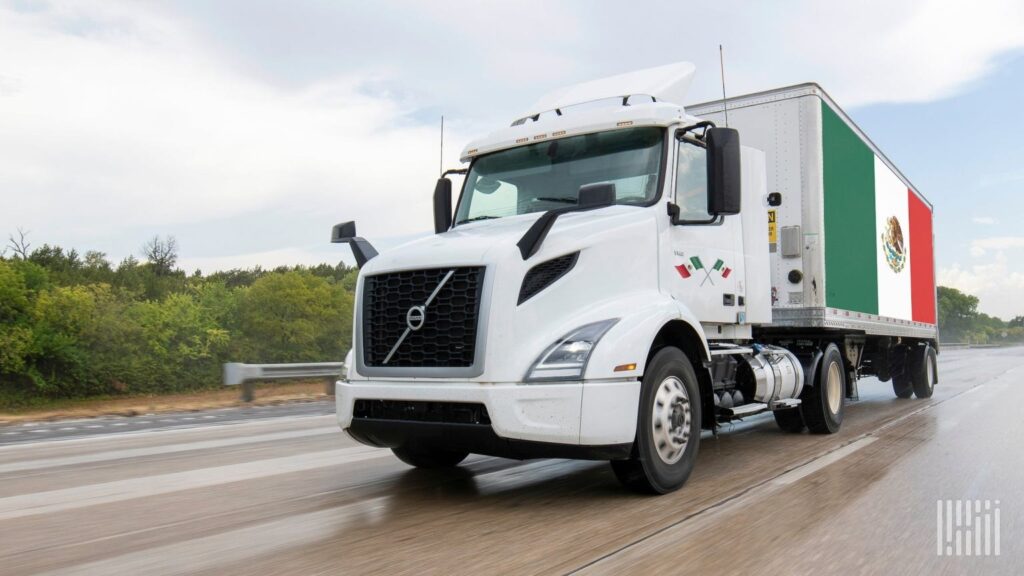
Criminal groups are intensifying pressure on Mexican freight networks, disrupting five major corridors and raising tender rejection rates by 23% year-over-year in Q2 2026. Extortion payments average $1,200 per incident, while border dwell times have increased 42% since early 2025. Mexican over-the-road freight volumes are projected to contract 1.8% in fiscal year 2026. Shippers are rerouting up to 30% of truckload volume to mitigate risk.

Port of Los Angeles expects 5% cargo bump amid Red Sea, Panama Canal risks
ESG & Regulation

Port of Los Angeles expects 5% cargo bump amid Red Sea, Panama Canal risks

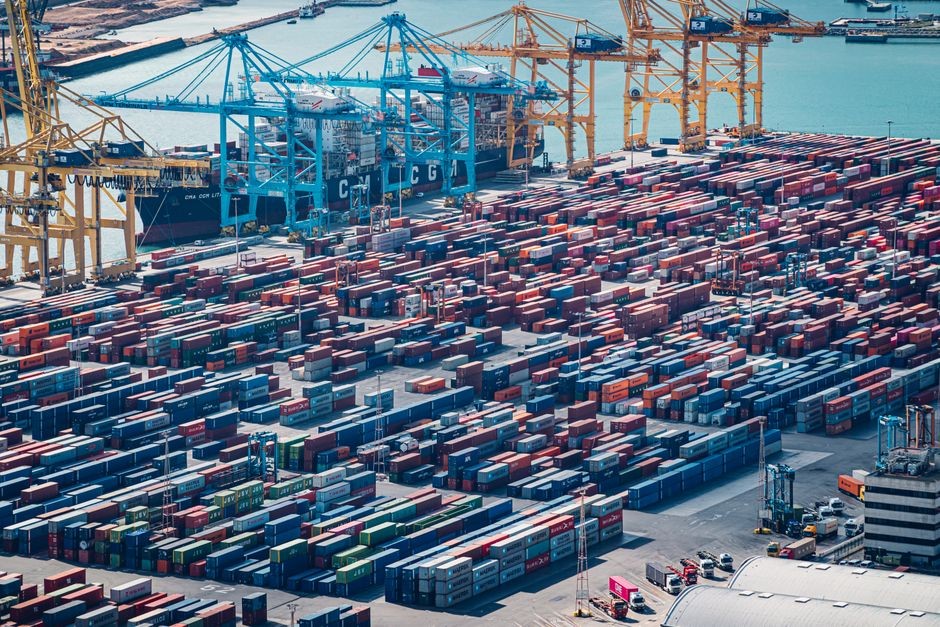
The Port of Los Angeles anticipates a 5% cargo volume increase in response to shipping disruptions in the Red Sea and Panama Canal. The port is coordinating with terminal operators to expand gate hours, adjust labor schedules, and allocate extra chassis and yard space ahead of the September peak season. Shippers are actively diverting cargo to the U.S. West Coast and renegotiating service contracts to address transit-time uncertainty and fuel surcharge triggers. The preparations follow assessments completed in August 2026, as regional instability continues to reshape global maritime logistics decisions.

Europe’s Battery Supply Chain Faces ESG Test, Due Diligence Delayed to Aug 2027
ESG & Regulation

Europe’s Battery Supply Chain Faces ESG Test, Due Diligence Delayed to Aug 2027

Europe’s battery supply chain faces mounting ESG scrutiny, with Arthur D. Little identifying upstream mining and processing as highest-risk zones for emissions, water stress, and human rights violations. The EU Battery Regulation’s due diligence obligations are delayed until August 2027, exposing a gap between policy and implementation. Mining firms like Elementos and Latitude 66 are embedding ESG and traceability early — from Finland’s Kuusamo Schist Belt to Spain’s Oropesa Tin Project — to meet binding requirements on carbon footprint, recycled content, and melt-and-pour verification starting 1 October 2026. Responsible sourcing is now a core commercial requirement, not just compliance.

RoadOne acquires Port of Charleston facility to expand operations
ESG & Regulation

RoadOne acquires Port of Charleston facility to expand operations

RoadOne has acquired a new facility at the Port of Charleston in South Carolina to expand its East Coast logistics operations. The company plans to integrate the site by Q4 2026 and invest $2.3 million in equipment upgrades over 18 months. The Port of Charleston handles over 3.2 million TEUs annually and offers direct access to I-26 and I-95. RoadOne will retain all current on-site personnel and target full operational readiness in early 2027.

Walmart fast delivery fuels 24% e-commerce sales growth
ESG & Regulation

Walmart fast delivery fuels 24% e-commerce sales growth

Walmart’s fast delivery initiatives drove a 24% increase in e-commerce sales, supported by expansion to 3,500 stores with same-day/next-day capability, deployment of 1,200 dedicated delivery vans, and a 42% year-over-year rise in micro-fulfillment centers to 197 facilities. Average delivery time fell from 2.8 to 1.3 days, while e-commerce gross margin improved to 29.4% from 27.1%. Fiscal year 2025 capital expenditures for e-commerce logistics totaled $2.1 billion.

Welcome Back!

Login to your account below

Create New Account!

Fill the forms below to register

Retrieve your password

Please enter your username or email address to reset your password.

Add New Playlist