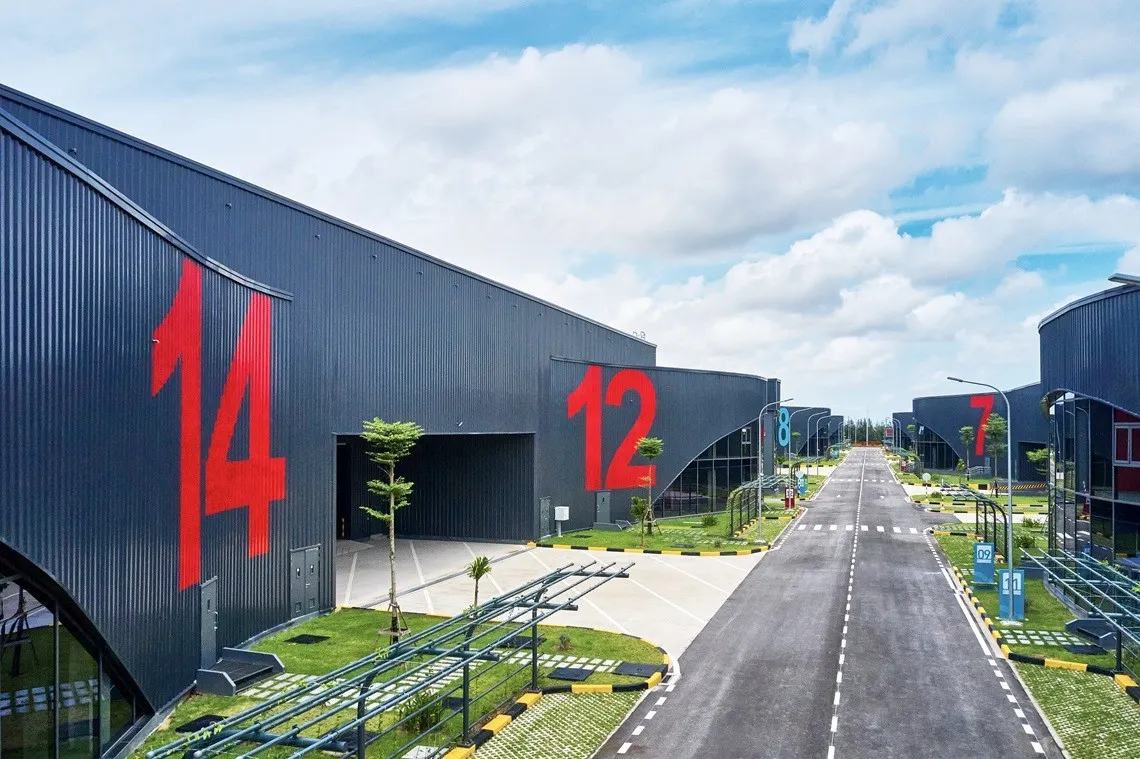
According to www.reccessary.com, Vietnam ranked 8th in the 2025 LEED market ranking outside the U.S., released in February by the U.S. Green Building Council (USGBC) and Green Business Certification Inc. A total of 100 projects in Vietnam earned LEED certification, covering more than 2.6 million square meters of gross floor area — marking the country’s first entry into the global top 10 and its highest ranking in Southeast Asia.
Supply Chain Pressure Drives Factory Certification
Green factories are no longer optional for Vietnamese manufacturers supplying global brands: multinational companies now extend decarbonization requirements deep into their supply chains, turning LEED certification from an added advantage into a prerequisite. As CEO Stan Ho of Taiwan-based consultancy GreenJump explained, international brands such as Nike began working with suppliers early to improve building energy efficiency — even helping them identify solar providers. Some brands also incorporate green building performance into formal supplier assessments, assigning distinct scores for certification levels like LEED Gold and Silver.
Ho noted that a difference of just 1 or 2 points in a supplier’s overall score can determine whether it secures an order. He observed that demand has shifted dramatically over the past decade: whereas consultants once had to introduce LEED concepts and persuade companies to pursue certification, today factory owners increasingly initiate inquiries themselves — especially electronics and PCB manufacturers now working with suppliers to Foxconn and Samsung.
This shift extends beyond Tier 1 suppliers. Efforts to improve factory sustainability are now spreading to Tier 2 and Tier 3 companies, many of which are preparing proactively — even without direct customer mandates — to avoid costly retrofits later if higher green building standards become mandatory.
Costs, Design, and Local Advantages
Achieving LEED certification adds measurable but manageable cost premiums: a factory targeting LEED Silver typically faces an additional construction cost of around 2% to 3%, while LEED Gold increases costs by up to 5%. According to Ho, many requirements can be met through optimized design rather than expensive equipment upgrades. Vietnam’s relatively abundant land enables features such as extensive rooftop solar arrays, retention ponds for rainwater reuse, and high-efficiency HVAC and lighting systems.
For low-electricity industries like apparel and footwear manufacturing, rooftop solar alone may cover 100% of electricity needs — simplifying compliance. Ho also emphasized that green building materials are readily available in Vietnam due to its large manufacturing base, including European and U.S. firms producing eco-friendly construction products.
Energy-efficient design is gaining urgency: research cited by VnEconomy shows air conditioning accounts for 25.5% of Vietnam’s electricity consumption, with related demand potentially doubling by 2030 if efficiency improvements lag. Green building expert Nguyen Cong Thinh stressed that energy efficiency must be embedded from the earliest design stage — influencing orientation, shading, ventilation, and material selection — rather than treated as an afterthought.
No Rent Premium — But Essential for Market Access
Unlike commercial real estate, where certified green office buildings across the Asia-Pacific region command rent or sale price premiums of 5% to 8%, industrial developers report no similar ‘green premium’ for factories in Vietnam. As Trang Pham, head of business development at Vietnamese industrial property developer Core5, stated, the goal is not to charge higher rents but to meet baseline expectations of international clients. All factories developed by Core5 are LEED-certified — a standard now adopted by most established industrial property developers in the country.
Pham underscored that certification value lies not in per-square-meter pricing power, but in determining whether a facility makes it onto a multinational company’s shortlist for potential sites. Green buildings represent only one component of Vietnam’s broader manufacturing decarbonization journey — yet they have become a non-negotiable entry ticket into global supply chains.
Source: reccessary.com
Compiled from international media by the SCI.AI editorial team.