Skip to content

ESG & Regulation · Warehousing & Transport

Analysis

C.H. Robinson $604M Verdict Drives Carrier Vetting Over Rates

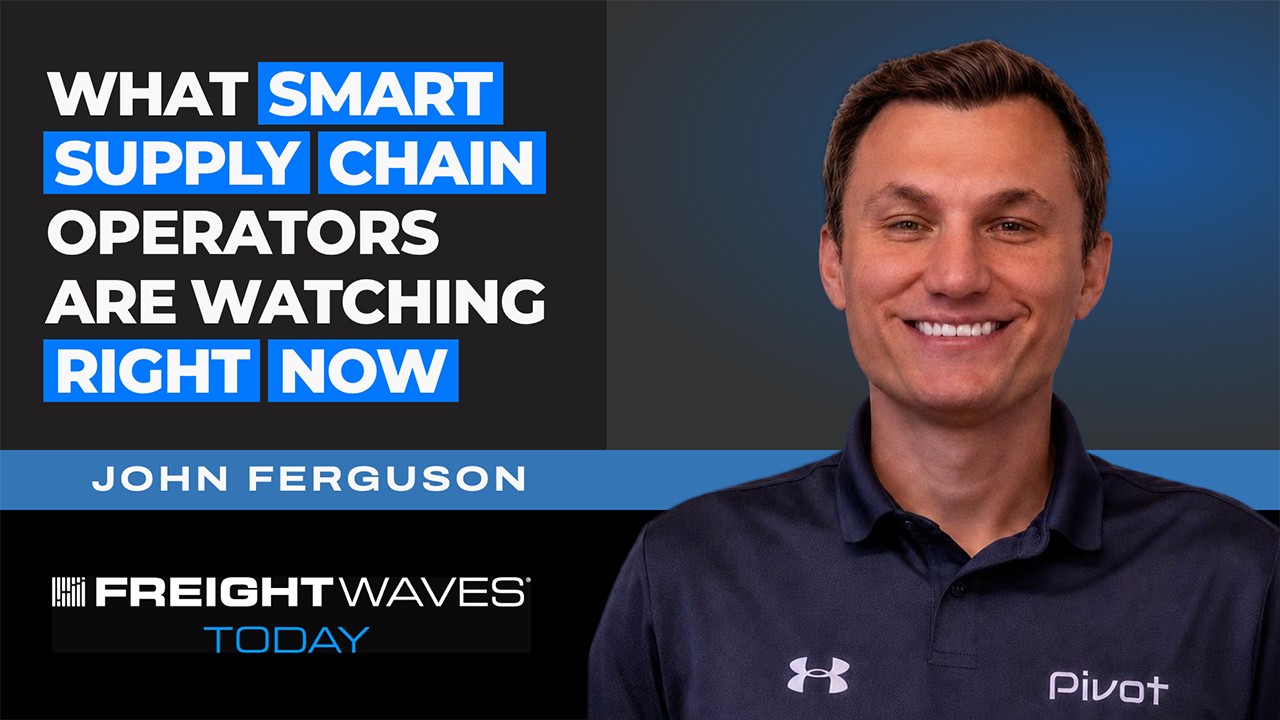
John Ferguson, founder and CEO of Pivot Supply Chain Solutions, reports that shippers now demand full disclosure of carrier vetting systems before discussing rates — a direct response to the $604 million C.H. Robinson verdict where the firm was held 23% liable, matching its $135 million insurance policy. The Northeast led U.S. load-to-truck ratios for 60 days before Washington State produce shifted dominance to the West Coast. Shippers are front-loading Monday–Wednesday pickups and pulling October freight into September, setting up a sharp early-October slowdown. Tender rejection rates moved from 13% to 14%, and brokers are revising language around driver tracking to avoid shared-employee liability.

Original source: Source information pending

C.H. Robinson $604M Verdict Drives Carrier Vetting Over Rates

Freight brokers are fielding a new kind of sales call. John Ferguson, founder and CEO of Chattanooga-based Pivot Supply Chain Solutions, said a prospective enterprise shiprequired him to walk through his firm’s entire carrier vetting process — system by system — before any rate discussion took place. The shipFerguson that rates were secondary to liability exposure in the wake of the post-Montgomery ruling, a posture Ferguson described as unlike anything he had previously encountered in years of pitching that account.

Liability Shifts Market Priorities

The shift reflects broader anxiety rippling through the brokerage market following the C.H. Robinson vicarious liability verdict. Ferguson noted that C.H. Robinson faced a $604 million verdict in which it was found 23% responsible — a share that aligns almost exactly with its $135 million insurance policy. He said plaintiffs’ attorneys are increasingly targeting all parties in the chain, including shippers and warehouse operators, pointing to recent amendments to Delilah’s Law that now explicitly include both.

“I’m still close enough to the business where I understand how we’re vetting everything. I don’t need to have somebody explain it to me. I can sit down with the client and explain it directly to them, how we’re keeping their loads safe, how we’re qualifying carriers,” John Ferguson, founder and CEO of Pivot Supply Chain Solutions

Operational Adjustments from Legal Precedent

One legal nuance that emerged during the C.H. Robinson trial carries direct operational implications for brokers: an attorney present during proceedings told Ferguson that jurors determined shared-employee status partly because C.H. Robinson described itself as “tracking the driver” through its app. Ferguson said the practical takeaway for brokers is precise language — carriers and drivers should be described as tracked by load, not by person.

Market Volatility and Volume Timing

On the rate and capacity side, Ferguson described the market as “very uncertain,” with fuel costs elevated and capacity still exiting. He said the tender rejection rate dipped to around 13% before recovering to roughly 14%, and that the North East — historically a softer region — posted the highest load-to-truck ratios in the country for about 60 days before the West Coast, driven by Washington State produce, took over that position in the past two weeks.

Shipment Front-Loading and Contract Flexibility

Volume patterns are also shifting in ways that complicate carrier planning. Ferguson said shippers are concentrating pickups Monday through Wednesday, leaving Thursday and Friday with sharp volume drop-offs week over week. He attributed the front-loading partly to must-arrive-by date management — shippers want buffer days in case a load falls through — and partly to end-of-quarter pull-forwards, with several enterprise customers already moving October volume into September. Ferguson said he expects a meaningful slowdown in the first weeks of October as a result.

On contract structures, Ferguson said more shippers are abandoning annual RFPs in favor of quarterly or even monthly bids, seeking flexibility in a volatile rate environment while still pressing to recover rates from one to two years ago. He framed tighter compliance requirements around carrier vetting as a competitive advantage for smaller, operator-led brokerages whose leadership can speak directly to vetting processes — a harder proposition, he argued, for larger firms where that knowledge is several management layers removed from the client conversation.

Source: FreightWaves

Compiled from international media by the SCI.AI editorial team.
Ask SCI.AI Finished reading? Continue with SCI.AI. Explore the related policy, route, company and historical context. Continue asking
Freight Brokers Face $400K Theft Risk Amid AI Fraud Surge
Risk & Resilience

Freight Brokers Face $400K Theft Risk Amid AI Fraud Surge

Freight brokers face escalating risks from AI-powered carrier impersonation, including a $400,000 lobster meat theft targeting Costco. Criminals exploit phishing, typo-squatted domains, compromised emails, and deepfake voice to divert high-value shipments. Verisk CargoNet’s Q2 cargo theft analysis identifies business email as the primary attack vector. Experts stress continuous verification over one-time onboarding, citing gaps exposed by the Supreme Court’s May 2026 Montgomery v. Caribe Transport II ruling. Platforms like Descartes’ AuditLog and Highway’s AI-driven insurance verification aim to close vulnerabilities, especially for small carriers lacking formal security protocols.

STB Board Member Calls Railroad Merger Plan ‘Shallow’
Warehousing & Transport

STB Board Member Calls Railroad Merger Plan ‘Shallow’

A U.S. Surface Transportation Board (STB) member has labeled a major railroad merger proposal 'shallow,' citing insufficient detail on integration timelines, labor transitions, and infrastructure investment. Will O'Donnell criticized the filing's lack of verifiable metrics, noting only $1.2 billion of a $4.8 billion capital plan targets high-congestion corridors. The STB aims to issue preliminary findings by Q1 2027, with a final decision expected no earlier than June 2027.

FBI Memphis Task Force Warns Cyber Schemes Risk $Millions in Freight
Risk & Resilience

FBI Memphis Task Force Warns Cyber Schemes Risk $Millions in Freight

The FBI’s Memphis Cargo Theft Task Force, active for nearly two decades, warns that cyber-enabled schemes now threaten millions in freight before shipments even reach docks. Assistant Special Agent in Charge Jeremy Baker notes criminals use computer intrusions and social engineering to target high-value goods, with thefts occurring digitally before physical handoffs. Phishing tests show employee click rates can fall from 60% to 2% after training. Federal indictments have targeted nearly $600K in interstate cargo theft tied to Memphis. The task force emphasizes repeated verification across brokers, carriers, and facilities — calling cybersecurity readiness 'several notches' higher than current industry standards.

Welcome Back!

Login to your account below

Create New Account!

Fill the forms below to register

Retrieve your password

Please enter your username or email address to reset your password.

Scan to share via WeChat

Open WeChat and scan the QR code to share

QR Code

Add New Playlist