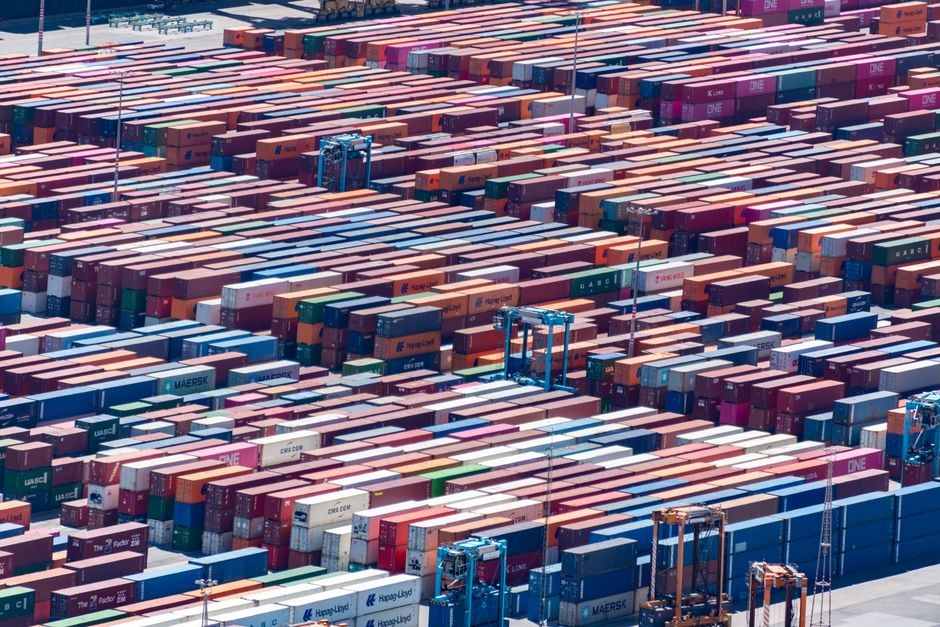
Hapag-Lloyd CEO reveals the Iran war costs the company $40-50 million weekly in additional fuel, insurance, and other expenses, creating severe challenges for global maritime logistics.
Hapag-Lloyd’s Financial Burden: $40-50 Million Weekly Additional Costs
German container shipping giant Hapag-Lloyd CEO Rolf Habben Jansen revealed that the Iran war is costing the company $40-50 million per week in additional fuel, insurance, and other expenses. This substantial loss represents a significant financial burden for the world’s fifth-largest container shipping line.
Hapag-Lloyd has six vessels trapped in the Persian Gulf as Iran selectively permits safe passage through the Strait of Hormuz. The company faces escalating costs for vessel security and transit permissions through this critical maritime chokepoint.
“Costs are increasing sharply. If we look at the impact that this has on us, then we talk easily about $40 million or $50 million per week that we are facing at this point in time,” said Hapag-Lloyd CEO Rolf Habben Jansen, “mainly related to bunker [fuel], but also insurance costs are up significantly and so are costs related to storage and in some cases also inland transportation.”
Strait of Hormuz: Critical Shipping Security Challenges
The Strait of Hormuz, one of the world’s most vital oil transportation corridors, has become a focal point of the Iran conflict. Shipping security in this narrow waterway faces severe threats, creating substantial challenges for global maritime logistics.
The strait’s confined navigation channels increase vessel vulnerability to attacks, elevating shipping risks. Iran’s selective vessel screening further extends shipping times, disrupting global supply chain stability. Approximately 20% of global oil shipments transit through the Strait of Hormuz, making its security crucial for worldwide energy supply.
Rising Fuel Costs: Cascading Effects on Global Supply Chains
War-induced fuel cost increases significantly impact global supply chains. Hapag-Lloyd identifies fuel cost escalation as a primary contributor to its weekly additional expenses. As fuel prices continue climbing, logistics costs correspondingly rise.
Higher fuel costs translate to increased transportation expenses for businesses, ultimately leading to product price inflation. This creates ripple effects throughout global trade and consumer pricing. With global maritime fuel consumption estimated at 260 million tons annually, fuel cost increases substantially affect international shipping logistics.
Insurance Premium Surge: Causes and Consequences
The conflict has triggered dramatic insurance premium increases, imposing heavy burdens on shipping companies like Hapag-Lloyd. Insurance cost escalation stems from two primary factors: heightened shipping risks requiring greater insurer liability coverage, and increased shipping company insurance demand driving premium rates upward.
Soaring insurance expenses significantly raise shipping companies’ operational costs, undermining global supply chain stability. The global maritime insurance market, valued at approximately $200 billion, faces substantial disruption from these premium increases.
Alternative Routes: Cost Analysis of Cape of Good Hope Diversions
To mitigate war risks, some shipping companies opt for alternative routes like the Cape of Good Hope. However, these detours involve higher costs with significant supply chain implications.
Cape of Good Hope diversions require extended transit times and greater sailing distances, increasing transportation expenses by approximately 20% compared to standard routes. These additional costs create substantial financial pressure for businesses, affecting global supply chain reliability.
Chain Effects on Major Shipping Companies: Maersk, MSC, and Others
The Iran conflict creates cascading impacts throughout global maritime logistics, affecting major shipping companies including Maersk and Mediterranean Shipping Company (MSC). War-induced shipping cost increases undermine these companies’ profitability.
Maersk, with its extensive global vessel fleet and route network, faces significant business disruption from heightened shipping risks and cost escalation. Controlling approximately 18% of the global container shipping market, Maersk’s financial performance suffers substantial war-related impacts.
Long-term Implications for Global Trade and Consumer Pricing
The Iran conflict generates lasting effects on global trade and consumer pricing. As maritime logistics costs rise, international trade expenses increase, leading to product price inflation and higher consumer living costs.
With global trade volume estimated at $25 trillion, the conflict’s trade implications warrant serious consideration. Additionally, potential supply chain disruptions could threaten global economic stability and development.
Conclusion: Logistics Industry Insights and Recommendations
The Iran conflict severely impacts global maritime logistics, presenting multiple challenges for shipping companies, international trade, and consumers. Analyzing from supply chain management, logistics cost, and geopolitical risk perspectives yields these industry insights and recommendations:
1. Enhance shipping security risk prevention and emergency response capabilities.
2. Optimize route networks to reduce transportation costs and improve supply chain stability.
3. Strengthen supply chain resilience by reducing dependence on single routes.
4. Increase logistics cost awareness and implement robust cost control measures.
5. Monitor geopolitical risks and foster international cooperation to safeguard global maritime logistics security.
In summary, the Iran conflict profoundly affects global maritime logistics, necessitating comprehensive industry reform and innovation to address future challenges.
This article was generated with AI assistance based on analysis of publicly available news sources.
Source: FreightWaves – Iran war costing Hapag-Lloyd $40-50 million per week: CEO