Amazon's New Supply Chain Feature to Launch for US Sellers in October, Roll Out Globally by Year-End
# Amazon Offers “Fully Managed” Supply Chain Solutions to Sellers
The new “Amazon Supply Chain” feature will be available to US sellers in October and rolled out globally within the year.
Release Date: September 18, 2024
Author: Kelly Stroh Editor
### Key Points:
– Amazon is set to offer a “fully managed” option utilizing its existing “Amazon Supply Chain” solution, which automates logistics, warehousing, and distribution decisions. According to a blog post on September 18, sellers only need to specify the quantity of products and desired pick-up locations.
– Previously, sellers had to individually select services and manage all product movement decisions. Dharmesh Mehta, Vice President of Global Seller Services at Amazon, told Supply Chain Dive that companies now just need to provide the product quantity and required pick-up location.
– Once this seller information is processed, “we handle the pickup, transport through borders and customs, port handling and warehousing, then optimize the quantities, locations, and timing of product movements,” Mehta said at Amazon’s annual third-party seller conference on Tuesday.
### In-Depth Analysis:
“Amazon Supply Chain” was initially launched in September as part of its end-to-end supply chain service portfolio, which Amazon has been investing in. The addition of the “fully managed” feature further simplifies services for sellers.
Despite numerous seller services since its inception, Amazon continues to improve its supply chain solutions with new logistics features, additional warehousing support options, better predictive algorithms, and more.
Mehta noted that hundreds of thousands of sellers have already used at least one Amazon supply chain service. Meanwhile, the number of sellers using multiple solutions has tripled since the beginning of the year.
Sellers utilizing end-to-end solutions are eligible for a 25% reduction in warehousing fees and a 15% discount on transportation and handling costs associated with Amazon’s warehousing and distribution services.
Amazon will roll out new features gradually. According to the release, the solution will be available to US sellers for domestic pick-up services in October, with plans for global rollout by year-end.
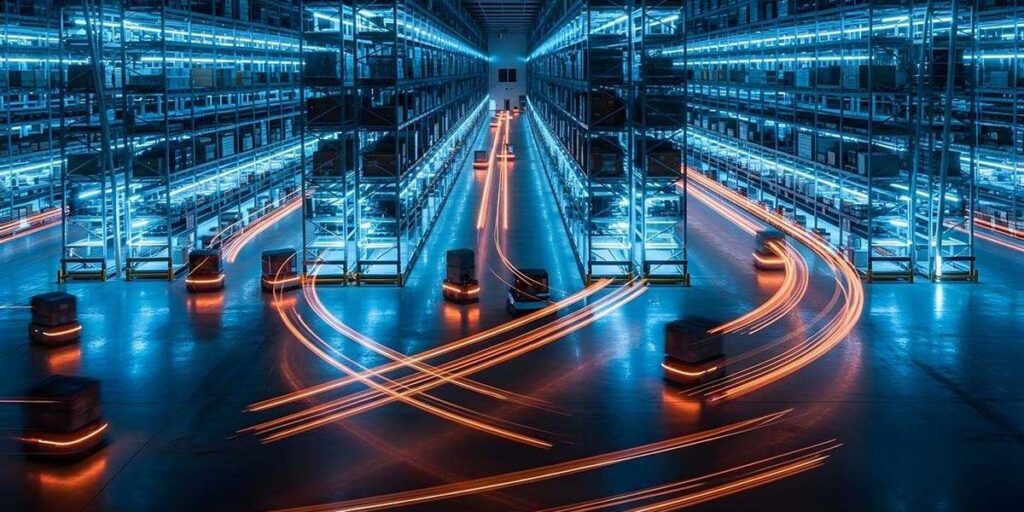
According to Mehta, the new automation option leverages machine learning and predictive analytics to help automate identification or prediction of individual unit movements or timing. While human involvement remains in operations like transportation, automation is used to ensure operational safety and reliability.
“It’s actually a mix of both: ‘Hey, automation is really good at certain things, possibly faster, safer, more reliable, while humans are better elsewhere because it requires human judgment or creativity.’ So we’ve found a balance between the two,” Mehta said.
Ultimately, sellers still have control over which services they want to automate, as stated by Mehta.
He further pointed out that sellers with larger or more complex supply chains usually opt for more control, while many small and medium-sized enterprises choose automation options to simplify their operations.
“We aim to strike a balance between offering numerous choices, controls, and configurability for those who desire them, but also catering to those who prefer simplicity and full management and automation,” Mehta said.
—
Source: Supply Chain Dive