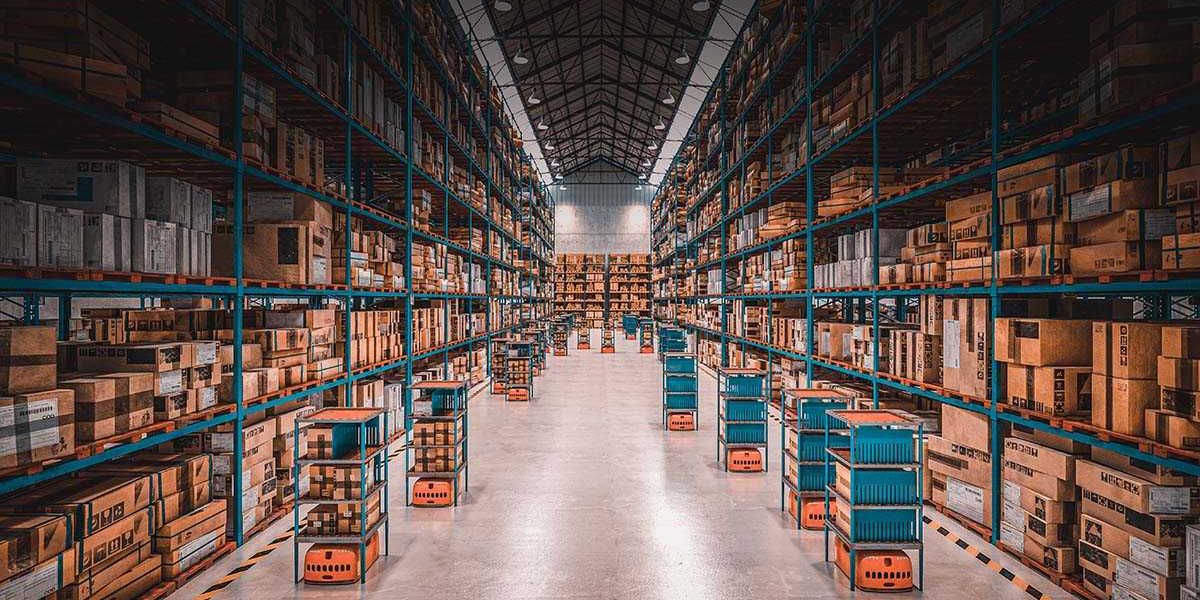
Supply chains are no longer judged solely on speed or cost—but on adaptive intelligence. In 2026, a seismic shift is underway: inbound automation now accounts for 43% of new warehouse automation investments, up from just 18% in 2022—marking the first time receiving, depalletizing, and putaway have eclipsed outbound fulfillment as the dominant automation priority. This pivot reflects a hard-won operational truth: bottlenecks upstream cascade with exponential severity downstream. A single delayed pallet unloading can stall an entire wave of same-day e-commerce orders; misidentified SKUs at intake propagate errors through inventory accuracy, replenishment logic, and customer returns. The data is unequivocal—warehouses deploying AI-powered inbound vision systems report 99.2% real-time SKU recognition accuracy across 50,000+ SKUs, compared to 82.7% for legacy template-based systems. What’s more, this isn’t incremental optimization—it’s structural recalibration. As labor shortages intensify (the U.S. Bureau of Labor Statistics projects a 12.4% shortfall in material handling workers by 2027) and e-commerce return rates climb to 16.5% industry-wide, automating the front door of the warehouse has become a strategic imperative, not a technical luxury.
Inbound Automation Dominance: From Bottleneck to Strategic Lever
The rise of inbound automation signals a fundamental reorientation in supply chain philosophy—from treating the warehouse as a static storage node to recognizing it as a dynamic, real-time data ingestion and decision engine. Historically, automation focused on outbound because it was visible, measurable, and directly tied to customer satisfaction metrics like order cycle time and on-time delivery. But that narrow lens ignored the fact that 73% of inventory inaccuracies originate during receiving, according to Gartner’s 2025 Supply Chain Automation Benchmark. Today’s leaders understand that intelligent inbound operations generate foundational data integrity: precise lot tracking for pharmaceutical recalls, real-time condition monitoring for temperature-sensitive goods, and instant ASN (Advanced Shipping Notice) reconciliation that slashes dock-to-stock time from hours to minutes. This transformation is enabled not by brute-force robotics alone, but by tightly coupled hardware-software orchestration—where a robotic depalletizer feeds live image data into a WES, which dynamically adjusts putaway logic based on real-time demand signals from the ERP and shelf-life data from IoT sensors. The result? One Tier-1 food distributor reduced its average receiving dwell time by 68% and cut labor costs per pallet by $14.30, while simultaneously increasing first-pass putaway accuracy to 99.8%.
This shift also redefines capital allocation logic. Where once companies built dedicated receiving docks with fixed conveyors and manual sortation, they now deploy modular, software-defined zones—equipped with load exchangers that accept mixed-pallet shipments from diverse suppliers, case handlers that preserve original packaging integrity for sustainability compliance, and AMRs that shuttle cases directly to dynamic storage pods without intermediate staging. Critically, these systems are designed for supplier-agnostic interoperability: they read GS1 DataMatrix codes, interpret EDI 856 ASN payloads, and auto-correct discrepancies between purchase orders and physical receipts using NLP-driven exception resolution engines. As Hy-Tek Intralogistics’ 2026 report notes, companies achieving >95% inbound automation penetration report 3.2x faster response to demand spikes than peers relying on manual or semi-automated intake. That agility is no longer theoretical—it’s the difference between capturing holiday-season market share or ceding it to competitors with resilient, responsive infrastructure.
Robots-as-a-Service: Capital Efficiency Meets Operational Agility
The RaaS (Robots-as-a-Service) model has evolved beyond a financing workaround into a core supply chain strategy—one that decouples technological capability from balance sheet risk. RaaS adoption in North American distribution centers reached 37% in Q1 2026, up from 9% in 2021, according to MHI’s Annual Industry Report. What makes this trend transformative is its dual impact: it eliminates the $2.1–$4.8 million upfront CAPEX typically required for a mid-sized AMR fleet while simultaneously reducing total cost of ownership (TCO) by 22–35% over five years due to bundled maintenance, over-the-air software updates, and performance-based SLAs. More importantly, RaaS embeds scalability into the operational DNA—fleets can be expanded or contracted within 72 hours to match seasonal demand, promotional surges, or unexpected disruptions like port congestion or labor strikes. Unlike traditional leasing, RaaS providers assume full responsibility for system uptime, firmware compatibility, and even workforce training, freeing internal teams to focus on process innovation rather than robotic firmware patches.
This model is rapidly expanding beyond mobile robots. Computer vision startups now offer ‘Vision-as-a-Service’ with pay-per-scan pricing models, enabling retailers to deploy AI-powered inspection at receiving docks without committing to proprietary hardware lock-in. Similarly, drone logistics providers offer aerial inventory auditing subscriptions—charging $0.07 per cubic foot scanned—making cycle counts feasible for sprawling cold-storage facilities where manual audits previously took weeks and introduced significant variance. Crucially, RaaS contracts now include data governance clauses that ensure customers retain full ownership of operational data generated by the equipment—a critical safeguard amid tightening global privacy regulations like the EU’s CSDDD and California’s CPRA. As one Fortune 500 logistics executive observed:
“RaaS isn’t about avoiding capital expenditure—it’s about converting fixed infrastructure costs into variable, outcome-aligned investments. When our peak season ends, we don’t own depreciating robots; we own proven throughput capacity that scales with our business.” — Maria Chen, VP of Global Fulfillment, LumiTech Logistics
Software Orchestration: The Central Nervous System of Modern Warehousing
Hardware may move goods, but software moves value—and in 2026, warehouse execution systems (WES) and orchestration platforms have become the undisputed command center of supply chain operations. While WMS solutions historically managed inventory and basic task assignment, modern WES platforms integrate ERP, TMS, WMS, robotics control systems, IoT sensor networks, and even external data feeds (e.g., weather APIs for perishables, traffic APIs for last-mile routing) into a single decision layer. This integration reduces system handoffs by 62% and cuts average exception resolution time from 23 minutes to under 90 seconds, according to a 2026 McKinsey study of 47 Tier-1 distribution centers. The architecture is inherently adaptive: when a pallet arrives with damaged cartons, the WES doesn’t just flag it—it triggers a cascading workflow: rerouting to quality inspection, adjusting downstream pick paths to avoid compromised stock, updating demand forecasts in real time, and auto-generating supplier chargebacks via integrated EDI. This level of closed-loop automation was impossible with siloed legacy systems.
Low-code/no-code configuration tools embedded within these platforms represent another paradigm shift. Instead of waiting 12–18 weeks for IT to develop custom integrations, supply chain analysts can now build API connections to new e-commerce marketplaces or configure robotic task sequences using drag-and-drop interfaces. Companies using low-code WES integrations reduced time-to-market for new fulfillment channels by 79%—a decisive advantage in markets where Amazon Marketplace sellers now launch private-label SKUs in under 72 hours. Furthermore, these platforms increasingly leverage predictive analytics—not just descriptive dashboards. For instance, a leading apparel distributor uses its WES to forecast labor requirements 48 hours ahead with 94.3% accuracy by correlating inbound shipment manifests, historical picking velocity, and real-time absenteeism data from HRIS systems. This transforms labor scheduling from reactive firefighting to proactive resource optimization, directly impacting both service levels and wage expense.
Intelligent Vision Systems: Beyond Barcode Scanning to Cognitive Perception
Modern vision technology has transcended optical character recognition to achieve true machine perception—enabled by neural processing units (NPUs) embedded directly in industrial cameras and edge computing gateways. Unlike legacy vision systems that rely on rigid templates requiring thousands of manually curated images per SKU, neural-network-based imagers achieve 98.1% identification accuracy across 120,000+ SKUs after only 200–300 training images per product class. This scalability is revolutionary for industries like grocery, cosmetics, and industrial parts, where SKU proliferation and frequent packaging redesigns rendered traditional vision systems economically unsustainable. These systems don’t just ‘see’ barcodes—they infer orientation, detect damage (bruised fruit, dented cans), verify label placement compliance, and even estimate fill levels in transparent containers using multi-spectral imaging. One pharmaceutical distributor reduced its FDA-mandated visual inspection labor by 87% while increasing defect detection rate by 41% using AI vision paired with robotic arms.
The integration architecture matters as much as the algorithm. Today’s smart vision systems feed structured metadata—not raw pixel data—into the WES, enabling contextual decision-making. For example, if a vision system detects a pallet with mixed expiration dates, the WES automatically assigns priority putaway to the nearest available slot with optimal temperature and humidity, then flags the batch for accelerated picking logic.
- Key differentiators of next-gen vision: real-time inference latency < 80ms, on-device model retraining without cloud dependency, and federated learning across distributed facilities
- Deployment barriers falling: average implementation time dropped from 14 weeks in 2022 to 5.2 weeks in 2026, driven by standardized RESTful APIs and pre-trained foundation models for common industrial object classes
This cognitive layer transforms vision from a passive verification tool into an active, anticipatory intelligence source—turning every receiving dock, packing station, and outbound gate into a continuous data acquisition point.
Dynamic Storage & Retrieval: From Static Racking to Algorithmic Inventory Geometry
Robotic AS/RS systems are dismantling the century-old assumption that warehouse layout must be static. Traditional pick modules, with fixed aisles and predetermined slotting logic, were optimized for human ergonomics—not algorithmic efficiency. In contrast, dynamic AS/RS platforms now optimize storage density, retrieval velocity, and energy consumption simultaneously using reinforcement learning models trained on 18 months of facility-specific operational data. These systems continuously reassess slotting strategies: high-velocity SKUs migrate toward robot charging stations and outbound docks; slow-movers consolidate into denser, higher-elevation zones; and seasonal items auto-reposition based on calendar-driven demand forecasts. One electronics distributor achieved a 42% increase in effective storage density and a 31% reduction in average robot travel distance after implementing such a system—without expanding its physical footprint.
What makes this truly strategic is its responsiveness to volatility. During the 2025 Red Sea crisis, a major automotive parts distributor used its dynamic AS/RS to reconfigure its entire facility layout in 36 hours—shifting 87% of its air-freighted emergency components to priority-access zones near packing stations, while relocating bulk ocean freight inventory to deeper storage. This agility wasn’t programmed—it emerged from the system’s ability to ingest real-time carrier ETAs, customs clearance status, and production line pull signals. Moreover, these systems now incorporate sustainability metrics: optimizing for minimal robot battery discharge cycles, selecting energy-efficient retrieval paths during peak utility rate windows, and even calculating carbon footprint per order based on actual robotic movement and ambient temperature. As supply chains face intensifying ESG scrutiny, dynamic storage systems contribute directly to Scope 1 and 2 emissions reduction targets—proving that operational excellence and environmental stewardship are no longer trade-offs, but co-evolving imperatives.
Source: www.dcvelocity.com
This article was AI-assisted and reviewed by our editorial team.