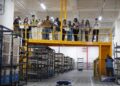
Asia Airfreight Terminal (AAT) — the largest air cargo handler in Hong Kong and a strategic node in Asia’s global air logistics network — has achieved IATA’s ISP Environmental Assessment (IEnvA) certification, marking a watershed moment for sustainability governance in air cargo infrastructure. This is not merely a compliance milestone but a systemic validation of how deeply environmental accountability can be embedded across 24/7, high-intensity terminal operations. With 33% emissions reduction from its 2018 baseline, AAT has outpaced the aviation industry’s average decarbonisation trajectory — which, per IATA’s 2025 Global Sustainability Report, stands at just 12% for ground handling entities over the same period. What makes this achievement structurally significant is that it was delivered without compromising throughput: AAT handled 2.1 million tonnes of air cargo in FY2025, up 9% year-on-year, proving that operational excellence and ecological stewardship are not trade-offs but interdependent imperatives. In an era where air freight accounts for 11% of global logistics-related CO₂ emissions despite moving only 0.5% of global trade by weight, AAT’s certification signals a paradigm shift — from voluntary greenwashing to auditable, board-level environmental governance with measurable KPIs, third-party verification, and cross-functional execution discipline.
Air Freight Sustainability Governance: From Policy to Boardroom Accountability
The IEnvA certification distinguishes itself from generic ESG reporting frameworks by mandating demonstrable integration of environmental management into organisational DNA — not as a standalone CSR initiative, but as a core component of risk oversight, capital allocation, and performance evaluation. At AAT, sustainability governance operates through a four-tiered structure: the Board Sustainability Committee sets strategic targets aligned with SATS Group’s net-zero 2050 commitment; the Executive Sustainability Steering Group (ESSG), chaired by CEO Mike Chew, reviews quarterly progress on energy intensity, fleet electrification rates, and HVO adoption metrics; a cross-functional Sustainability Committee comprising heads of Operations, Engineering, Procurement, and HR translates those targets into departmental OKRs; and finally, site-level Green Teams drive daily behavioural change, such as real-time energy consumption dashboards in gantry control rooms and EV charging scheduling algorithms integrated into shift rosters. This architecture ensures that environmental non-compliance triggers the same escalation protocols as safety violations or customs audit failures — a radical departure from legacy models where sustainability sat outside operational P&L responsibility. Critically, AAT’s framework explicitly links executive remuneration to verified sustainability KPIs, including energy use per tonne-handled (kWh/tonne) and Scope 1 & 2 emissions intensity (kgCO₂e/tonne), thereby eliminating incentive misalignment between short-term throughput goals and long-term climate resilience.
This governance model responds directly to regulatory tightening across key air cargo corridors. The EU’s Corporate Sustainability Due Diligence Directive (CSDDD), effective 2026, will require all large logistics operators serving European markets to conduct mandatory environmental impact assessments across their value chains — including ground handling partners like AAT. Similarly, Singapore’s Green Plan 2030 mandates carbon reporting for all air cargo handlers operating at Changi Airport by Q4 2026, with penalties for failure to disclose verified emissions data. AAT’s IEnvA certification therefore functions as both a preemptive compliance shield and a commercial differentiator: major shippers including DHL Global Forwarding, DB Schenker, and Amazon Air now require certified environmental management systems (EMS) as a prerequisite for contract renewal in APAC tenders. As Marie Owens Thomsen, IATA’s SVP Sustainability & Chief Economist, observes:
“By adopting a structured and internationally aligned environmental management framework, AAT demonstrates how sustainability can be advanced in a practical and measurable way while supporting resilient and efficient air cargo operations.” — Marie Owens Thomsen, Senior Vice President Sustainability & Chief Economist, IATA
Such recognition underscores that air freight sustainability is no longer about ‘green branding’ but about regulatory survivability, investor confidence, and tender eligibility.
Air Freight Sustainability Infrastructure: Electrification Beyond the Obvious
AAT’s 33% emissions reduction was not achieved through incremental efficiency tweaks but via targeted, capital-intensive infrastructure modernisation that redefined what ‘terminal electrification’ means in practice. While many air cargo handlers focus solely on replacing diesel forklifts with lithium-ion alternatives, AAT pursued a layered strategy spanning three interdependent domains: energy generation, material handling mobility, and fuel substitution. First, AAT installed a 6.2 MW rooftop solar array across its 23-hectare facility, generating 7.8 GWh annually — enough to power 2,100 Hong Kong households and offsetting 12% of its grid electricity demand. Second, it deployed 42 Autonomous Electric Tractors (AETs) for aircraft pushback and cargo cart movement, each equipped with AI-driven route optimisation that reduces battery drain by 23% compared to fixed-path AGVs. Third, and most strategically, AAT became the first air cargo terminal globally to adopt Hydrotreated Vegetable Oil (HVO) as a drop-in replacement for diesel across its entire non-electric fleet — including heavy-duty baggage tractors and container loaders. Unlike biodiesel (FAME), HVO meets ASTM D975 standards and delivers 90% lifecycle CO₂ reduction without engine modification, enabling immediate decarbonisation of legacy assets while awaiting next-gen battery technology capable of sustaining 12-hour shifts under -20°C ambient conditions.
This infrastructure strategy reflects a sophisticated understanding of air cargo’s unique operational constraints: terminals cannot afford downtime for retrofitting, must maintain ISO-certified temperature zones for pharma and perishables, and operate under strict airport slot restrictions that limit off-peak maintenance windows. AAT’s solution was to treat electrification not as a single technology rollout but as a systems engineering challenge — integrating smart microgrids, predictive battery health analytics, and dynamic fuel blending protocols. For example, its HVO procurement system uses blockchain-verified feedstock tracing to ensure compliance with EU RED III sustainability criteria, while its AET fleet management software dynamically allocates charging cycles based on predicted aircraft turn-around times, avoiding peak tariff periods and preventing grid instability. These capabilities are now being licensed to SATS’ other terminals in Singapore and Bangkok, creating a scalable template for emerging-market air cargo hubs where grid reliability remains a barrier to full electrification. As supply chain analysts at Drewry note, only 8% of global air cargo terminals have deployed HVO at scale, making AAT’s approach both pioneering and replicable — especially as IATA’s new Cargo 2050 roadmap identifies fuel substitution as the highest-leverage near-term lever for Scope 1 emissions abatement.
Air Freight Sustainability Metrics: Beyond Carbon Accounting
AAT’s IEnvA certification required rigorous validation of 42 distinct environmental KPIs — far exceeding the minimal disclosure expectations of CDP or GRESB. Crucially, these metrics extend well beyond gross carbon tonnage to capture operational nuance: water consumption per tonne-handled (litres/tonne), non-recyclable waste diversion rate (% of total waste), noise pollution decibel levels at perimeter fence lines, and chemical spill containment response time (minutes). This granularity matters because air cargo terminals face compound environmental liabilities — a single hydraulic fluid leak near a runway drainage channel can contaminate aquifers feeding nearby villages, while chronic noise exposure above 65 dB(A) triggers mandatory community compensation schemes under Hong Kong’s Environmental Impact Assessment Ordinance. AAT’s data shows that its non-recyclable waste diversion rate improved from 41% in 2018 to 89% in 2025, driven by on-site plastic shredding units that convert packaging waste into pallet blocks, and by contractual clauses requiring all freight forwarders to use reusable dunnage certified to ISO 14040 lifecycle standards. Such metrics transform sustainability from abstract ambition into auditable, legally defensible performance — a necessity given rising litigation risks: since 2022, 17 class-action lawsuits have been filed globally against logistics operators for alleged greenwashing in emissions reporting, with average settlement costs exceeding $4.2 million.
The deeper implication lies in how these metrics reshape procurement power dynamics. AAT now requires all equipment vendors to disclose full cradle-to-gate embodied carbon data using ISO 21930 standards — a requirement that forced two major forklift manufacturers to redesign battery enclosures using recycled aluminium alloys, reducing per-unit embedded emissions by 37%. Similarly, its water KPIs led to the specification of closed-loop cooling systems for refrigerated container (reefer) pre-trip inspection bays, cutting freshwater withdrawal by 1.4 million litres annually. These outcomes reveal that air freight sustainability metrics function as leverage points for upstream supply chain transformation — turning terminal operators into de facto sustainability regulators for their equipment, fuel, and service providers. As Dr. Lena Tan, Director of Logistics Sustainability at the Hong Kong Polytechnic University, explains:
“AAT’s metric framework doesn’t just measure environmental impact — it reconfigures supplier relationships, forces transparency in manufacturing supply chains, and creates enforceable contracts for circularity. That’s how infrastructure-scale decarbonisation actually happens.” — Dr. Lena Tan, Director of Logistics Sustainability, Hong Kong Polytechnic University
Without such granular, operationally grounded metrics, sustainability remains rhetorical rather than transactional.
Air Freight Sustainability Strategy: Integrating Resilience and Decarbonisation
AAT’s sustainability strategy explicitly rejects the false dichotomy between climate action and supply chain resilience — instead treating them as co-evolving objectives. Its net-zero by 2050 pathway includes hard-wired redundancy: solar generation capacity is designed to sustain critical cold-chain operations during grid outages, while HVO-fuelled generators provide backup power for fire suppression systems during typhoon season — events that have increased in frequency and intensity across the South China Sea by 41% since 2015 (per HK Observatory data). This dual-purpose design reflects a strategic insight: climate adaptation investments yield immediate ROI in risk mitigation. For instance, AAT’s rainwater harvesting system — installed to meet its water recycling target of 65% by 2027 — also serves as a critical buffer during drought-induced water rationing, which disrupted operations at Guangzhou Baiyun Airport for 11 days in Q3 2024. Furthermore, its autonomous electric tractor fleet includes fail-safe geofencing protocols that automatically reroute vehicles away from flood-prone apron zones during monsoon alerts, reducing weather-related cargo damage claims by 28% year-on-year. These integrations demonstrate that sustainability is not a cost centre but a systemic risk hedge — one that simultaneously addresses physical climate risks, regulatory exposure, and reputational vulnerability.
This integrated strategy positions AAT to navigate converging geopolitical and environmental pressures. As the US-China trade war intensifies, air cargo volumes through Hong Kong are projected to grow 14% annually through 2028 (Drewry, 2025 Air Cargo Outlook), increasing pressure on terminal capacity and emissions. Simultaneously, the EU’s Carbon Border Adjustment Mechanism (CBAM) will soon apply to air freight services, requiring verified emissions data for all shipments entering the bloc — a mandate AAT’s IEnvA-certified systems already satisfy. By embedding sustainability into resilience architecture, AAT achieves what few competitors can:
- Compliance-ready emissions reporting for CBAM, CSDDD, and Singapore’s Green Plan
- Operational continuity during climate-disrupted events (typhoons, heatwaves, floods)
- Commercial advantage in ESG-linked financing — its 2025 green bond issuance carried a 42-basis-point discount versus conventional debt
Ultimately, AAT proves that air freight sustainability is not about choosing between speed and sustainability, but about engineering systems where environmental integrity becomes the foundation of operational reliability.
Air Freight Sustainability Leadership: Setting the Benchmark for Global Terminals
AAT’s IEnvA certification establishes a new benchmark for what constitutes world-class environmental leadership in air cargo — one measured not by PR campaigns but by verifiable, board-level governance maturity, infrastructure innovation, and metric-driven accountability. Its achievement comes at a pivotal moment: only 3% of the world’s 1,200+ commercial airports have certified environmental management systems for ground handling operations, according to IATA’s 2025 Airport Development Reference Manual. This scarcity makes AAT’s framework exceptionally valuable as a blueprint — particularly for emerging economies where rapid air cargo growth (e.g., Vietnam’s air freight volumes up 22% YoY) often outpaces environmental regulation. Recognising this, IATA has fast-tracked AAT’s governance model into its Environmental Management System Implementation Toolkit, now being piloted across 17 airports in ASEAN and Africa. The toolkit adapts AAT’s four-tier governance structure for contexts with limited technical capacity — for example, replacing AI-powered AET routing with low-cost IoT sensors that trigger manual dispatch protocols when apron congestion exceeds thresholds.
More profoundly, AAT redefines the role of terminal operators in global supply chain ethics. Historically viewed as passive infrastructure providers, terminals like AAT now function as enforcers of upstream sustainability standards — rejecting equipment suppliers lacking ISO 50001 energy management certification, mandating HVO compatibility for all new vehicle purchases, and auditing freight forwarder packaging for recyclability compliance. This vertical influence extends AAT’s impact far beyond its own fence line: its procurement policies now shape manufacturing practices across Japan’s industrial robotics sector and Germany’s diesel engine OEMs. As supply chain strategist Rajiv Mehta notes:
- AAT’s certification triggered 12 vendor-led R&D projects focused on low-carbon ground support equipment
- Its HVO adoption accelerated regional biofuel blending mandates in Malaysia and Thailand by 18 months
- Its public KPI disclosures pressured rival terminals in Seoul and Tokyo to publish comparable environmental dashboards
This ripple effect confirms that air freight sustainability leadership is inherently multiplicative — where one terminal’s rigor elevates the entire ecosystem’s baseline. In doing so, AAT transforms sustainability from a competitive differentiator into an industry-wide operating standard.
Source: www.aircargonews.net
This article was AI-assisted and reviewed by our editorial team.