According to Gartner’s latest five-year forecast report, by 2031 artificial intelligence will be able to autonomously resolve 60% of supply chain disruptions without human intervention. This significant shift marks the evolution of supply chain management from manual decision-making to automated intelligent decision systems, as global supply chain leaders accelerate their adoption of agentic AI capabilities to cope with increasingly complex geopolitical and trade uncertainties.
Gartner Prediction: AI Autonomous Decision-Making Becomes New Normal
Gartner’s latest research shows that as trade policy uncertainty and geopolitical conflicts intensify, supply chain managers face unprecedented challenges. The report predicts that by 2031, 60% of supply chain disruptions will be resolved autonomously by AI systems, driven primarily by AI features such as real-time analytics and automated risk analysis. Without AI, supply chain managers would see increased risks of mismanagement, delayed responses, and financial losses.
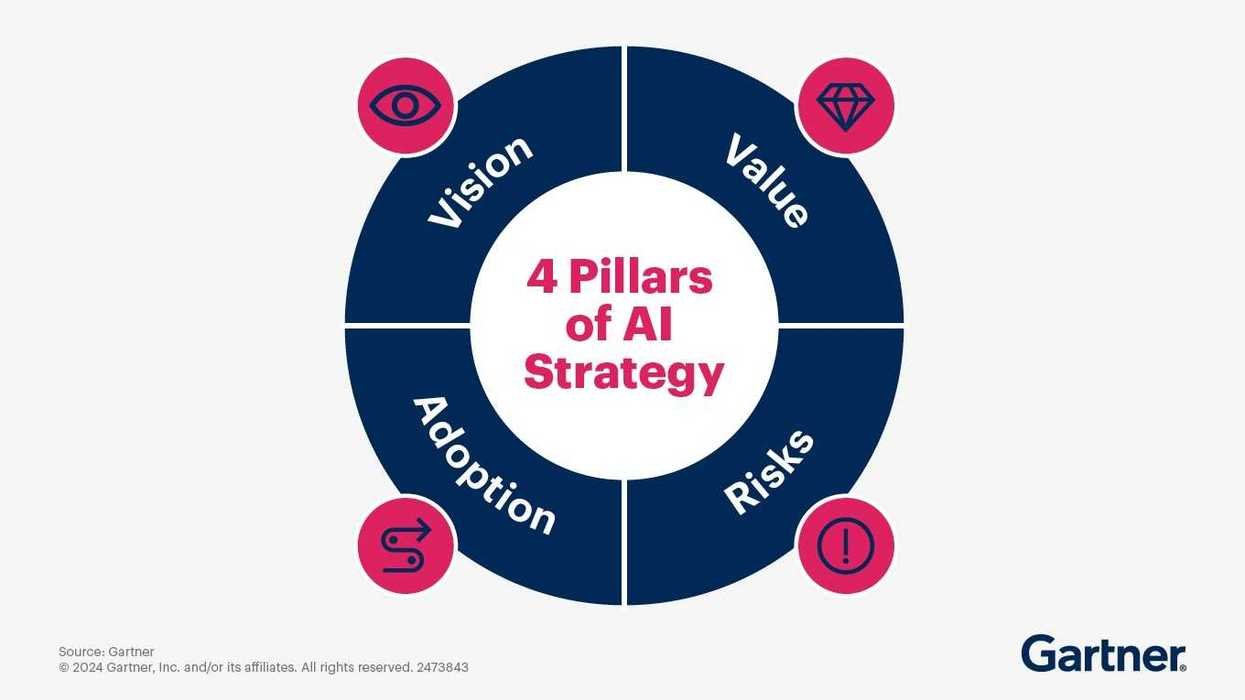
Agentic AI: New Strategic Tool for Supply Chain Leaders
Gartner’s October 2025 survey of 509 supply chain leaders found that “changes in ways of working driven by advancements in AI and agentic AI” will be the most influential driver of supply chain performance over the next two years. Many chief supply chain officers are rapidly adopting agentic AI capabilities or plan to implement them within the next two years. Julia von Massow, Director Analyst in Gartner’s Supply Chain practice, stated: “As more frequent and complex disruptions continue to test response capacity, organizations are moving toward AI that can sense and act in real time to improve the consistency and speed of decisions.”

Starting with Low-Risk Decisions: Building Automation Capabilities
Gartner recommends that chief supply chain officers focus on expanding autonomy in a controlled manner by starting with low-risk decisions and building the data and governance foundation needed to grow automation capabilities responsibly in the coming years. Currently, technological immaturity and data availability issues should restrict full AI automation to low-risk decisions. For higher-stakes decisions, AI is better used to augment human judgment where full automation may introduce unacceptable risks.
Dual Strategy: AI Augmentation and Full Automation in Parallel
This dual approach enables chief supply chain officers to build the data and governance foundation needed to eventually manage most disruptions without human intervention as both technology and organizational capabilities expand. The report emphasizes that supply chain organizations need to balance automation levels with risk tolerance, gradually advancing AI applications in supply chain decision-making.
Gartner’s Four-Step Implementation Roadmap
Gartner recommends chief supply chain officers take the following actions to progress toward an AI-enabled supply chain that can manage disruptions without human intervention:
- Own responsibility for supporting an enterprise-wide AI strategy and roadmap: Align technology investments with objectives including disruption management and decision automation.
- Prioritize investments in data quality and governance: Enable autonomous supply chain technologies to access accurate, timely, and complete supply chain information, supporting trusted decisions aligned with potential regulatory guidelines.
- Budget ongoing resources to assess impact: Evaluate the emotional and performance-based impact of increasing autonomy on existing supply chain roles, treating change management as a core workstream.
- Develop contingency plans for autonomous decision failures: Include protocols for rapid human intervention and continuous improvement based on incident analysis, supported by governance and performance management frameworks.
Industry Practice: From Warehouse Management to Transportation Optimization
The report also cites industry cases where supply chain software developers like Blue Yonder and Manhattan Associates have embedded AI agents into their cloud platforms. These AI agents can absorb updates in real time and apply what they learn to find better solutions, covering goods flow within warehouses as well as related areas like supply chain networks and transportation management systems. Keith Whalen, Corporate Vice President for Product Management at Blue Yonder, said: “Customers are asking about the journey of generative AI, saying, ‘Help us get to the next level and unlock new things.’ They want to reimagine traditional workflows, ease the burden of manual analytics, get better automation paths, and resolve problems faster.”
This article is AI-assisted and has been reviewed and verified by the SCI.AI editorial team before publication.
Source: DC Velocity
This article was AI-assisted and reviewed by our editorial team.