Amid a constitutional reckoning over trade authority, U.S. supply chains are undergoing a silent but seismic transformation—not through brute-force reshoring or geographic diversification alone, but through an unprecedented infusion of algorithmic intelligence into operational decision-making. Forty-one percent of U.S. companies are now deploying artificial intelligence to manage and optimize trade compliance, according to KPMG’s 2026 U.S. CEO Outlook Pulse Survey—a figure that reflects not just technological adoption, but a fundamental recalibration of risk philosophy. This is no longer about optimizing for cost or even speed; it is about engineering responsiveness into the DNA of procurement, logistics, customs clearance, and inventory planning. The catalyst? A Supreme Court ruling that invalidated sweeping tariffs imposed under the International Emergency Economic Powers Act (IEEPA), exposing a decades-old legal scaffolding as constitutionally unsound and triggering cascading uncertainty across every tier of global manufacturing. As one industrial CFO confided in a closed-door roundtable hosted by the Council of Supply Chain Management Professionals (CSCMP) last quarter, ‘We’re not building redundancy—we’re building reflexes.’ That distinction defines the new era: agility is no longer a capability—it is the primary unit of strategic value.
The Constitutional Fracture: When Trade Law Becomes Operational Risk
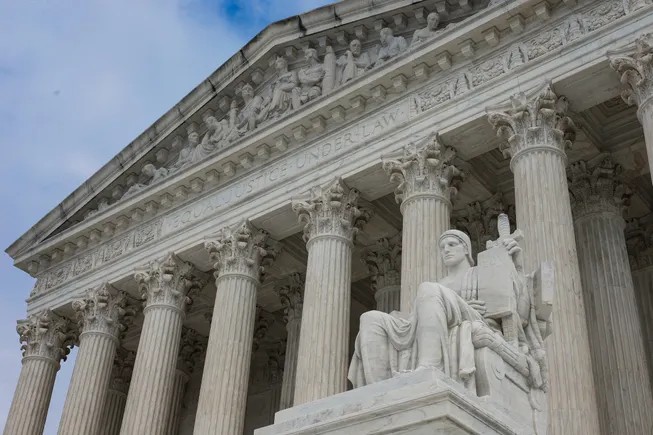
The U.S. Supreme Court’s March 2026 decision invalidating the Trump administration’s $217 billion in Section 232-style tariffs—imposed unilaterally under IEEPA—did far more than reset tariff schedules. It shattered the implicit contract between business and government on regulatory predictability. For over four decades, corporations treated trade statutes like IEEPA, Section 301, and Section 201 as stable, if occasionally politicized, instruments—tools with defined triggers, review cycles, and judicial deference. The Court’s narrow but devastating ruling—that the President lacked statutory authority to impose tariffs as ‘economic sanctions’ absent explicit congressional delegation—has reclassified entire categories of trade policy as legally contingent rather than administratively procedural. This isn’t merely a technicality; it forces companies to model not one, but three distinct legal pathways for future tariffs: congressional authorization (slow, deliberative, subject to lobbying), WTO-consistent safeguards (narrow, evidence-intensive), and newly asserted authorities under the Trade Expansion Act of 1962 (untested, vulnerable to litigation). As Baker McKenzie’s Washington trade practice notes in its April 2026 advisory, ‘The void left by IEEPA’s collapse has not been filled—it has been fragmented.’ Companies can no longer rely on historical precedent or agency guidance; they must now embed legal scenario-planning directly into demand forecasting engines and supplier scorecards.
What makes this constitutional fracture operationally corrosive is its temporal asymmetry: while courts move at judicial pace, supply chains operate in real time. Consider the case of a Tier-1 automotive supplier headquartered in Michigan sourcing lithium cathode active material from South Korea. Under prior IEEPA-based tariffs, the company had built buffer stock, renegotiated Incoterms to shift customs liability to Korean partners, and secured bonded warehouse capacity in Laredo—all calibrated to a known duty rate of 7.5%. Post-ruling, that rate is technically nullified—but so is the certainty that any replacement mechanism will maintain equivalency. Worse, the U.S. Court of International Trade’s concurrent ruling that importers are entitled to refunds creates a perverse incentive: delay liquidation of entries, hold cash in customs trust accounts, and wait for administrative clarification—yet doing so disrupts working capital models, violates GAAP revenue recognition standards for landed cost accounting, and strains relationships with foreign suppliers demanding timely payment. Nearly half (48%) of organizations surveyed by KPMG are actively modeling and deploying tariff mitigation strategies, but those models now require dynamic legal ontologies—mapping statutes to jurisdictional interpretations, court precedents to probable enforcement timelines, and congressional committee agendas to likely legislative outcomes. This is no longer procurement’s domain; it is the convergence point of trade law, treasury operations, and enterprise architecture.
Agility as Architecture: Beyond Multi-Sourcing to Multi-Logic Networks
Historically, supply chain agility meant geographic redundancy: dual-sourcing critical components from Vietnam and Mexico, or maintaining nearshored assembly lines as insurance against Asia-Pacific disruptions. Today, that paradigm is collapsing under its own complexity. KPMG’s data reveals that 41% of firms deploying AI for trade compliance are not using it to replace human judgment—but to compress decision latency from weeks to seconds. This signals a deeper architectural shift: from static network design to dynamic logic networks. A dynamic logic network treats every node—not just factories and ports, but customs brokers, bonded warehouses, freight forwarders, and even foreign tax authorities—as programmable interfaces governed by real-time rule engines. When U.S. Customs and Border Protection updates its Automated Commercial Environment (ACE) rules for de minimis thresholds, or when the Office of the U.S. Trade Representative publishes a new list of excluded items under Section 301, AI systems don’t just flag changes—they auto-reconfigure routing algorithms, recalculate landed cost simulations across 17,000 SKUs, and trigger pre-approved contingency workflows (e.g., diverting air freight to Miami instead of Chicago O’Hare if CBP processing times exceed 48 hours at ORD). This is not automation; it is autonomic response infrastructure. As Tim Walsh, KPMG U.S. Chair and CEO, observed in a keynote at the MIT Center for Transportation & Logistics summit:
“Policy uncertainty is the baseline, and agility is the only way to stay ahead of it. CEOs are keenly aware that their customers are price sensitive right now. Leading companies are not just re-examining their supply chains. They are investing in technology and AI to gain every edge.” — Tim Walsh, KPMG U.S. Chair and CEO
This architectural evolution demands radical interoperability. Legacy ERP systems—SAP S/4HANA, Oracle Cloud SCM—were built for deterministic, batch-processed trade documentation. They cannot natively ingest live tariff classification rulings from the Harmonized Tariff Schedule (HTS) database, correlate them with evolving country-of-origin determinations under USMCA’s regional value content formulas, and reconcile discrepancies with third-party logistics providers’ TMS platforms. Consequently, leading adopters are deploying middleware layers like project44’s Trade Intelligence Hub or E2open’s Global Trade Management suite—not as bolt-on modules, but as central nervous systems. These platforms ingest over 300 structured and unstructured data feeds daily: CBP bulletins, WTO dispute settlement updates, port congestion indices from MarineTraffic, even social media sentiment analysis of labor strikes in Shenzhen export zones. The result? A single source of truth that doesn’t just report risk—but prescribes action. One Fortune 500 medical device manufacturer reduced its average customs entry error rate from 12.7% to 0.9% within six months of deployment, while cutting duty drawback claim processing time from 142 days to 18. Crucially, these gains weren’t achieved by adding headcount; they were enabled by replacing manual HTS code lookups with AI-powered image recognition of component schematics that auto-generates classification recommendations validated against 20 years of CBP ruling databases.
The Margin Squeeze Paradox: Why Agility Investment Is Now a Profit-and-Loss Line Item
In previous cycles of trade volatility, companies absorbed tariff costs as temporary overhead, passing them selectively to customers or absorbing them to protect market share. Today, that calculus has inverted. With inflationary pressures persisting, consumer price sensitivity at multi-decade highs, and private equity ownership dominating mid-market manufacturing, CEOs are treating supply chain agility investments not as cost centers—but as direct margin protectors. KPMG’s survey confirms this: 63% of respondents linking agility initiatives to P&L outcomes reported measurable EBITDA improvement within 12 months—primarily through avoided duty payments, optimized duty drawback claims, and reduced demurrage/detention fees. Consider the financial mechanics: a $50 million annual import portfolio facing a 25% tariff faces $12.5 million in duties. But the true cost includes working capital tied up in customs bonds ($2.1 million), storage fees during classification disputes ($380,000), and opportunity cost of delayed product launches ($7.2 million in lost Q1 revenue). An AI-driven GTM platform that reduces classification errors by 90%, accelerates bond release by 65%, and cuts customs clearance cycle time from 72 to 11 hours delivers ROI not in efficiency metrics—but in hard dollars flowing straight to net income. As Brian Higgins, KPMG’s U.S. & consulting sector leader for industrial manufacturing, emphasized:
“What we’re seeing now is uncertainty reentering the system at exactly the wrong time. Companies are once again leaning harder on price increases to protect margins, pushing capital investments further out, and hesitating to make long‑term commitments on jobs or reshoring. Even where production is coming back, it’s increasingly automated, not labor‑intensive.” — Brian Higgins, KPMG U.S. & Consulting Sector Leader for Industrial Manufacturing
This margin-centric framing explains why agility spending is surging despite macroeconomic headwinds. The KPMG data shows that 48% of firms modeling tariff mitigation strategies allocate budget from gross margin preservation funds—not IT or operations budgets. That structural shift has profound implications for vendor selection: procurement teams now evaluate GTM vendors not on implementation timelines or user interface aesthetics, but on auditable duty savings calculations, CBP audit success rates, and integration depth with treasury management systems for real-time FX and duty exposure hedging. One major aerospace supplier recently mandated that all Tier-1 suppliers demonstrate API-level connectivity to its AI-powered trade orchestration platform—effectively making supply chain agility a contractual requirement for doing business. This cascades risk upward: a supplier’s inability to auto-classify a new composite material under HTS 8803.30 (parts of aircraft) versus 3926.90 (other plastic articles) doesn’t just delay shipments—it triggers contractual penalties for non-compliance with the prime’s landed cost targets. The consequence? Agility is no longer optional; it is the new currency of commercial viability. As one procurement director at a top-10 U.S. retailer bluntly stated in a Gartner peer forum: ‘If your ERP can’t tell me the exact landed cost of a hoodie shipped from Bangladesh today—including anticipated port surcharges, pending anti-dumping duties, and applicable VAT exemptions—I’m not issuing the PO.’
The Human Capital Inflection Point: Reskilling Compliance into Cognitive Orchestration
The most underestimated dimension of the agility imperative is human capital transformation. Deploying AI for trade compliance does not eliminate roles—it radically redefines them. Traditional trade compliance officers spent 65–70% of their time on manual tasks: HTS code verification, certificate-of-origin validation, and spreadsheet-based duty calculation. With AI handling those functions at scale, the role evolves into cognitive orchestration: interpreting algorithmic outputs, challenging model assumptions, and integrating trade intelligence into broader strategic decisions. This requires fluency not just in customs law, but in data science fundamentals—understanding confidence intervals in AI classification recommendations, auditing training data provenance for bias, and translating statistical significance into business impact. KPMG’s internal talent analytics show that firms achieving >20% ROI on agility investments invested 3.2x more in cross-functional upskilling than peers—specifically in ‘trade data literacy’ programs co-developed with MIT’s Data Science Lab and the National Customs Brokers & Forwarders Association of America (NCBFAA). These programs teach compliance staff to query AI models like SQL databases: ‘Show me all HTS classifications where confidence scores dropped below 85% after the March 15 CBP ruling on electric vehicle battery components.’
The organizational ripple effects are profound. At a major semiconductor equipment manufacturer, the trade compliance team shrank by 40% in headcount but expanded its influence into product engineering—requiring engineers to input material composition data during design reviews so AI models could pre-classify subassemblies before prototype builds. Similarly, finance teams now embed trade analysts directly into FP&A cycles, feeding real-time duty exposure forecasts into quarterly earnings guidance. This represents a tectonic shift from siloed functional expertise to integrated operational intelligence. Yet the transition is fraught:
- 72% of surveyed compliance professionals report insufficient training in AI model interpretation
- Only 28% of firms have formal career ladders for ‘trade data scientists’
- Over 60% of procurement leaders cite ‘resistance to algorithmic decision-making’ as their top cultural barrier
Without deliberate reskilling, AI deployments risk becoming expensive black boxes—generating flawless classifications but failing to drive actionable business outcomes. The solution lies in hybrid roles: ‘Trade Intelligence Analysts’ who hold both Certified Customs Specialist (CCS) credentials and AWS Certified Machine Learning certifications, serving as translators between legal, technical, and commercial domains.
Strategic Implications: From Defensive Mitigation to Offensive Opportunity
The ultimate implication of this agility revolution extends far beyond tariff avoidance—it is the foundation for competitive differentiation in global markets. Companies mastering AI-driven trade orchestration are discovering latent advantages: accelerated time-to-market for regulated products, superior pricing precision in cross-border e-commerce, and enhanced sustainability reporting through granular carbon footprint tracing embedded in customs documentation. One consumer electronics firm reduced its average product launch timeline from 142 to 89 days by automating regulatory submissions across 37 countries—leveraging AI to parse EU MDR, FDA 510(k), and China NMPA requirements simultaneously. Another food exporter increased its shelf-life utilization by 22% by dynamically rerouting perishables based on real-time port inspection backlog data and AI-predicted cold-chain compliance failures. These are not incremental efficiencies—they are strategic capabilities that reshape industry boundaries.
Looking ahead, the convergence of trade AI with generative models will unlock next-generation applications: predictive tariff scenario planning using synthetic regulatory texts, autonomous negotiation of customs valuation disputes via large language models trained on 20 years of CBP rulings, and real-time supply chain ‘stress testing’ simulating the financial impact of hypothetical WTO rulings or congressional trade bills. Yet the greatest opportunity lies in standardization. As more firms adopt interoperable GTM platforms, industry consortia like the Digital Container Shipping Association (DCSA) and the Global Standards Organization (GS1) are developing open APIs for tariff data exchange—turning proprietary agility into collective resilience. The message is unequivocal: in an era where trade law is no longer a backdrop but a variable in every operational equation, agility is not a response to disruption—it is the architecture of enduring competitiveness. As KPMG’s data confirms, 41% of companies deploying AI for trade compliance are doing so not to survive uncertainty—but to exploit it.
Source: www.supplychaindive.com
This article was AI-assisted and reviewed by our editorial team.