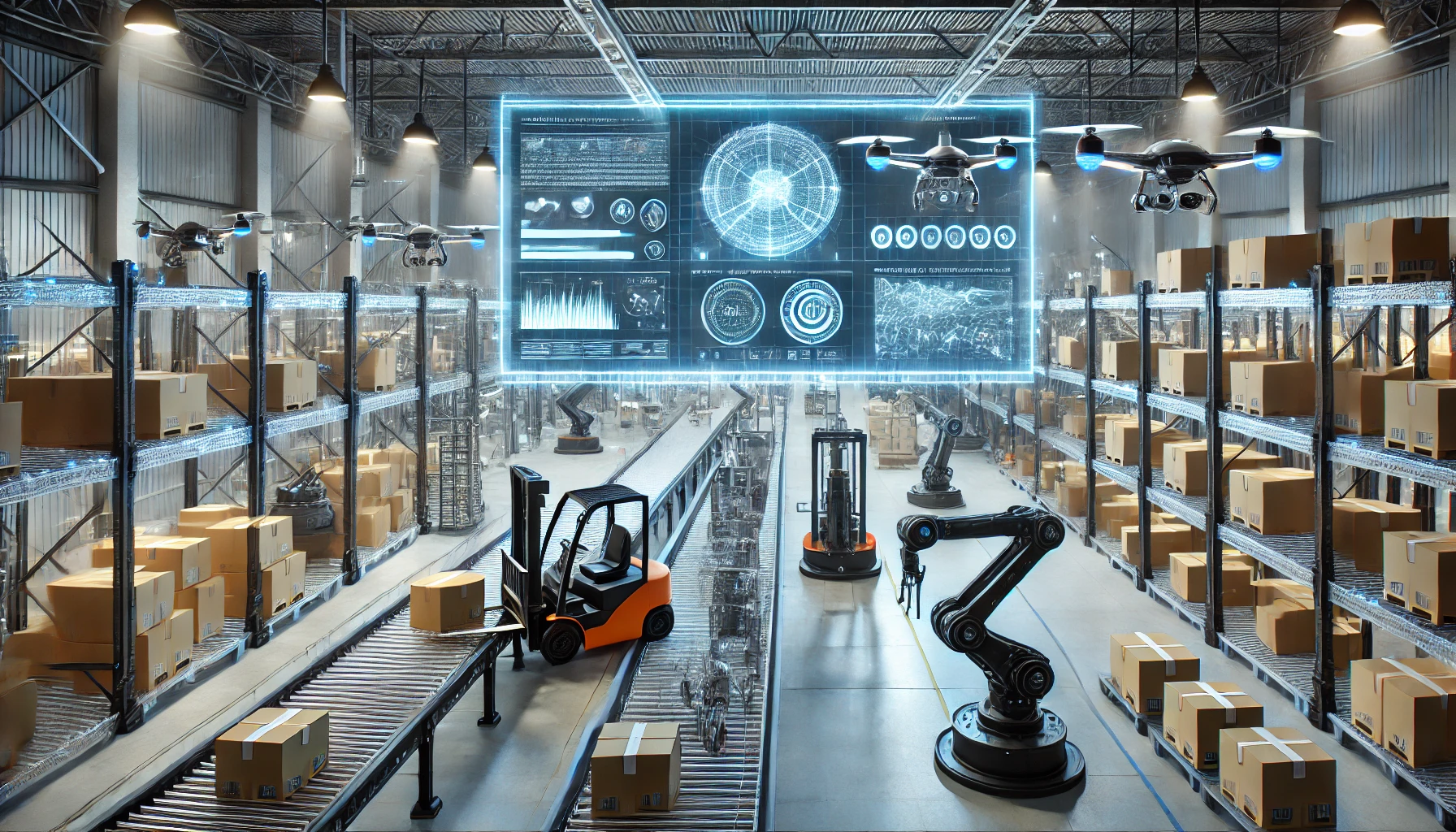
The Warehouse Robotics Market is Projected to Reach $16.58 Billion by 2032, Growing at a CAGR of 12.67%, Driven by Logistics Automation | SNS Insider Research Report
Rising E-commerce and Demand for Rapid Order Fulfillment Drive Investment in Robotic Solutions for Streamlining Picking, Packing, and Sorting Processes
September 30, 2024 09:00 ET | Source: SNS Insider pvt ltd
Pune, September 30, 2024 (GLOBE NEWSWIRE) — Market Size and Overview:
The warehouse robotics market was valued at $5.68 billion in 2023 and is expected to reach $16.58 billion by 2032, with a CAGR of 12.67% during the forecast period from 2024 to 2032.
The warehouse robotics market is rapidly evolving due to the emergence of automation technologies and growing demand for efficiency in logistics and supply chain management. The rise of e-commerce, changes in consumer behavior, and the need to reduce operational costs are driving the adoption of robotic systems for automating various warehouse functions. Key trends fueling this transformation include rising labor costs, labor shortages, and long supply chains, which have sparked global interest in automation. Therefore, businesses are seeking technologies and solutions that can make warehouses more efficient and less dependent on human factors. With soaring labor costs, an increasing number of companies are opting for automation, with the warehouse automation market expected to grow from $23 billion in 2023 to $30 billion by 2026.
Major Market Players Listed in This Research Report Include:
- Amazon Robotics (Kiva Systems, Amazon Prime Air)
- KUKA Robotics (KMP 1500, KUKA omniMove)
- Fetch Robotics (Freight 500, Freight 1500)
- ABB Robotics (YuMi, IRB 6700)
- Ocado Technology (Oconveyor, Smart Platform)
- Clearpath Robotics (OTTO 100, OTTO 750)
- Geek+ (P800, P2000)
- Locus Robotics (LocusBot, LocusFleet)
- Siemens (Siemens SIMATIC, Siemens Logistics)
- Mujin (Mujin Controller, Mujin Manipulator)
- Mobile Industrial Robots (MiR) (MiR100, MiR200)
- Robotiq (Robotiq 2F-85, Robotiq Wrist Camera)
- Seegrid (G2 Autonomous Mobile Robot, Palion AMRs)
- Yaskawa (MOTOMAN-HP, Yaskawa Smart Pendant)
- Vecna Robotics (Vecna Robotics AMRs, Vecna Warehouse Management)
- Cobalt Robotics (Cobalt Security Robot, Cobalt Inventory Management)
- Balyo (Balyo AGV, Balyo Forklift)
- Pinc Solutions (Pinc’s Real-Time Location System, Pinc Inventory Management)
- FANUC (M-20iA, M-710iC)
- 6 River Systems (Chuck, 6 River Systems Cloud)
Scope of the Warehouse Robotics Market Report:
| Report Attributes | Details |
| Market Size in 2023 | $5.68 billion |
| Market Size in 2032 | $16.58 billion |
| CAGR | A CAGR of 12.67% from 2024 to 2032 |
| Key Segments | • By Type (Autonomous Mobile Robots (AMRs), Automated Guided Vehicles (AGVs), Articulated Robots, Cylindrical and SCARA Robots, Collaborative Robots (COBOTS), Others) • By Function (Picking & Placing, Palletizing & Depalletizing, Transportation, Sorting & Packaging) • By Load Capacity ( 200 kg) • By End User (Automotive, Semiconductor & Electronics, Chemicals, E-commerce & Third-party Logistics, Food & Beverage, Healthcare, Metals & Heavy Machinery, Others) |
| Key Drivers | • Driving efficiency and customer satisfaction in the warehouse robotics market through automation and advanced technologies. • Expansion of e-commerce and rapid growth in automation demand are driving the warehouse robotics market. |
“Comprehensive Segmentation Analysis Highlights Emerging Market Opportunities”
- By Type: Automated Guided Vehicles (AGVs) held the largest share of the warehouse robotics market in 2023, accounting for 40% of the market. They are designed to move materials automatically within a facility along pre-set paths guided by magnetic strips, lasers, or visual systems. AGVs are crucial in modern warehouses and distribution centers as they significantly enhance efficiency, reduce labor costs, and minimize human error.
- By Function: The Picking & Placing segment held the highest market share at 45% in 2023. Demand for efficient and accurate inventory management mechanisms is driving employee adoption of these devices. These robots can select the right products, place them correctly, and understand their capabilities for improvement. Using these devices greatly reduces error rates and increases productivity. With increased frequency of online shopping, people now demand faster delivery.
- By Load Capacity: The 20-100 kg segment held a market share of 48% in 2023. These robots are flexible and capable of handling various tasks such as selection, sorting, and item processing. They have appropriate size, capabilities, and costs to perform multiple warehouse activities. Due to their efficiency, Amazon uses robots like the Kiva system to boost productivity in its fulfillment centers.
“Unlocking Regional Opportunities: In-depth Insights and Forecasts”
The Asia Pacific region held the highest market share at 44% in 2023 and dominates the market. Increased industrialization, economic growth, business expansion needs, and demand for advanced technologies have made Asia Pacific a dominant player. China, Japan, and South Korea are leading innovators and implementers in multiple application areas such as electronics, manufacturing, and information technology. The region’s strong industrial base is evident from the presence of major enterprises like LG Innotek in South Korea and Tata Group in India.
Europe is expected to be the fastest-growing region during 2024-2032. Green initiatives and a strong focus on sustainability will drive growth in this region. Europe’s CAGR of 15% from 2024 to 2032 highlights its potential for significant market expansion.
Key Highlights
- Introduction
- Executive Summary
- Research Methodology
- Market Dynamics Impact Analysis
- Statistical Insights and Trend Reports
- 5.1 Warehouse Robotics Operational Efficiency by Region (2023)
- 5.2 Trends in Warehouse Robotics Design (Historical & Future)
- 5.3 Capacity Utilization of Warehouse Robots (2023)
- 5.4 Supply Chain Indicators
- Competitive Landscape
- Warehouse Robotics Market Segmentation by Type
- Warehouse Robotics Market Segmentation by Function
- Warehouse Robotics Market Segmentation by Load Capacity
- Warehouse Robotics Market Segmentation by End User
- Regional Analysis
- Company Profiles
- Use Cases and Best Practices
- Conclusion
Access the Full Report to Understand Growth and Prospects in the Warehouse Robotics Market from 2024-2032
Source Website: GlobeNewswire News Room