Top 10 Supply Chain Trends 2026: AI Automation, Hyper-Localization and Circular Economy Reshape Industry Landscape
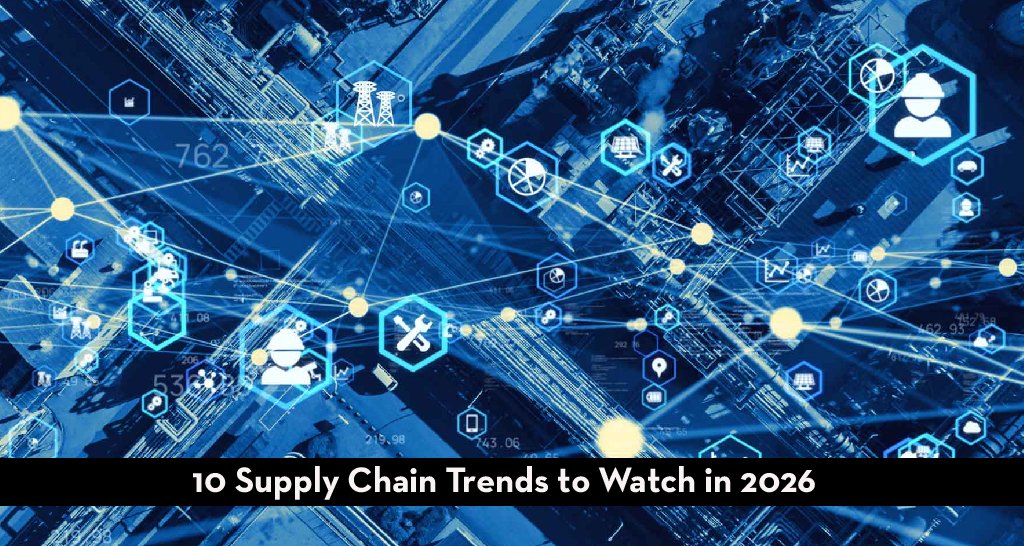
As international markets develop, supply chains are increasingly becoming reliant on data and centered around customer needs. In 2026, companies must maintain flexibility and adopt innovative practices to remain competitive. According to the latest report from PrimeView, here are the top 10 supply chain trends to watch in 2026, trends that are profoundly changing how global supply chains operate and compete.
These trends reflect a paradigm shift the supply chain industry is undergoing: from traditional linear, cost-driven models to digital, agile, and sustainable ecosystems. Companies that can quickly adapt to these trends will gain competitive advantages in a rapidly changing environment, while those clinging to old models face elimination risks. For global supply chain practitioners, understanding and capturing these trends is crucial.
AI and Automation Expansion: Revolution in Predictive Analytics and Smart Routing
Artificial Intelligence (AI) and automation are revolutionizing supply chains through predictive analytics, smart routing, and robotic process automation. By 2025, more businesses are expected to adopt AI to enhance operational efficiency, minimize errors, and increase forecasting precision. AI applications in supply chains have moved from proof-of-concept to scaled deployment, becoming part of core operational capabilities.
Specific applications include:
- Demand forecasting: AI algorithms analyze historical data, market trends, and external factors, improving forecast accuracy by 20-30%
- Smart routing: Real-time optimization of transportation routes considering traffic, weather, and cost factors, reducing transportation costs by 10-15%
- Automated warehousing: Robots and automation systems handle picking, packing, and sorting, improving warehouse efficiency by 40-50%
- Anomaly detection: AI monitors supply chain anomalies in real-time, providing advance warning of potential disruption risks
Resilience and Risk Management: From Reactive Response to Proactive Planning
Following years of upheaval from pandemics to geopolitical conflicts, resilience has become a primary focus. Organizations are set to increase investments in diversified sourcing, regionalization, and scenario planning to reduce risk and maintain continuity. In 2026, supply chain resilience is no longer just an “insurance” measure but a crucial component of corporate core strategy.
Key resilience-building strategies include: diversifying supplier bases to avoid over-reliance on single sources; building regionalized supply chain networks to shorten response times and reduce cross-border risks; investing in scenario planning capabilities to simulate various disruption scenarios and develop response plans; establishing strategic inventory buffers to balance inventory costs with supply security. These strategies require systematic investment and long-term commitment but are necessary in an increasingly uncertain environment.
Sustainability and Circular Supply Chains: From Compliance Requirement to Competitive Advantage
Environmental issues are compelling businesses to embrace more sustainable practices. Circular supply chains, focusing on reuse and recycling, are expected to become more prevalent, while carbon tracking and ESG reporting will become norms. Sustainability has shifted from a “nice-to-have” optional item to an “essential” core requirement, driven by regulation, customers, and investors.
Core principles of circular supply chains include: designing products for recyclability and reusability, reducing waste at the source; establishing reverse logistics networks to effectively recover and reuse products; collaborating with suppliers to reduce raw material consumption and environmental impact; adopting renewable energy and low-carbon transportation methods. Companies that can establish circular supply chain capabilities first will gain multiple advantages in cost savings, brand reputation, and market access.
Digital Twins: Virtual Simulation Optimizes Decision-Making
Digital twin technology generates virtual representations of supply chain processes, enabling real-time simulation and optimization. This allows companies to evaluate various scenarios and enhance decision-making without causing physical disruptions. Digital twins have become the “control tower” of complex supply chain management, providing end-to-end visibility and analytics capabilities.
Digital twin application value includes: virtual testing before implementing new facilities or processes, reducing investment risks; real-time monitoring of supply chain operations, identifying bottlenecks and improvement opportunities; simulating disruption scenarios (such as natural disasters, supplier bankruptcies), assessing impacts and developing response plans; optimizing inventory levels and distribution, balancing service levels and holding costs. As computing power and data availability improve, digital twins are spreading from large enterprises to SMEs.
Hyper-Localization: Shortening Lead Times to Serve Local Markets
To minimize lead times and enhance service to local markets, companies will transition towards hyper-local sourcing and manufacturing. This movement is especially pronounced in food, apparel, and consumer goods sectors. Hyper-localization is not only a response to consumer expectations for fast delivery but also a defensive strategy against global supply chain risks.
Hyper-localization drivers include: consumer expectations for same-day or next-day delivery, driving nearby production; tariffs and trade barriers increasing import costs, making local production more competitive; geopolitical uncertainty prompting companies to reduce cross-border dependence; sustainability requirements to reduce transportation distances and carbon footprints. Hyper-localization requires redesigning supply chain networks and investing in local production capabilities but can significantly improve response speed and customer satisfaction.
Blockchain for Transparency: Ensuring Authenticity and Compliance
Blockchain technology is increasingly being utilized to enhance traceability and trust. It facilitates secure and unchangeable tracking of products, guaranteeing authenticity and adherence to regulations, particularly vital in pharmaceutical and food safety sectors. Blockchain’s immutable characteristics make it an ideal technological foundation for supply chain transparency.
Key blockchain applications in supply chains include: product traceability, recording the complete journey from raw materials to end consumers; compliance verification, automatically verifying whether products meet regulatory requirements; anti-counterfeiting protection, preventing counterfeit products through unique identifiers; smart contracts, automatically executing contract terms and payment conditions. Although blockchain adoption still faces technical and organizational challenges, its value in critical areas has been widely recognized.
Collaborative Logistics: Shared Platforms Reduce Costs and Environmental Impact
Shared logistics platforms and networks are becoming increasingly popular. Organizations will work together more on transportation and warehousing to lower expenses and minimize environmental effects. Collaborative logistics represents a mindset shift from competition to “coopetition,” with companies recognizing that cooperation in certain areas can create win-win situations.
Collaborative logistics forms include: collaborative transportation, where multiple companies share truck or container space, improving load rates; shared warehousing, where multiple companies共用 warehouse facilities, sharing fixed costs; joint procurement, where multiple companies procure together for better prices; logistics platforms, digital markets connecting shippers and carriers, improving matching efficiency. Collaborative logistics challenges lie in coordinating multiple parties’ interests and building trust, but successful implementation can bring significant cost and environmental benefits.
Talent Shortages and Upskilling: Technical Capabilities Become Core Requirements
The need for supply chain experts possessing technological and data competencies is on the rise. Organizations are likely to allocate resources towards training and development initiatives to bridge the skills gap and maintain their workforce. Supply chain careers are transforming from traditional logistics management to data-driven technical professions, requiring new skill sets.
Key skills for future supply chain talent include: data analytics capabilities, able to interpret and leverage supply chain data; technical literacy, familiar with AI, IoT, blockchain and other new technologies; systems thinking, understanding interconnections across supply chain links; change management, leading and driving organizational transformation; sustainability knowledge, understanding ESG requirements and practices. Companies need to rethink talent recruitment and development strategies to attract and retain talent with these skills.
Customer-Centric Supply Chains: Fast Transparent Delivery Shapes Experience
Consumer expectations for rapid and transparent delivery are influencing supply chain strategies. Businesses will prioritize innovations in last-mile delivery and tailored logistics experiences. Supply chains are no longer just back-office operational functions but critical touchpoints directly affecting customer experience and brand perception.
Customer-centric supply chain characteristics include: real-time order tracking, letting customers know order status at any time; flexible delivery options, providing multiple delivery time and location choices; transparent communication, proactively notifying customers of potential delays or issues; personalized service, customizing logistics experiences based on customer preferences; seamless return processes, simplifying return and exchange procedures. These capabilities require technology investment and process restructuring but can significantly improve customer loyalty and repurchase rates.
Implications for Chinese Companies: Capturing Trends to Build Future Competitiveness
In 2026, the supply chain will further evolve into a more digital, agile, and sustainable ecosystem. For Chinese companies, these trends present both challenges and opportunities. First, AI and automation provide Chinese companies with “overtaking on a bend” opportunities; through technology investment, they can compensate for deficiencies in traditional operational capabilities. Second, hyper-localization and regionalization trends require Chinese companies to rethink global supply chain layouts, establishing localized capabilities in key markets. Third, sustainability and ESG compliance have become “tickets” for international market access; Chinese companies need to accelerate green transformation.
Specific action recommendations include: assess existing supply chain capabilities, identify gaps with industry trends; develop digital transformation roadmaps, prioritizing high-return investment areas; build diversified supplier networks to reduce single-source risks; invest in talent development, building future-oriented supply chain teams; proactively collaborate with customers and partners to jointly address industry changes. Chinese companies that can quickly adapt to these trends will gain competitive advantages in a rapidly changing environment.
Source: primeview.co