Explore

  • Trending
  • Latest
  • Tools
  • Browse

Logistics

  • Ocean
  • Air Cargo
  • Road & Rail
  • Warehousing
  • Last Mile

Regions

  • Southeast Asia
  • North America
  • Middle East
  • Europe
  • South Asia
  • Latin America
  • Africa
  • Japan & Korea
SCI.AI
  • Supply Chain
    • Strategy & Planning
    • Logistics & Transport
    • Manufacturing
    • Inventory & Fulfillment
  • Procurement
    • Strategic Sourcing
    • Supplier Management
    • Supply Chain Finance
  • Technology
    • AI & Automation
    • Robotics
    • Digital Platforms
  • Risk & Resilience
  • Sustainability
  • Research
  • English
    • Chinese
    • English
No Result
View All Result
  • Login
  • Register
SCI.AI
No Result
View All Result
Home Supply Chain

U.S. Supreme Court Strikes Down Trump’s Unilateral Tariff Power — Global Supply Chains Pivot to a Fragile ‘15% Baseline’ Amid Legal Fallout and Strategic Realignment

2026/02/28
in Supply Chain
0 0

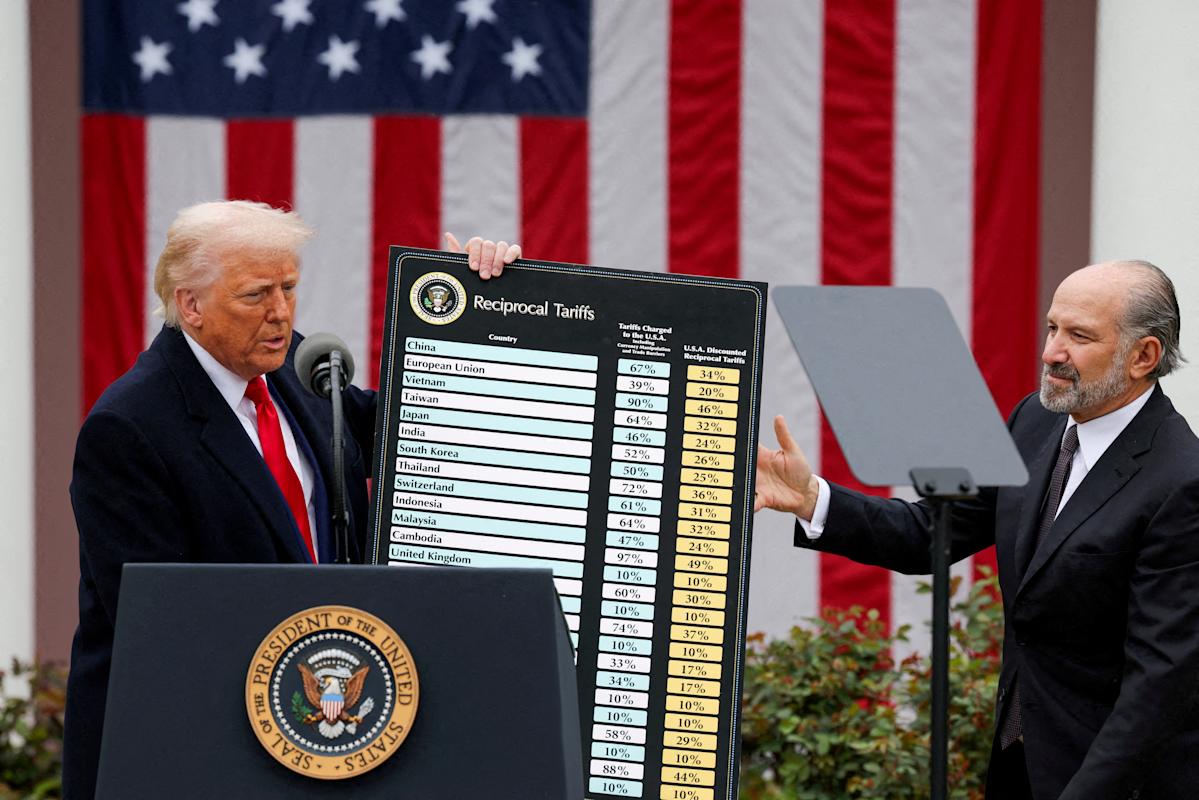
In a landmark ruling with far-reaching implications for global trade governance and supply chain resilience, the U.S. Supreme Court has decisively curtailed presidential authority over import tariffs—upending months of unilateral trade policy under the Trump administration. On February 22, 2026, the Court ruled 6–3 that President Trump’s imposition of additional import duties under executive fiat exceeded constitutional and statutory limits. The decision invalidated the legal foundation of over $170 billion in tariff revenue collected since early 2025 and triggered an immediate recalibration across manufacturing hubs, logistics corridors, and procurement strategies worldwide. For supply chain professionals, this is not merely a legal footnote—it is a structural reset: one that replaces ad hoc protectionism with a volatile, time-bound, and politically contested ‘15% baseline tariff regime’ whose durability remains deeply uncertain.

The Constitutional Breakpoint: Why the Court Said ‘No’

The Court’s majority opinion, authored by Chief Justice Roberts, centered on the separation of powers and statutory interpretation of the Trade Expansion Act of 1962 and the International Emergency Economic Powers Act (IEEPA). Crucially, the justices held that while Congress delegated limited tariff-setting authority to the president under Section 232 (national security) and Section 301 (unfair trade practices), it did not authorize broad, economy-wide duties imposed without congressional authorization or judicial review. The ruling explicitly rejected the administration’s claim that ‘economic insecurity’ constituted a cognizable national security threat under Section 232—a precedent that now constrains future administrations from weaponizing national security rhetoric to justify sweeping industrial policy.

This jurisprudential boundary has profound operational consequences. Logistics managers at multinational enterprises must now reassess tariff classification workflows, customs valuation protocols, and bonded warehouse utilization—not just for compliance, but for strategic agility. With the Court declining to rule on refund eligibility (leaving that to lower courts), over 1,500 companies have already filed claims in the U.S. Court of International Trade. If successful, total refunds could reach $170 billion, representing more than half of all tariff revenue collected under the contested orders. That scale of potential liability forces CFOs and treasury teams to model cash flow volatility across fiscal quarters—and re-evaluate duty-drawback program participation, foreign-trade zone (FTZ) deferrals, and advance rulings from U.S. Customs and Border Protection (CBP).

The 15% Baseline: A Fragile New Equilibrium

In response, the Trump administration invoked Section 122 of the Trade Act of 1974, authorizing a temporary, blanket 15% ad valorem tariff on all imports. But unlike prior measures, Section 122 imposes strict temporal limits: the levy expires after 150 days, and any extension requires explicit congressional approval—a near-impossibility given current partisan gridlock. This creates a uniquely unstable operating environment for global supply chains:

🔒

Sign up free to read the full article

Create a free account to unlock full access to all articles.

Sign Up Free

Already have an account? Sign in

Related Posts

Last Mile

Silent Revolution on the Pavement: How Starship’s Robot Deliveries in Sunderland Signal a Structural Shift in Global Supply Chain Architecture

February 28, 2026
0
Supply Chain

Thai Airways’ Lithium Power Bank Ban Triggers Supply Chain Ripple: Global Air Cargo Regulations Tighten, Southeast Asian E-Commerce Logistics Costs Surge 12.3% Amid IATA DGR 65th Edition Enforcement

February 28, 2026
0
Supply Chain

Critical Minerals Cold War Escalates: China’s Export Controls on Japanese Defense Firms Trigger Supply Chain Realignment Across Asia-Pacific

February 28, 2026
0
Supply Chain

China’s Dual-List Export Controls on 40 Japanese Firms Signal Strategic Supply Chain Decoupling: Implications for Global Defense, Semiconductor, and Critical Materials Flows

February 28, 2026
0
Supply Chain

15% Global Tariff Shockwave: How Trump’s Emergency Trade Pivot Is Forcing Supply Chain Dual-Track Restructuring

February 28, 2026
0
Supply Chain

20 Million Patients Stranded at the Last Mile: How Shanghai’s Rare Disease Special Fund Could Reshape Pharmaceutical Supply Chain Resilience

February 28, 2026
0

Leave a Reply Cancel reply

Your email address will not be published. Required fields are marked *

Recommended

生成式人工智能推动货运经纪转型 | 运输动态

Generative AI Drives Freight Brokerage Transformation | Transportation Trends

8 Views
February 16, 2026
Purple重新设计了其供应商和物流网络。原因如下。

Purple Redesigns Its Supplier and Logistics Network: Here’s Why

5 Views
February 16, 2026

From Idealism to Imperative: How ESG Evolved from Youth-Led Moral Movement to Supply Chain Risk Management Core — New 2025 Equilibrium Reveals Climate Resilience, Social Retreat, and Governance as Baseline

0 Views
February 28, 2026
P&SC 直播问答:百胜中国首席供应链官黄灿

P&SC Live Q&A: Chief Supply Chain Officer of Yum China, Huang Can

1 Views
February 16, 2026
Show More

SCI.AI

Global Supply Chain Intelligence. Delivering real-time news, analysis, and insights for supply chain professionals worldwide.

Categories

  • Supply Chain Management
  • Procurement
  • Technology


  • Risk & Resilience
  • Sustainability
  • Research

© 2025 SCI.AI. All rights reserved.

Powered by SCI.AI Intelligence Platform

Welcome Back!

Sign In with Facebook
Sign In with Google
Sign In with Linked In
OR

Login to your account below

Forgotten Password? Sign Up

Create New Account!

Sign Up with Facebook
Sign Up with Google
Sign Up with Linked In
OR

Fill the forms below to register

All fields are required. Log In

Retrieve your password

Please enter your username or email address to reset your password.

Log In

Add New Playlist

No Result
View All Result
  • Supply Chain
    • Strategy & Planning
    • Logistics & Transport
    • Manufacturing
    • Inventory & Fulfillment
  • Procurement
    • Strategic Sourcing
    • Supplier Management
    • Supply Chain Finance
  • Technology
    • AI & Automation
    • Robotics
    • Digital Platforms
  • Risk & Resilience
  • Sustainability
  • Research
  • English
    • Chinese
    • English
  • Login
  • Sign Up

© 2025 SCI.AI