Earnings Results
FedEx Cuts Full-Year Forecast, Stock Dips as Clients Seek to Cut Shipping Costs
CEO Says “Yesterday’s Rate Cut by the Fed Signals a Weak Current Environment”
By Bill Peters
Last Updated: September 19, 2024 at 8:02 PM ET
Originally Published: September 19, 2024 at 4:41 PM ET
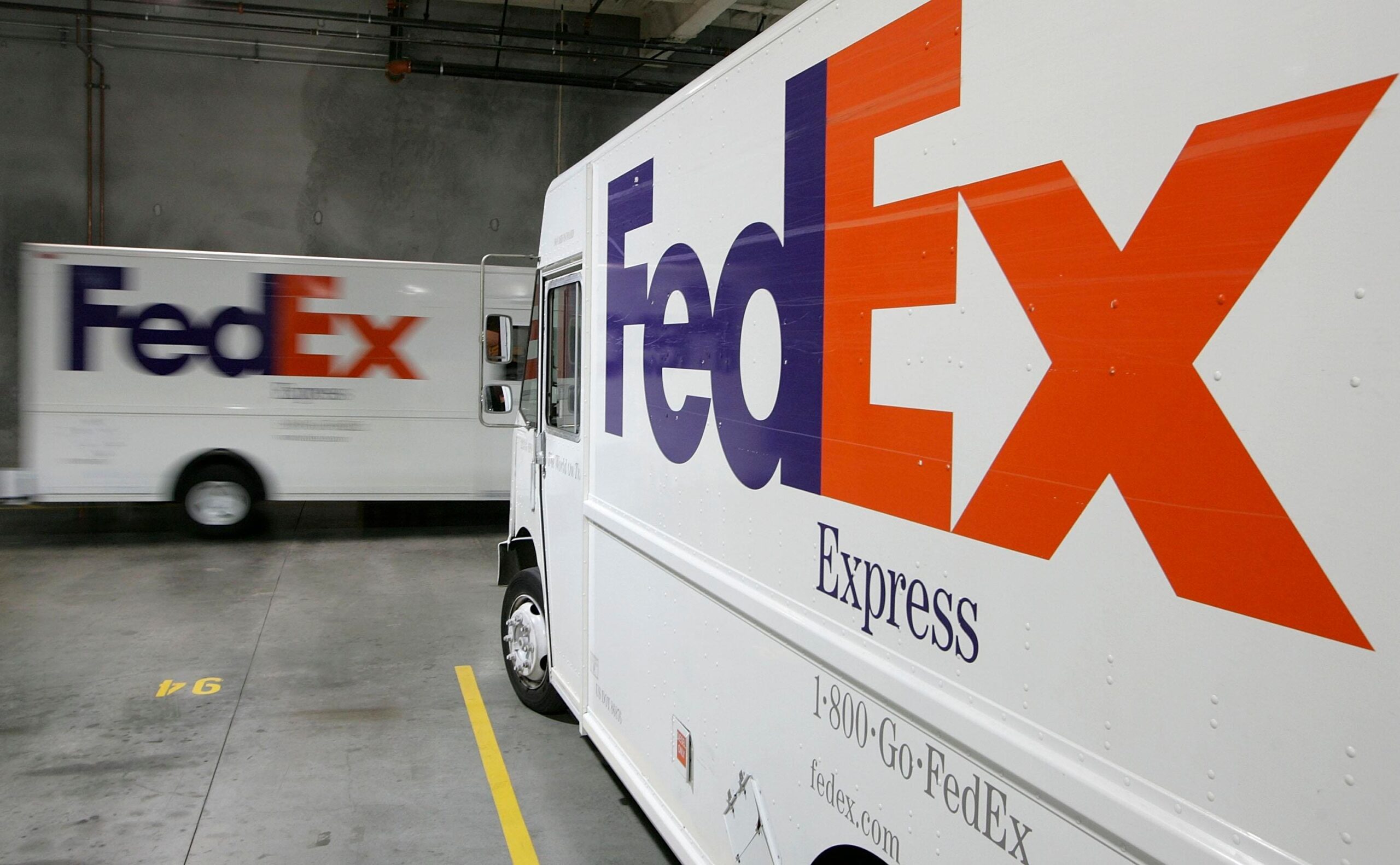
On Thursday, FedEx Corp.’s stock fell sharply in after-hours trading as the parcel delivery giant lowered its full-year forecast due to global businesses remaining cautious about the economy, citing “lower-than-expected” shipping demand.
FedEx reported earnings for its fiscal first quarter just days before retailers, customers, and those delivering items to their doorsteps prepare for the holiday shopping season. This came a day after the Federal Reserve aggressively cut interest rates in an effort to stimulate borrowing and spending.
However, even though price increases are not as intense as they were two years ago, they remain high, making consumers more cautious about purchasing and shipping.
“Yesterday’s rate cut by the Fed signals a weak current environment,” FedEx CEO Raj Subramaniam said during the company’s earnings call.
“We do not expect any significant rebound in industrial conditions for the remainder of this year,” he continued. “We are cautiously optimistic about some improvement in industrial production in the second half. But based on what we see, our growth expectations remain quite low.”
Subramaniam noted on Thursday that more customers were opting for the company’s cheaper services and moving away from its priority services following FedEx’s announcement last week of a 5.9% price increase starting next January. He added that the company is now “focused on what we can control.”
FedEx stock fell by 11.1% in after-hours trading. The stock had risen 14.7% over the past year as of Thursday’s close.
The company said it expects sales for fiscal year 2025 to grow at a “low single-digit percentage,” ending in May, slightly more pessimistic than its previous forecast of “low-to-mid-single digit” growth.
FedEx also said it now expects adjusted earnings per share for the full year between $20 and $21, down from the prior outlook of $20 to $22 per share.
Due to weak shipping demand driven by rising costs of two annual necessities, FedEx has planned to cut billions in costs over the next few years through layoffs and restructuring or scaling back operations. However, some analysts question whether the easiest cuts are already off the table.
FedEx noted on Thursday that higher operating costs weighed down its first-quarter performance. Nevertheless, despite calling it a “challenging quarter,” executives remained optimistic.
“Our adjusted outlook reflects our continued confidence in executing the DRIVE plan and the impact of recent pricing actions we expect to help offset below-expected demand trends,” said FedEx CFO John Dietrich in a statement. DRIVE stands for the company’s cost-cutting initiative.
FedEx reported net income of $790 million, or $3.21 per share, for its fiscal first quarter, down from $1.08 billion, or $4.23 per share, a year earlier. After adjusting for “business optimization costs,” FedEx earned $3.60 per share during the period. Revenue fell to $21.6 billion.
Analysts surveyed by FactSet had expected adjusted earnings of $4.75 per share and revenue of $21.87 billion.
In June, FedEx said it expects demand for its future fiscal year to improve somewhat. However, the company also stated that its [freight business is under review]; this segment generated $9 billion in revenue last fiscal year, handling small shipments from multiple businesses. Executives said on Thursday that the review process is expected to be completed by the end of the year.
The U.S. Postal Service, a key air cargo customer, will also cease its contract with FedEx on September 29. On Thursday, FedEx said it expects the contract termination to bring about $500 million in “headwinds.”
During the earnings call, Dietrich noted that overall shipment volumes were strong for the quarter—but added that ending the USPS contract will give FedEx more flexibility in developing its delivery network.
“But again, we’re talking about a massive network,” he pointed out. “It’s not easy to pivot quickly.”
Source: MarketWatch