Can the Global Supply Chain Be Repaired?
The pandemic exposed deep-seated issues in global procurement and delivery of goods and services. SIEPR’s Matthew Jackson explains what went wrong and what needs to be done now.
September 12, 2024
| Krysten Crawford
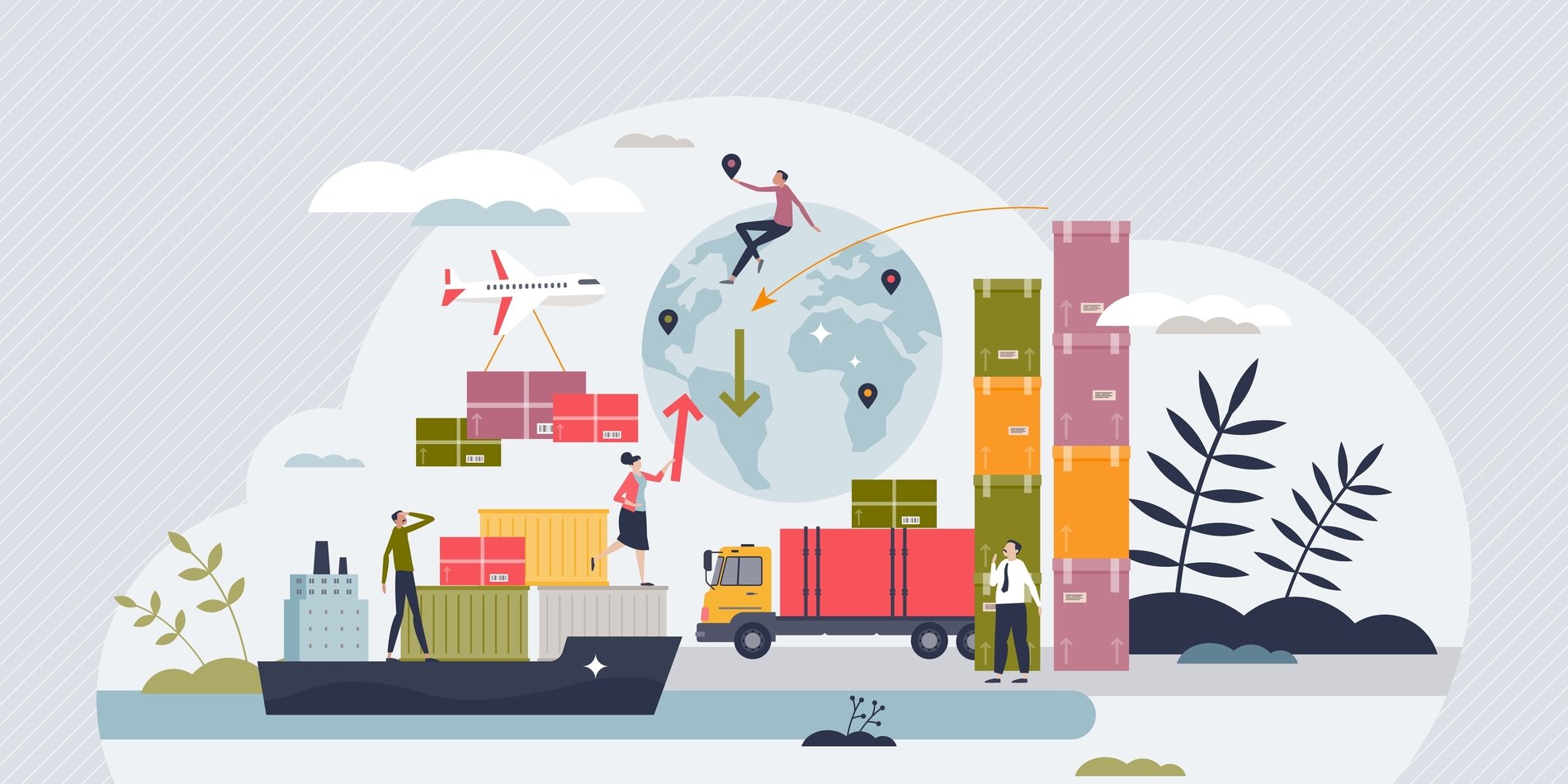
Airplanes, trains, and automobiles: supply chain disruptions are the new reality.
First, toilet paper and computer chips vanished; now it’s olive oil and aircraft seats. Four years into the COVID-19 outbreak, shortages of products and services have become increasingly frequent, not just due to a global health crisis but also conflicts, trade sanctions, software failures, and natural disasters. As a result, companies and policymakers worldwide must reconsider the sourcing and delivery methods for critical materials.
This is no easy task. As Matthew Jackson, senior fellow at the Stanford Institute for Economic Policy Research (SIEPR), explains, the full picture of global supply chains has only just begun to emerge, including potential costly bottlenecks. As a William D. Eberle Professor of Economics in the School of Humanities and Sciences at Stanford University, Jackson discusses why supply chains are so difficult to repair, what measures are currently being taken to strengthen them, and how his recent research is helping businesses and policymakers get closer to solutions.
When toilet paper disappeared from store shelves in March 2020, consumers first became aware of supply chain issues. Were companies also caught off guard?
We’ve seen—and continue to see—the scale of product and service supply disruptions that most contemporary individuals have never experienced, nor has the world since World War II. Companies like Starbucks have long been dealing with supply chain risks because coffee beans grow in countries with significant volatility. However, other companies were not prepared. For example, when the 2011 tsunami destroyed several factories producing auto parts, supply chain risks were not on Japanese automakers’ radar. It took Toyota, Honda, Nissan, and others more than a year to fully recover.
If supply chain disruptions are our new reality, why is it so difficult to resolve them?
Supply chains have become geographically more diverse and complex than ever before. They can involve dozens or even hundreds of companies. Take advanced circuit boards as an example; the components required for these boards cross several international borders before assembly in Taiwan.
The information about the breadth and depth of supply chains is only just becoming available, making it difficult for companies to identify all risks. If I am a car manufacturer looking to diversify my airbag suppliers, simply contracting with three different airbag manufacturers may not be enough. What if these three companies all purchase their materials from the same supplier? Understanding the origins of all product inputs is likely the most critical step in managing supply networks.
How does your research—conducted with Matthew Elliott at Cambridge University—help bridge this information gap?
The study has explored long-term impacts of disruptions but not short-term ones, which can contrast significantly. For instance, if I run a company selling products priced in the hundreds that use inexpensive computer chips found in most electronics and several major chip factories are closed due to a crisis, the long-term impact might mean new factories producing these chips at slightly higher costs, adding just a few cents to my overall cost and product price.
However, in the short term, if I cannot obtain these chips, I simply can’t manufacture my products. This is not just an issue of a few extra cents but a completely different and costly problem that affects not only my products but all those dependent on these disrupted chips.
Matt Elliott and I have developed a simple model to better understand the economic costs of short-term disruptions. You can use this model to trace the entire supply chain, for example, seeing that 10% of cars use a certain chip with disruption risks, and 5% of refrigerators also use the same chip, adding all these up. This could have significant impacts, which we estimate are often much larger than long-term effects in many cases. It is useful for policymakers and businesses trying to strengthen supply chains to know this.
Our model also helps identify potential bottlenecks in supply chains. This is important because more reliable supply chains have their value. If a company wants to source from five suppliers instead of one, it will cost them more, leading to higher product prices. Companies must determine if the price increase benefits them. Figuring out whether they can recover additional costs in the market is tricky, and our model helps them better understand these and other trade-offs.
What are companies doing to make their supply chains more resilient?
Companies are stockpiling inventories of critical inputs, a significant shift from the long-standing “just-in-time” strategy that made their supply chains leaner and more efficient but also increased their vulnerabilities. They are considering establishing parallel supply chains and using different technologies to produce the same goods. Artificial intelligence is playing a crucial role in handling vast amounts of data on global supply chains so companies can better identify and address their vulnerabilities.
Another increasingly popular option is supply chain insurance. If I am an automaker concerned about my steering wheel supplier, I can purchase insurance that compensates me if the supplier’s factory catches fire or suffers another disaster, preventing me from obtaining the necessary steering wheels. However, the market for supply chain insurance remains inefficient and underdeveloped, with efforts underway to design and price policies more effectively.
What are policymakers doing to prevent shortages?
Companies may not care about how their disruptions spread through the supply chain and result in losses far beyond their own profits. Therefore, we see governments reacting in various ways—not only to ensure adequate supplies but also for national security reasons within a geopolitical context. For example, the U.S. is subsidizing semiconductor chip production and plans to collaborate with more countries to establish facilities for assembling these chips.
In the EU, new legislation holds manufacturers accountable if their suppliers violate human rights or environmental laws. So, if you are Nike and purchase sole materials from a company that sources goods from an unknown supplier using forced labor, your Nike shoes could be banned under new EU law or face sanctions. This also encourages companies to better understand their supply chains, highlighting the need for greater insight into global suppliers and how they interconnect.
Globalization and partial outsourcing have made many companies more efficient and enabled them to provide increasingly complex and advanced products to us. However, this has also made them more vulnerable to disruptions. These are the trade-offs we face when managing supply chains better.
Why It Matters
Problems arise when we—individuals, businesses, and economies—don’t get our goods. A new modeling tool developed by SIEPR’s Matthew Jackson can help policymakers and businesses determine how to make global supply chains less risky and more resilient.
Source: Stanford Institute for Economic Policy Research (SIEPR)