According to en.vietnamplus.vn, Vietnam’s share of global trade in AI-related equipment rose from 1.2% in 2015 to 12.4% in 2025 — one of the fastest growth rates recorded by any single economy worldwide over the past decade.
Global buyers converge for VIS 2026
The 2026 Vietnam International Sourcing Expo (VIS 2026) will host 400–500 international buyers from the US, EU, China, Japan, Mexico, and other markets. Confirmed participants include Walmart, IKEA, Central Retail, and ESFLO Mkting. The event — scheduled for late August or early September 2026 — serves not only as a trade exhibition but also as a strategic platform to affirm Vietnam’s position amid ongoing global supply chain restructuring.
The return of major importers such as Walmart, Central Retail, and IKEA constitutes a practical test of Vietnamese manufacturers’ ability to meet tightening requirements on product traceability, sustainability, recyclability, and environmentally friendly packaging. For the fourth consecutive year, Walmart, the largest retailer in the US, will seek suppliers across six categories: clothing and accessories, footwear, textiles and accessories, consumer electronics, furniture, and food and consumer goods.
Walmart’s deepening footprint in Vietnam
Walmart has sourced billions of US dollars worth of Vietnamese goods annually since establishing its representative office in Vietnam in 2013. That office supports sourcing and supplier development for Walmart’s global distribution network of 10,900 stores and clubs across 19 countries. According to the Department of Foreign Market Development under the Ministry of Industry and Trade (MoIT), becoming a Walmart supplier effectively grants Vietnamese businesses a powerful “passport” to enter any demanding market worldwide.
South Korea — which imports more than $30 billion worth of goods from Vietnam each year — will also send several major buyers to VIS 2026. Among them, HiteJinro aims to source Vietnamese processed food products for distribution through its global network and is preparing to expand production in Vietnam in the near term.
Rising FDI and manufacturing dominance
Foreign direct investment (FDI) inflows reflect Vietnam’s growing role as a strategic supply hub. Registered FDI reached $34.65 billion as of June 30, 2026 — up 61% year-on-year. Disbursed FDI in the first half of 2026 totaled $13.03 billion, an 11.2% increase from the same period last year and the highest first-half figure in the past five years.
The processing and manufacturing industry accounted for $10.76 billion, or 82.6% of total disbursed FDI. As a result, most of Vietnam’s top export-earning product groups now originate from this sector. Electronics alone is projected to generate more than $200 billion in export revenue by the end of 2026.
From low-cost hub to AI hardware ‘golden link’
Tim Evans, CEO of HSBC Vietnam, described Vietnam’s evolution as an “impressive leap” — from a country once known primarily for low-cost manufacturing to a “golden link” in the global AI hardware supply chain. Citing HSBC Global Research data, he noted the surge in Vietnam’s AI-related equipment trade share — from 1.2% in 2015 to 12.4% in 2025.
This shift aligns with broader structural changes. International investors increasingly view Vietnam not merely as a low-cost destination but as a strategic base anchored by stable policy, deeper supply chain integration, compliance with international standards, and potential as a regional manufacturing and trade connectivity hub. Vietnamese exporters are also expanding beyond traditional consumer goods into software, digital products, and high-tech services — strengthening their role across multiple tiers of global value chains.
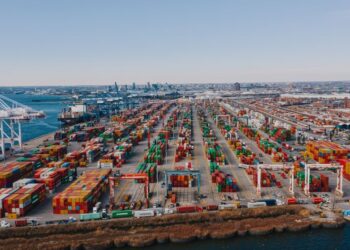
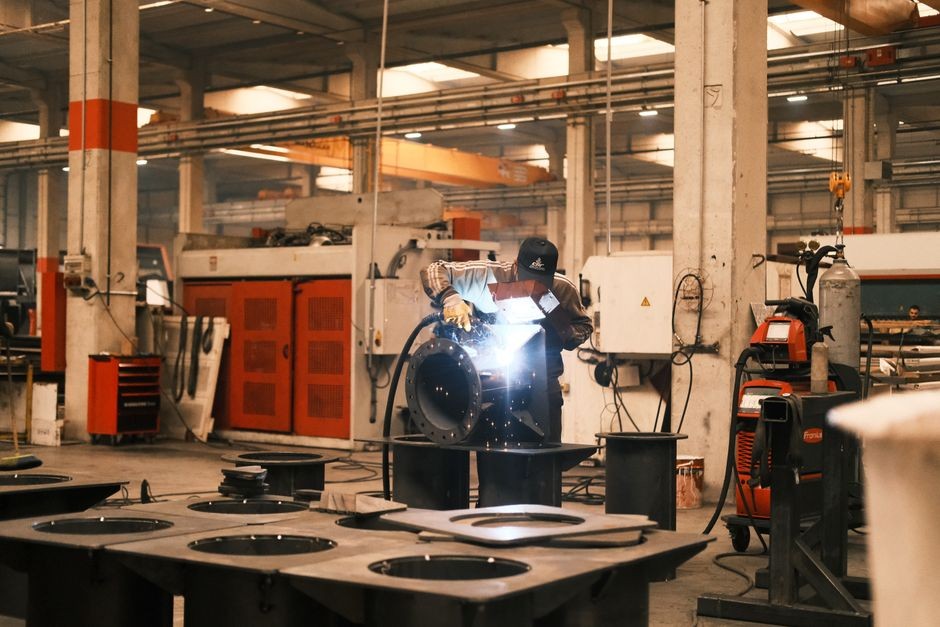
At the Trung Nam Ca Na International Port in Khanh Hoa province, infrastructure investments support regional goods flow. Meanwhile, laborers at Nam Binh Footwear Company in Dong Nai city exemplify the domestic industrial capacity scaling to meet global demand. The Department of Foreign Market Development emphasized that engagement with global retailers helps Vietnamese firms restructure operations, upgrade products, and improve competitiveness — especially as ESG compliance, traceability, and green packaging become non-negotiable criteria.
Source: en.vietnamplus.vn
Compiled from international media by the SCI.AI editorial team.