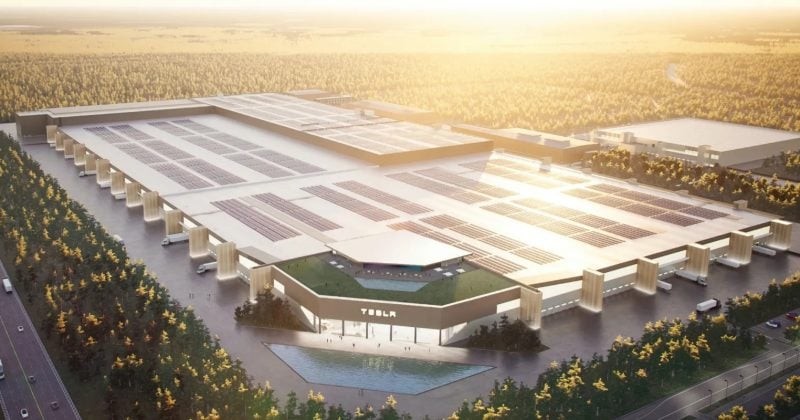
According to cryptobriefing.com, Tesla is accelerating production at its Gigafactory Berlin-Brandenburg in Grünheide, targeting 7,500 Model Y units per week by October 2026 — a 20% increase from its 6,200 vehicles per week output level in July 2026.
Production scale-up and capacity utilization
The Grünheide facility has historically operated below its installed annual capacity of over 375,000 Model Y units. Tesla’s latest expansion signals a strategic shift toward full-scale regional manufacturing. The automaker’s German subsidiary released its 2025 annual report in mid-July 2026, framing the production ramp as a direct response to improving demand and profitability metrics.
The company is also advancing vertical integration at the site, investing in on-site battery cell production. According to the source, Tesla plans to scale annual battery capacity at Grünheide to between 8 GWh and 18 GWh.
Hiring surge and workforce expansion
To support the accelerated output schedule, Tesla launched a multi-phase hiring initiative. It added approximately 1,000 employees in April 2026, followed by another 1,000 hires in June 2026. In total, the expansion has generated roughly 3,500 new positions, spanning vehicle assembly, quality control, logistics coordination, and battery manufacturing roles.
This workforce growth reflects Tesla’s commitment to transforming Grünheide from a national production node into a pan-European operational hub — not merely a factory serving Germany, but a central pillar of its continental supply chain architecture.
Strategic export footprint
Tesla plans to supply more than 30 markets directly from the Berlin factory. This includes countries across the European Union, the United Kingdom, Switzerland, Norway, Iceland, Turkey, and select Eastern European and Balkan nations — positioning Grünheide as Tesla’s primary export hub for the EMEA region.
The move intensifies competitive pressure on legacy European automakers such as Volkswagen and Stellantis, both of which rely heavily on localized production networks and dealer-based distribution. For supply chain professionals, this shift implies tighter lead-time expectations, increased cross-border customs coordination, and greater reliance on just-in-time inbound logistics for battery components and high-precision electronics.
Risk factors and execution challenges
Despite the aggressive targets, Tesla’s historical performance at Grünheide shows persistent gaps between planned and actual output. The source states that some longer-term expansion plans at the site have faced temporary freezes depending on market conditions — including fluctuations in EV demand, raw material pricing volatility, and regulatory approvals for additional land use and environmental permits.
Logistics practitioners note that scaling to 7,500 units weekly requires doubling outbound rail capacity and expanding truck-loading bays by at least 40%, while maintaining compliance with EU Type Approval requirements for each exported variant. No timeline or investment figure for those infrastructure upgrades was disclosed in the source material.
Source: cryptobriefing.com
Compiled from international media by the SCI.AI editorial team.