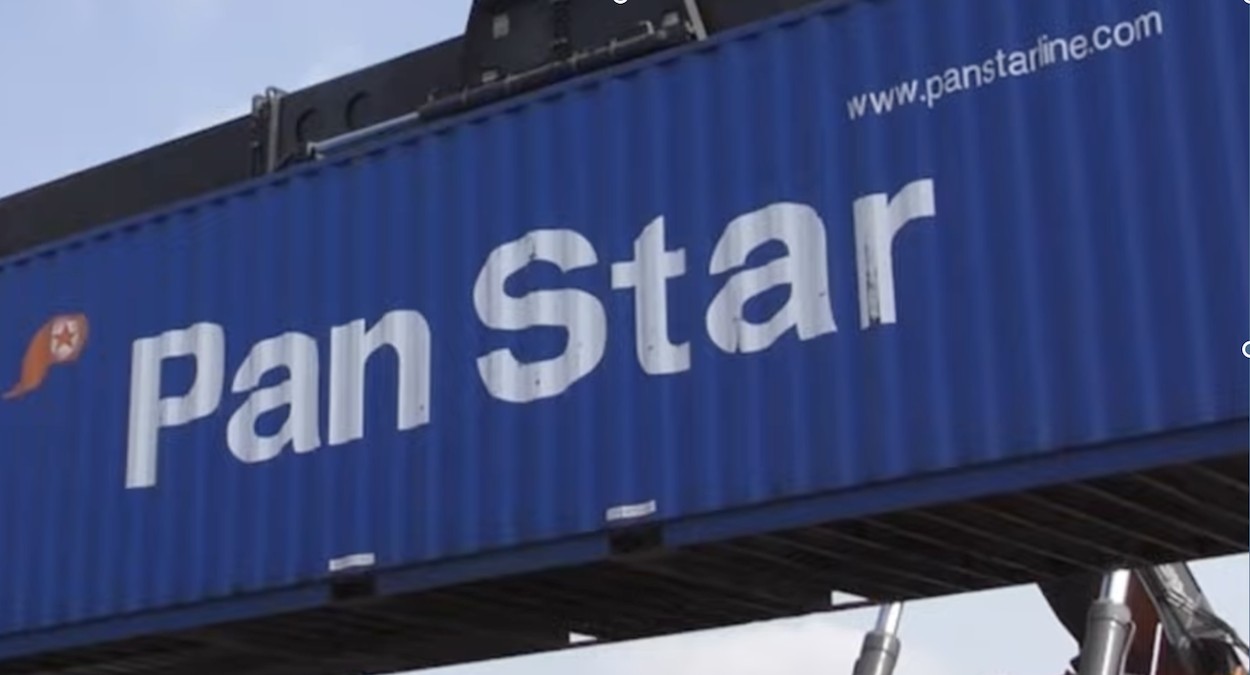
A South Korean container ship has completed the country's first commercial round-trip to Europe through the Arctic, demonstrating a potentially faster alternative to the Suez Canal while leaving unresolved questions about costs, reliability and geopolitical risk. The PanStar Acro returned to Busan on Oct. 11, completing a 50-day voyage that began Aug. 22. It sailed along Russia's Arctic coast to Felixstowe in the United Kingdom, then called at Rotterdam and Gdansk before returning through the northern passage, Reuters reported. The government-backed trial carried billed export cargo. South Korean officials intend to use the operational data to assess whether the route can support regular commercial services, which they hope to launch by 2030.
According to www.freightwaves.com, a South Korean container ship has completed the country’s first commercial round-trip to Europe through the Arctic, demonstrating a potentially faster alternative to the Suez Canal while leaving unresolved questions about costs, reliability and geopolitical risk.
The PanStar Acro returned to Busan on Oct. 11, completing a 50-day voyage that began Aug. 22. It sailed along Russia’s Arctic coast to Felixstowe in the United Kingdom, then called at Rotterdam and Gdansk before returning through the northern passage, Reuters reported. The government-backed trial carried billed export cargo.
South Korean officials intend to use the operational data to assess whether the route can support regular commercial services, which they hope to launch by 2030.
Shorter passage offers strategic potential
The PanStar Acro reached Felixstowe in about 20 days, according to South Korea’s Ministry of Oceans and Fisheries, as reported by The Korea Herald. President Lee Jae Myung said the voyage shortened the one-way sailing time by 10 days compared with the conventional Suez Canal route.
The Northern Sea Route runs along Russia’s northern coast, offering a shorter connection between Northeast Asia and Europe. For South Korea, the potential benefits extend beyond faster deliveries. Officials see the corridor as a way to diversify export-import logistics networks and strengthen Busan’s position as an international maritime hub.
The Oceans and Fisheries Ministry plans to analyze the voyage’s results before preparing further trials and commercial operations. It also sees opportunities for related shipping, shipbuilding, port and logistics businesses as part of a longer-term Arctic development strategy.
Capacity ran well below plan
The ship sailed with just 737 loaded TEUs of a planned 1,300-TEU cargo, according to the report. The gap between planned and actual load underscores how far the trial sits from the volumes needed to justify regular service.
Other carriers have tested similar ground. In September–October 2025, the container ship Istanbul Bridge conducted a China-Europe Arctic Express trial, departing Ningbo-Zhoushan on Sept. 23 and reaching Felixstowe in about 20 days. Maersk also conducted a 2018 Arctic container-ship trial.
Costs, ice and geopolitics remain unresolved
Analysts say that commercial viability will depend on schedule reliability, the cost of slowing or diverting to avoid ice, special insurance premiums and additional fuel consumption. Those factors could offset some of the advantages of a shorter sailing distance.
Seasonality is another limitation. The Northern Sea Route is generally more accessible during warmer months as sea ice retreats, but conditions remain unpredictable and some ships require icebreaker assistance. The Arctic passage also introduces geopolitical complications.
Because it follows Russia’s coastline, South Korea consulted Moscow about the voyage, including potential assistance if the vessel encountered ice-related problems. Reuters reported that expanded cooperation could create friction with Western allies seeking to isolate Russia over its war in Ukraine.
Environmental advocates have also warned that greater commercial traffic could damage fragile Arctic ecosystems and accelerate ice loss. The initiative points up the tension between exploiting a route made more accessible by warming temperatures and protecting the region.
Source: FreightWaves
Compiled from international media by the SCI.AI editorial team.