Stricter U.S. enforcement of cabotage rules, B-1 visa requirements, English-language proficiency standards, and driver qualifications is raising concerns about disruptions to U.S.–Mexico freight. While Werner Enterprises’ Derek Leathers supports crackdowns on illegal domestic hauls, ATA’s Bob Costello warns inconsistent application risks delays for compliant carriers. North American cross-border trade rebounded in 2026 after a 2025 dip. CBP’s Electronic Export Manifest pilot ends Oct. 23. Meanwhile, Meiborg Companies and Morales Capital Group launched M2 Global Logistics, anchored by an 830,000-square-foot Houston campus supporting 550 trucks and 4 million sq ft of warehousing.
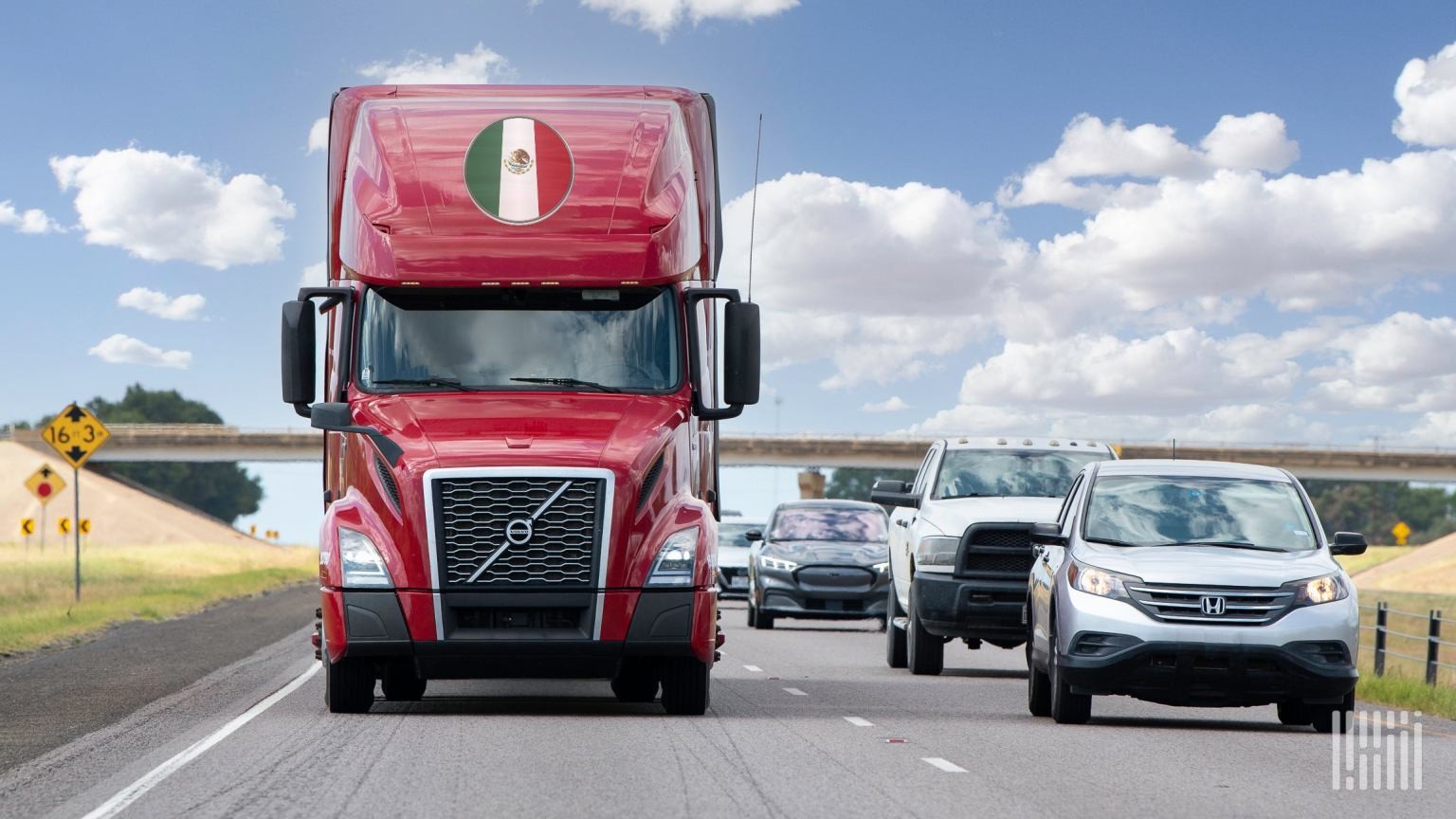
According to FreightWaves, stricter U.S. enforcement of cabotage rules, B-1 visa requirements, English-language proficiency standards, and commercial driver qualifications is raising concerns about disruptions to U.S.–Mexico freight flows.
Enforcement Backed — But With Caveats
Derek Leathers, chairman and CEO of Werner Enterprises, affirmed support for tougher enforcement to prevent foreign drivers from illegally hauling domestic U.S. freight — a violation of federal cabotage restrictions. He endorsed federal efforts targeting misuse of B-1 business visitor visas and welcomed increased oversight by the Federal Motor Carrier Safety Administration (FMCSA) of English-language proficiency requirements. Leathers stressed that drivers must be able to communicate with law enforcement while operating in the U.S., especially as the Trump administration intensified enforcement of these standards alongside tighter licensing and training oversight.
The discussions also highlighted risks for compliant carriers: inconsistent rule application could delay cross-border shipments, restrict driver availability, and complicate freight movement. According to Mexican transportation publication Revista Transportes y Turismo, ATA Chief Economist Bob Costello noted that North American cross-border trade rebounded in 2026 following a slight decline in 2025, reinforcing the need for efficient U.S.–Mexico–Canada transport links.
Costello warned that some U.S. enforcement personnel may not fully grasp cabotage complexities, creating uncertainty for legally operating Mexican carriers — a concern echoed by CANACAR President Augusto Ramos Melo, who cautioned that intensified border scrutiny could cause additional delays and operational challenges for Mexican trucking companies navigating tighter documentation, visa eligibility, and regulatory compliance checks.
Border Initiatives and Driver Challenges
Liliana Flores, CBP’s port director at Del Rio, Texas, outlined new initiatives aimed at strengthening cargo security and improving trade information processing — including expansion of the Customs Trade Partnership Against Terrorism (CTPAT) and the Electronic Export Manifest pilot program, whose testing period concludes on Oct. 23. Flores encouraged Mexican carriers to join both programs to support smoother, more secure cross-border operations.
Justen Thomas, a representative of the U.S. Consulate General, advised Mexican drivers applying for or renewing B-1 visas to prepare thoroughly for consular interviews, noting that English-language proficiency is among several factors influencing visa decisions. While B-1 visas authorize international freight transport into the U.S., they explicitly prohibit domestic cabotage — a distinction critical to legal compliance.
IRU Goods Transport Council President Iro Doumani offered a European perspective, emphasizing how coordinated regulatory systems and digitalization can balance enforcement with freight efficiency. She also confirmed that driver shortages remain a persistent challenge across regions — even where cross-border systems are more integrated.
New Logistics Venture Launches in Houston
Meiborg Companies and Morales Capital Group have partnered to launch M2 Global Logistics, a new third-party logistics provider anchored by an 830,000-square-foot industrial campus near downtown Houston. The 27-acre facility provides access to major freight corridors, intermodal hubs, and port connections. Founded in 1981 and headquartered in Rockford, Illinois, Meiborg operates more than 550 trucks and manages over 4 million square feet of warehouse space across Illinois and Texas.
The new company will offer domestic trucking, international freight services, customs-related logistics, warehousing, fulfillment, and distribution under one platform. Leadership includes Zach Meiborg, CEO of Meiborg Companies; Nick Gibbons; James Cooper; and executives from Morales Capital Group. Operations are expected to begin in the coming months, with further market expansion planned.
Source: FreightWaves
Compiled from international media by the SCI.AI editorial team.