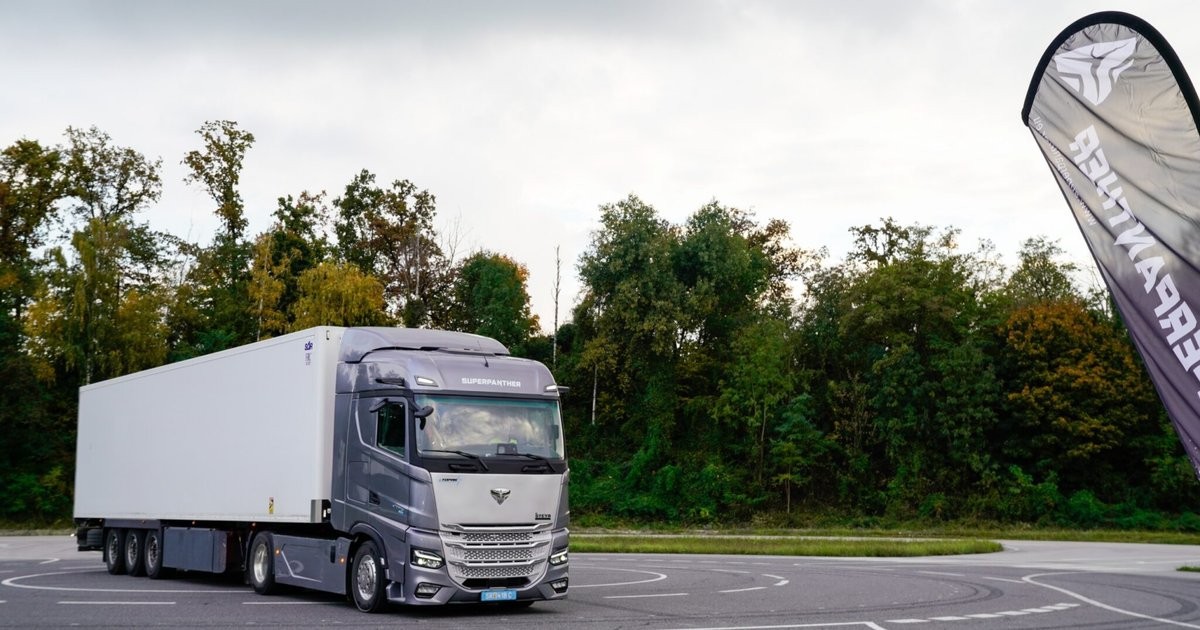
DHL Freight has deployed the Chinese-made eTopas 600 electric heavy-duty truck in its Dutch network since September 2026, following a two-week trial in spring 2026 that covered 1,900 kilometres and saved 930 kilograms of CO₂e versus diesel. The vehicle, first produced in Europe in July 2026, achieved 102 kWh/100 km consumption and averages 238 km daily. DHL Group and SuperPanther also inked an MoU on autonomous driving at IAA Transportation in Hanover. CEO Heidi van Eldik stressed the need for proven, everyday operational performance to meet customer emissions goals.
According to supplychaindigital.com, DHL Freight has integrated the Chinese-made eTopas 600 electric heavy-duty truck into its regular operations across the Dutch network as of September 2026.
From Trial to Commercial Deployment
The rollout follows a phased collaboration between DHL Freight and SuperPanther, beginning with a memorandum of understanding signed in September 2024. A real-world trial of the eTopas 600 was conducted in Austria during spring 2026, where the vehicle covered approximately 1,900 kilometres over two weeks — averaging 238 kilometres per day.
During that trial, electricity consumption was recorded at 102 kilowatt-hours per 100 kilometres. Compared with an equivalent diesel-powered heavy-duty truck operating on the same route profile, the eTopas 600 achieved a verified reduction of 930 kilograms of CO₂e.
European Production and Operational Integration
The first eTopas 600 produced in Europe by the Chinese manufacturer rolled off the production line for DHL Freight in July 2026. Since September 2026, the vehicle has been in continuous, revenue-generating service across DHL Freight’s Dutch logistics network.
This deployment forms part of a broader strategic alignment: at IAA Transportation in Hanover, DHL Group and SuperPanther signed a second memorandum of understanding — this one focused on autonomous driving technology and real-world testing protocols.
Leadership Perspective on Emissions Reduction
Heidi van Eldik, CEO of DHL Freight Netherlands & Belgium, emphasized operational validation over theoretical potential:
“Our customers are looking for practical ways to reduce greenhouse gas emissions from their transport operations. That is why it is not enough for the technology simply to be available; it must also prove itself in day-to-day commercial operations.” — Heidi van Eldik, CEO of DHL Freight Netherlands & Belgium
The initiative reflects a direct response to customer demand for verifiable, scalable decarbonization in freight transport — with all performance metrics anchored to real-world use, not lab conditions or projections.
Source: supplychaindigital.com
Compiled from international media by the SCI.AI editorial team.