DHL Group plans to invest more than $447 million in Central and Eastern Europe by 2030, focusing on logistics infrastructure, freight services, and technology. Key initiatives include a $201 million international logistics center in Poznań, Poland, opened in 2024, and a new DHL Express air freight terminal in Katowice. Poland’s goods trade is forecast to grow 28% faster than global trade and 91% faster than EU trade over the next three years. The company also expanded operations in Germany, opening a 215,000-square-foot station in Cologne-Marsdorf and advancing construction of a 315,000-square-foot logistics center near Jena. Poland hosts over 10,000 DHL employees — among its top 10 global markets.
DHL Group said it plans to invest more than $447 million in logistics infrastructure, freight services and technology in Central and Eastern Europe by 2030 because the region is home to a growing number of innovative, high-growth companies that need supply chain, international transportation and distribution services.
The express freight company said it has added Poland, the Czech Republic, Hungary and Romania to its 2030 strategic growth plan because the region is playing an increasingly important role in production and trade, while also being a large consumption market. The four countries are increasingly attracting European manufacturers and distributors, and foreign companies seeking closer proximity to the European consumer market as part of a growing nearshoring trend.
The investment program spans most business groups, supporting capacity expansion in warehousing, ground freight transportation, supply chain control towers and international express services, including the planned construction of a new DHL Express air freight express terminal in Katowice, DHL said in a news release last week.
“Central and Eastern Europe is becoming increasingly important for global trade flows and supply chain networks. Poland, in particular, is developing into one of Europe’s most dynamic logistics and manufacturing hubs,” said John Pearson, CEO of DHL Express. “As customers strive for greater resilience and flexibility, they need logistics partners who can seamlessly connect production, inventory, and markets across borders. With these investments, we are expanding the infrastructure and international connectivity required to support the growth ambitions of the dynamic companies driving the economic development of this region.”
Poland grows as major trade hub
Poland has become a regional economic power over the past 30 years, with merchandise trade growing more than two times faster than global trade and 2.7 times faster than trade within the European Union over the past decade, DHL Globalization Tracker published this month. The report, written in conjunction with New York University’s Stern School of Business, forecasts Poland’s goods trade will grow 28% faster than global trade and 91% faster than EU trade over the next three years.
The analysis also shows an increasing diversification of Poland’s trade relations. While Germany remains an important trading partner and the majority of Polish trade takes place within the European Union, trade with both the United States and China has increased significantly over the past 10 years.
“Central and Eastern Europe is consolidating its role as a strategic location for production, distribution, and regional fulfillment activities, particularly for companies seeking closer proximity to the European market,” said Hendrik Venter, CEO of DHL Supply Chain.
The contract logistics unit, for example, recently entered the Romanian market through an expanded partnership with Polish retailer Pepco. DHL said Poland will continue to play a central role in its growth ambitions for the region. DHL Group has already invested significantly in the Polish market in recent years. In 2024, DHL opened a $201 million international logistics centre in Poznań, one of the largest logistics investments in the company’s history in Poland. The site supports several DHL business units, including DHL eCommerce, DHL Freight, and Post & Parcel Germany, and also serves as a key logistics hub connecting Poland with European and global markets.
DHL eCommerce operates a significant network of fulfillment centers, parcel lockers and pickup points in Poland in support of e-commerce marketplaces. Poland is among DHL Group’s 10 largest markets worldwide in terms of the number of employees, with more than 10,000 people working there.
More warehouse capacity in Germany
DHL Group also continues to invest in Germany, where the company is headquartered.
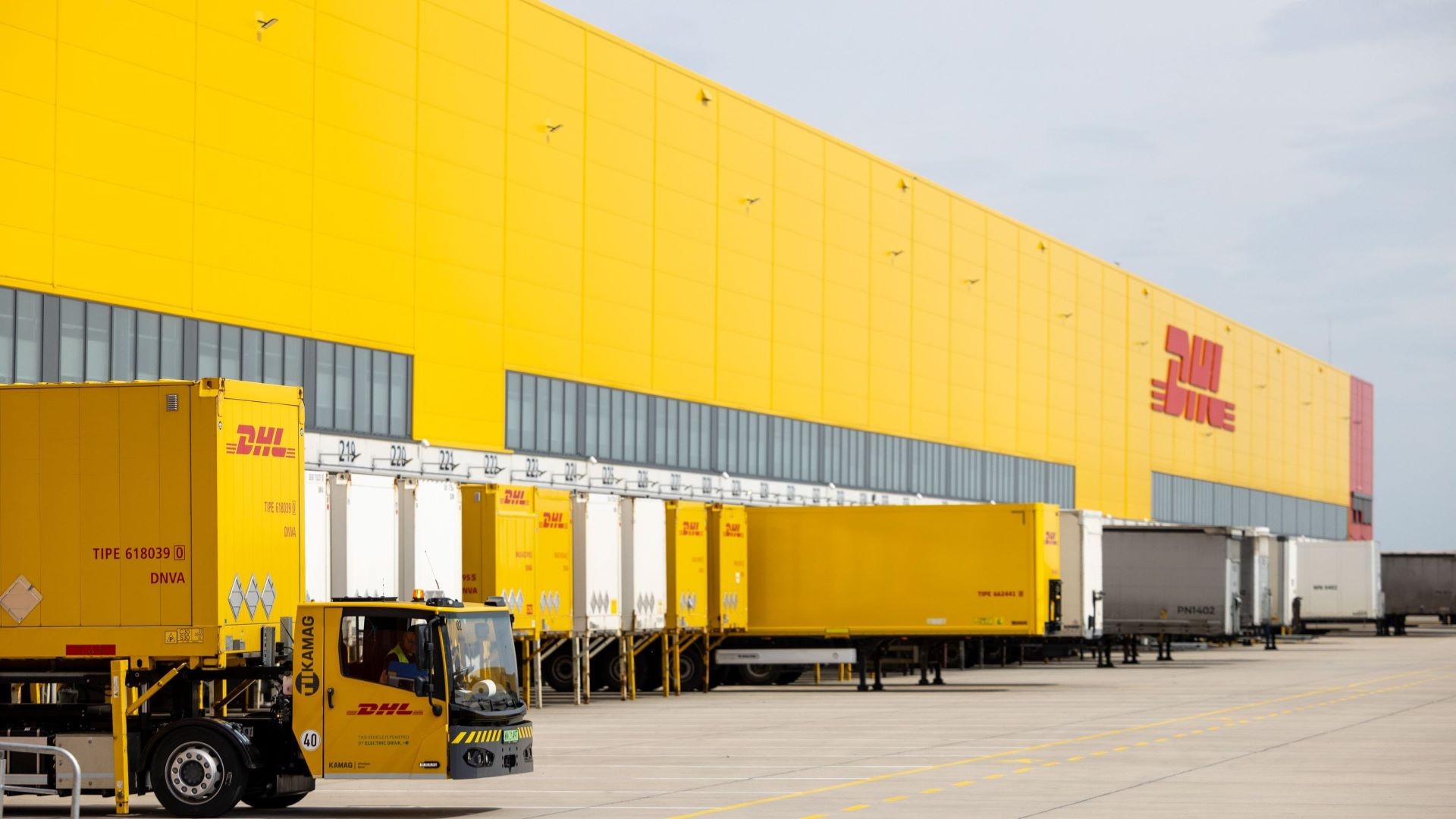
DHL Express last week officially opened a new station in Cologne-Marsdorf, significantly expanding its capacity in the region. The 215,000-square foot site features three Pick-up and Delivery bays with 78 loading and unloading bays, a warehouse area with 35 bays of its own, and a modern sortation system capable of processing up to 6,000 domestic and international parcels.
The site includes 78 charging points for electric vehicles. DHL also said it is on track to complete a new 315,000-square foot logistics center outside Jena, Germany, by March. Jena is a high-tech industrial city in the eastern German state of Thuringia. DHL said the warehouse will offer logistics services for growing businesses in high-tech manufacturing, semiconductors, healthcare and battery technology. One of DHL Supply Chain’s key customers in the area is Zeiss, a leading manufacturer of eyeglass lenses, camera and cinematic lenses, and binoculars.
Source: FreightWaves
Compiled from international media by the SCI.AI editorial team.