Skip to content

Southeast Asia Supply Chain

Indonesia Targets $7.5B China Durian Market via 53 Transmigration Zones

Indonesia is redefining its transmigration program as an engine for supply chain integration, targeting the US$7.5 billion annual durian market in China. Economist Soner Bakaya highlights Indonesia's strategic advantages — including political neutrality, trade routes, and nickel resources — to attract investment and build domestic industrial capacity. The Ministry of Transmigration, under Muhammad Iftitah Sulaiman Suryanagara, will deploy 1,476 experts across 53 zones in 2026, including 10 in Papua, to establish end-to-end economic ecosystems covering research, production, processing, logistics, and marketing.

Original source: Source information pending

Indonesia Targets $7.5B China Durian Market via 53 Transmigration Zones

According to www.idnfinancials.com, Indonesia is transforming its transmigration program into an integrated economic strategy aimed at capturing global supply chain opportunities — beginning with the US$7.5 billion annual durian market in China.

Strategic Shift in Transmigration Policy

Economist and University of Glasgow professor Soner Bakaya emphasized that Indonesia’s geopolitical neutrality, strategic maritime trade routes, and critical natural resources — particularly nickel — position it advantageously amid global supply chain realignment. “

Indonesia’s current position is highly advantageous, with relatively neutral political stance, strategic trade routes, and vital natural resources such as nickel — essential for future industries.

” he stated in a written statement cited by Antaranews.

Bakaya delivered these remarks at the Transmigration Executive Dialogue (TED) in Jakarta on Monday, arguing that transmigration must evolve beyond resettlement into a driver of productive employment, skills development, local enterprise strengthening, and inclusive market access. He stressed the need for agricultural processing centers, modern logistics networks, financing mechanisms, and innovation ecosystems to ensure value addition within transmigration zones.

This paradigm shift aligns with the Ministry of Transmigration’s new approach: generating economic activity and jobs *before* population relocation. Minister Muhammad Iftitah Sulaiman Suryanagara affirmed, “The future of transmigration is not merely moving people with the hope that economic opportunity will follow. We must first create economic opportunities, prepare decent jobs and livelihoods, and then allow population mobility to occur voluntarily, safely, and with future certainty.”

From Raw Export to Integrated Value Chains

A key focal point is the Chinese durian market, where annual consumption is estimated at US$7.5 billion. To capitalize on this, Indonesia aims to build a full upstream-to-downstream durian industry — spanning research, seedling development, cultivation, processing, packaging, logistics, and marketing — rather than exporting only raw fruit.

The ministry plans to develop transmigration zones as interconnected economic ecosystems linking communities, land, science, technology, investment, industry, and markets. This includes enabling micro, small, and medium enterprises (UMKM) and farmers to access technology, finance, business partners, and broader markets.

To operationalize this vision, the Ministry of Transmigration has launched five flagship programs: Trans Tuntas (land tenure security), Trans Lokal (local community empowerment), Trans Patriot (human capital and technology enhancement), Trans Karya Nusantara (investment and job creation), and Trans Gotong Royong (multi-stakeholder collaboration).

2026 Deployment of Expert Teams Across 53 Zones

In 2026, the ministry will deploy 1,476 participants from the Tim Ekspedisi Patriot (TEP) across 53 transmigration zones. These include 41 national priority zones, 2 ministry-priority zones, and 10 locations in Papua.

The TEP cohort comprises 39 professors, 158 doctors, 263 master’s graduates, and 1,016 bachelor’s degree holders — reflecting a deliberate emphasis on deploying high-caliber human capital to catalyze local economic transformation.

Source: idnfinancials.com

Compiled from international media by the SCI.AI editorial team.
Ask SCI.AI Finished reading? Continue with SCI.AI. Explore the related policy, route, company and historical context. Continue asking
Indonesia, India Target Indo-Pacific Semiconductor Supply Chain
Southeast Asia Supply Chain

Indonesia, India Target Indo-Pacific Semiconductor Supply Chain

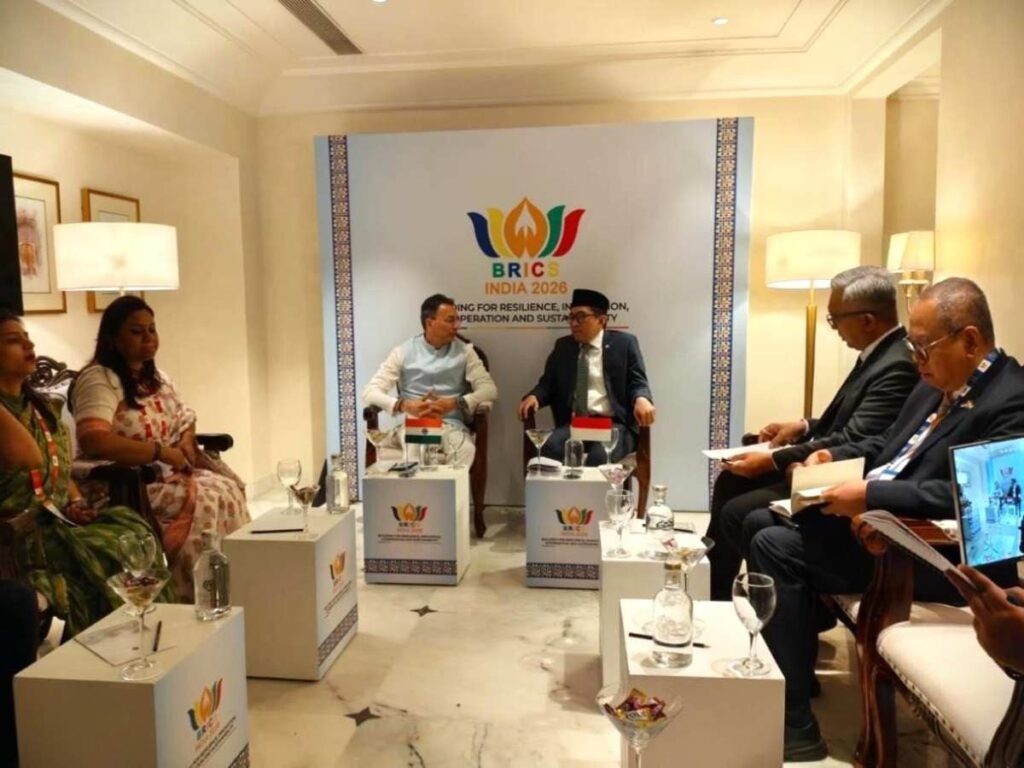
Indonesia and India are deepening industrial cooperation, focusing on semiconductors to bolster Indo-Pacific supply chain resilience. At the 10th BRICS Industry Ministers’ Meeting in Jaipur, Deputy Minister Faisol Riza and Minister Jitin Prasada discussed joint ventures in green industry, agro-industry, and smart manufacturing. Bilateral trade hit USD23.16 billion in 2025, with Indonesian exports at USD18.32 billion and imports from India at USD4.84 billion. The partnership builds on diplomatic exchanges, including President Prabowo’s Republic Day 2025 visit and PM Modi’s planned July 2026 trip to Indonesia.

Two Indonesian IKMs Join Molinas EV Supply Chain in 2026
Southeast Asia Supply Chain

Two Indonesian IKMs Join Molinas EV Supply Chain in 2026

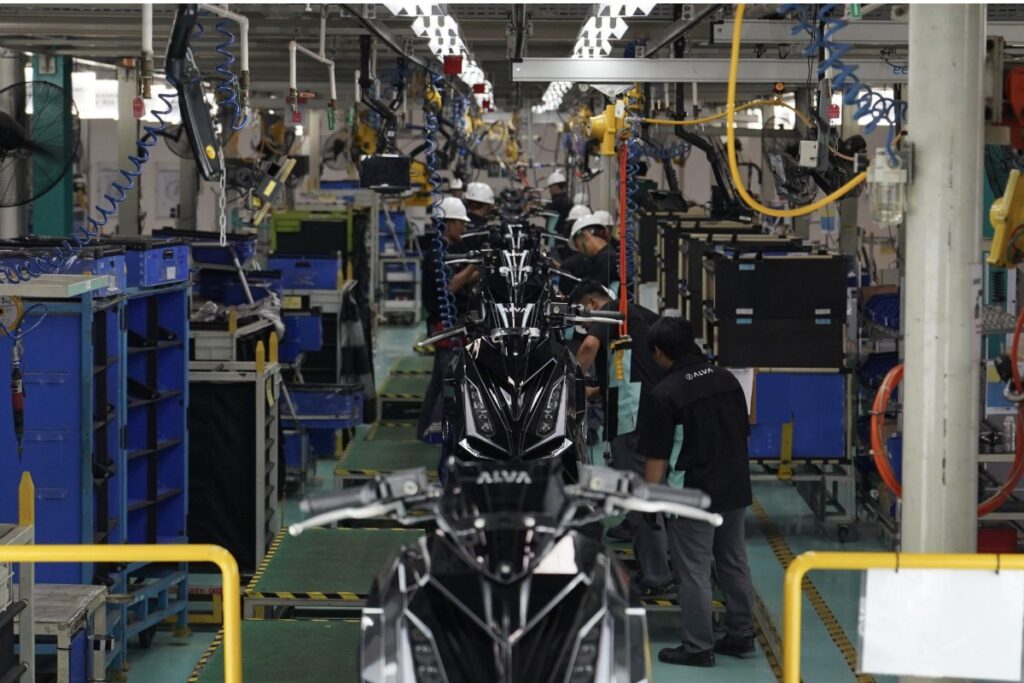
Two Indonesian small and medium enterprises — PT Kannindo Metal Industri and PT Multikon Rekatama Industri — have joined the supply chain for the National Electric Motorcycle (Molinas) program, supplying battery boxes and brackets for the Alva model. Launched by President Prabowo Subianto on 13 August 2026 in Cikarang, Molinas prioritizes domestic component integration. Kemenperin’s supplier development framework assesses IKMs on eight criteria, including technology, quality, and delivery reliability. Minister Agus Gumiwang Kartasasmita stressed that mentoring must begin from OEM-defined market needs. The initiative aims to generate local value addition and jobs, not just vehicle sales.

EU Targets Indonesia’s Critical Minerals, $13.6B Investment in 5 Years
Southeast Asia Supply Chain

EU Targets Indonesia’s Critical Minerals, $13.6B Investment in 5 Years

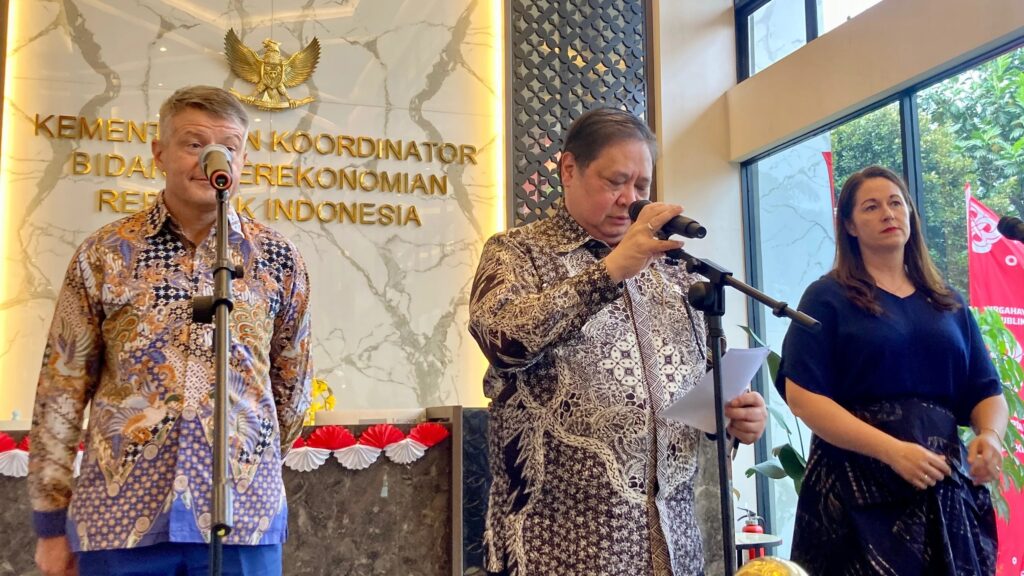
The European Union is deepening economic ties with Indonesia to diversify critical mineral and energy supply chains. Over the past five years, EU investment in Indonesia totaled USD13.6 billion, generating over 245,000 jobs. Priority sectors include electric vehicles, battery ecosystems, renewable energy, digital industry, advanced manufacturing, critical mineral processing, water management, and sustainable infrastructure. Indonesia and the EU aim to sign the IEU-CEPA agreement by October 2026. Coordinating Minister Airlangga Hartarto emphasized that economic security requires trusted, diversified partnerships — not fragmentation.

Welcome Back!

Login to your account below

Create New Account!

Fill the forms below to register

Retrieve your password

Please enter your username or email address to reset your password.

Scan to share via WeChat

Open WeChat and scan the QR code to share

QR Code

Add New Playlist