Skip to content

Southeast Asia Supply Chain

Two Indonesian IKMs Join Molinas EV Supply Chain in 2026

Two Indonesian small and medium enterprises — PT Kannindo Metal Industri and PT Multikon Rekatama Industri — have joined the supply chain for the National Electric Motorcycle (Molinas) program, supplying battery boxes and brackets for the Alva model. Launched by President Prabowo Subianto on 13 August 2026 in Cikarang, Molinas prioritizes domestic component integration. Kemenperin’s supplier development framework assesses IKMs on eight criteria, including technology, quality, and delivery reliability. Minister Agus Gumiwang Kartasasmita stressed that mentoring must begin from OEM-defined market needs. The initiative aims to generate local value addition and jobs, not just vehicle sales.

Original source: Source information pending

Two Indonesian IKMs Join Molinas EV Supply Chain in 2026

According to otomotif.kompas.com, two Indonesian small and medium enterprises (IKMs) — PT Kannindo Metal Industri and PT Multikon Rekatama Industri — have officially entered the supply chain for the National Electric Motorcycle (Molinas) program launched by President Prabowo Subianto on 13 August 2026 in Cikarang, West Java.

Local Component Integration Accelerates

The Ministry of Industry (Kemenperin) is actively advancing supplier development to embed domestic manufacturers into electric vehicle production. As part of this strategy, IKMs are being prepared not just as peripheral suppliers but as qualified Tier-2 vendors capable of meeting OEM standards. The initiative targets sustained procurement orders — not one-off contracts — with IKMs expected to fulfill full qualification requirements including engineering capability, quality control, production capacity, certifications, and on-time delivery performance.

Kemenperin’s approach begins with actual demand signals from original equipment manufacturers and Tier-1 suppliers. This market-led method ensures that training and technical assistance directly address gaps in technology, human resources, product quality, standardization, and testing access. According to Agus Gumiwang Kartasasmita, Minister of Industry, “

“Our mentoring must start from market needs. OEMs and Tier-1s communicate required standards, then the government supports IKMs to close those gaps through technology strengthening, workforce development, quality improvement, standardization, and testing access.” — Agus Gumiwang Kartasasmita, Minister of Industry

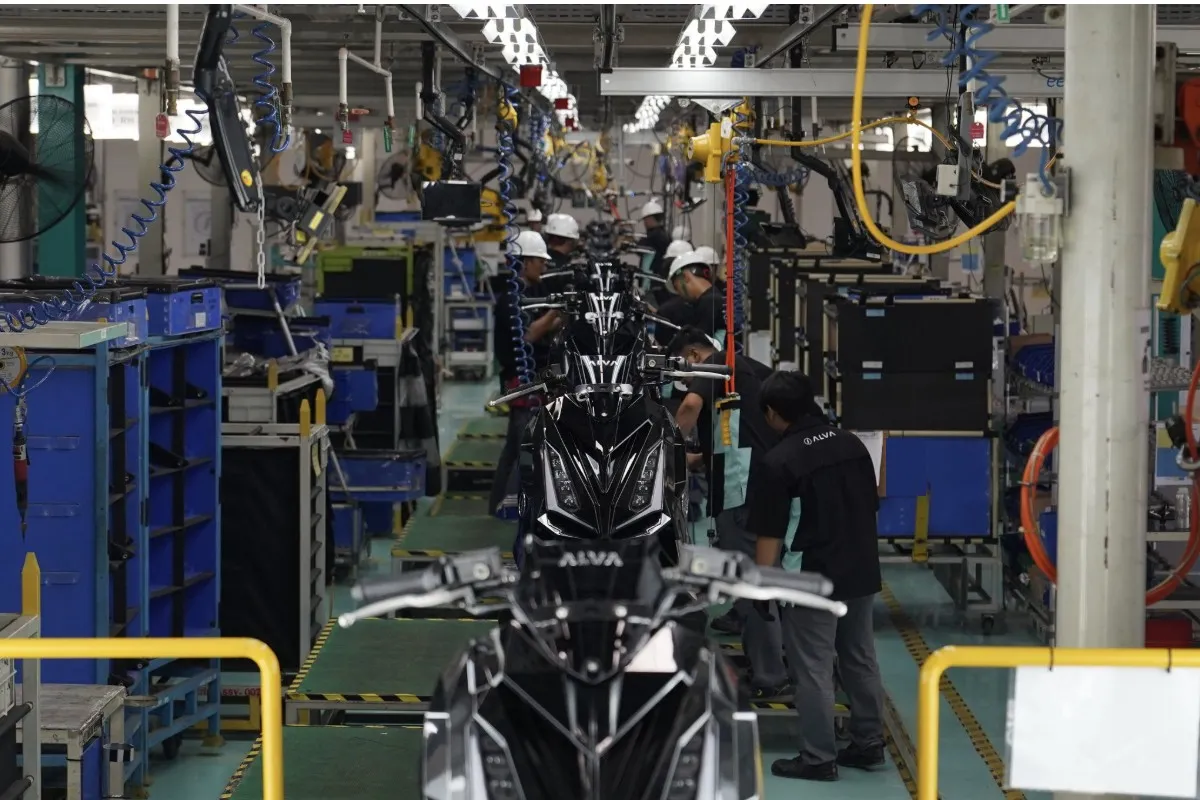
The two newly onboarded IKMs produce battery boxes and battery brackets for the Molinas Alva motorcycle, manufactured by PT Electra Mobilitas Indonesia. Their inclusion marks a structural shift: local firms are now supplying mission-critical components for nationally branded electric two-wheelers — not merely auxiliary parts for conventional vehicles.

Strategic Supplier Development Framework

Kemenperin applies a formalized supplier development framework grounded in industrial readiness assessment. Potential IKMs undergo rigorous evaluation across eight criteria: technology maturity, product quality, production capacity, engineering competence, certification status, productivity metrics, cost efficiency, and delivery reliability. Only those scoring above threshold levels advance to targeted capacity-building programs.

This model aims to build end-to-end local capability — from upstream component design to downstream integration — ensuring that Molinas’ growth translates into durable domestic value addition and job creation. As emphasized by the ministry, the goal extends beyond sales volume: it is to anchor the entire electric mobility ecosystem within Indonesia’s industrial base.

The national rollout follows the official launch event held on 13 August 2026, where President Prabowo Subianto inaugurated the Molinas program in Cikarang. The program’s first production facility — Alva’s electric motorcycle plant — is located in the same industrial zone. PT Kannindo Metal Industri and PT Multikon Rekatama Industri were selected from Kemenperin’s cohort of mentored IKMs and began supplying components immediately following their qualification in mid-2026.

Source: otomotif.kompas.com

Compiled from international media by the SCI.AI editorial team.
Ask SCI.AI Finished reading? Continue with SCI.AI. Explore the related policy, route, company and historical context. Continue asking
EU Targets Indonesia’s Critical Minerals, $13.6B Investment in 5 Years
Southeast Asia Supply Chain

EU Targets Indonesia’s Critical Minerals, $13.6B Investment in 5 Years

The European Union is deepening economic ties with Indonesia to diversify critical mineral and energy supply chains. Over the past five years, EU investment in Indonesia totaled USD13.6 billion, generating over 245,000 jobs. Priority sectors include electric vehicles, battery ecosystems, renewable energy, digital industry, advanced manufacturing, critical mineral processing, water management, and sustainable infrastructure. Indonesia and the EU aim to sign the IEU-CEPA agreement by October 2026. Coordinating Minister Airlangga Hartarto emphasized that economic security requires trusted, diversified partnerships — not fragmentation.

Bac Ninh Targets $330M Revenue for SMP Holdings by 2030
Southeast Asia Supply Chain

Bac Ninh Targets $330M Revenue for SMP Holdings by 2030

Bac Ninh provincial leaders visited domestic suppliers including SMP Holdings—a Tier-1 Samsung assembler with $50 million invested across two factories and 4,000 employees—to resolve barriers to global supply chain integration. SMP Holdings targets $330 million revenue and 30,000 workers by 2030. Bac Ninh has drawn 33 semiconductor projects totaling $2.742 billion, including Amkor Technology’s $1.6 billion investment. The province operates 23 of 39 approved industrial parks and has launched ‘24-Hour’ and ‘60%’ green channel administrative reforms for high-tech projects.

ASEAN-5 Trade Surplus Hits $156.6B Amid 8.3% CAGR Growth
Southeast Asia Supply Chain

ASEAN-5 Trade Surplus Hits $156.6B Amid 8.3% CAGR Growth

The ASEAN-5 bloc — Indonesia, Singapore, Malaysia, Thailand, and Vietnam — posted a $156.6 billion trade surplus in 2025, extending an 11-year growth streak. United Overseas Bank reports an 8.3% compound annual growth rate since 2014, with intra-ASEAN trade generating a $63 billion surplus. Driven by AI-related semiconductor and electronics demand, ASEAN’s total trade surged 13.7% in 2025. UOB revised its long-term forecast: trade is now expected to reach $6.6 trillion by 2030 and surpass $9.0 trillion by 2035 — up from prior estimates of $5.3 trillion and $7.1 trillion, respectively.

Welcome Back!

Login to your account below

Create New Account!

Fill the forms below to register

Retrieve your password

Please enter your username or email address to reset your password.

Scan to share via WeChat

Open WeChat and scan the QR code to share

QR Code

Add New Playlist