According to infobanknews.com, the European Union is prioritizing Indonesia as a strategic partner to diversify critical mineral supply chains and strengthen resilient energy supply networks.
Critical Minerals and Value Chain Resilience
The EU’s focus on Indonesia reflects a broader shift toward building sustainable and robust value chains — especially for critical minerals and clean energy. This effort aligns with outcomes from negotiations on the Indonesia–EU Comprehensive Economic Partnership Agreement (IEU-CEPA), which have expanded bilateral economic cooperation beyond traditional trade into joint industrial development. Coordinated investment now targets upstream-to-downstream integration, with emphasis on domestic capacity building rather than commodity exports alone.
Indonesia’s offer includes industrial downstreaming, technology transfer, and workforce development — all framed as core incentives for European investors. According to the report, the government explicitly links foreign investment to long-term structural upgrading across priority sectors. The EU’s interest in these areas underscores mutual recognition that economic security depends on diversified, trusted partnerships rather than fragmented sourcing.
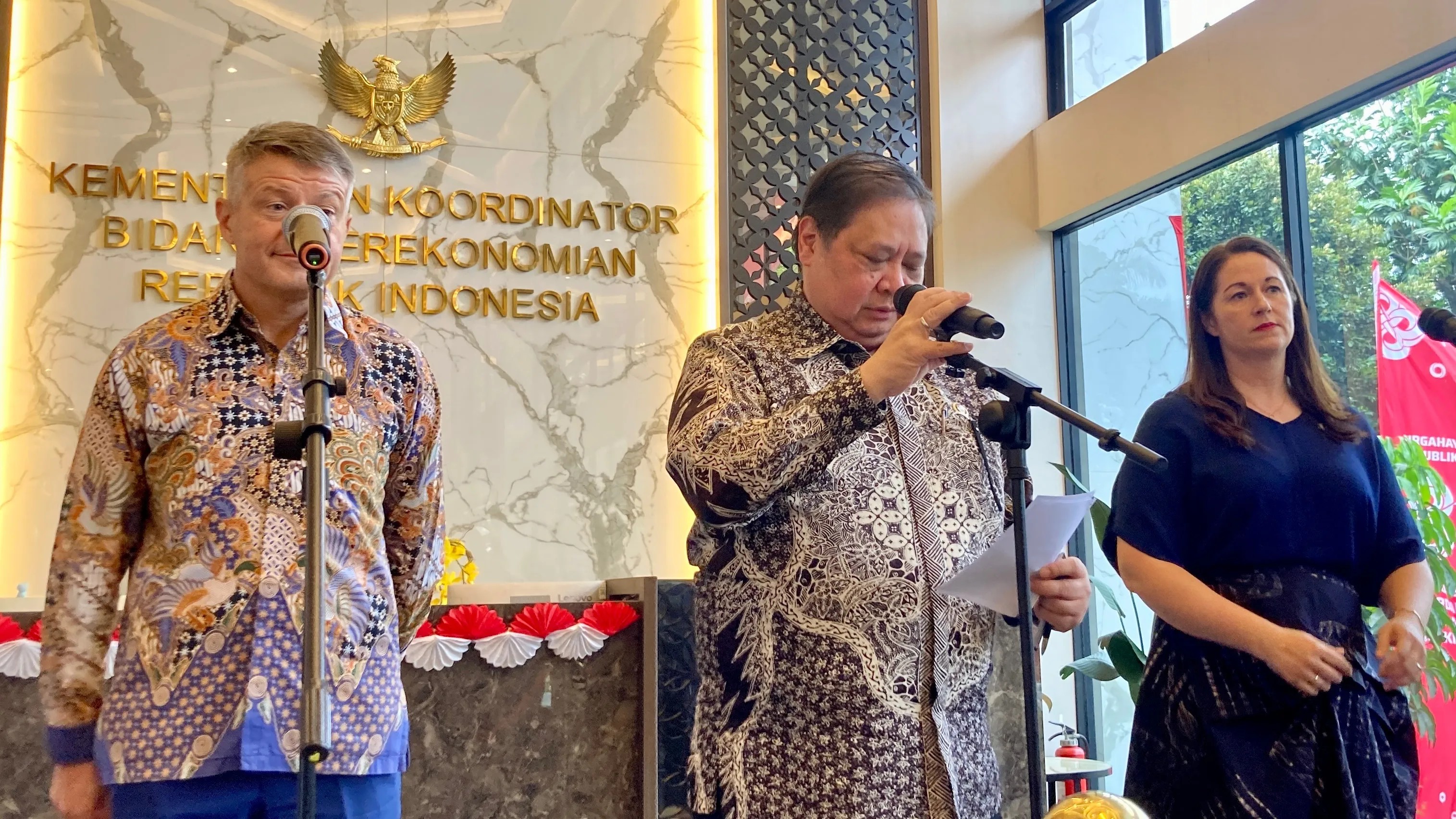
“We welcome increasingly strong recognition that economic security must be achieved through diversification and trusted partnerships, not through fragmentation,” said Airlangga Hartarto, Coordinating Minister for Economic Affairs of Indonesia, during a meeting with Denis Chaibi, EU Ambassador to Indonesia, in Jakarta on Friday, 21 August 2026.
Sectoral Priorities and Investment Impact
Airlangga identified seven strategic investment sectors: electric vehicles and battery ecosystems, renewable energy, digital industry, advanced manufacturing, critical mineral processing, water management, and sustainable infrastructure. These choices signal a deliberate pivot from transactional trade toward co-developed industrial capabilities. European capital is viewed not just as funding but as a vehicle for knowledge-intensive growth.
The source states that EU investment in Indonesia reached USD13.6 billion over the past five years. That inflow has generated more than 245,000 jobs domestically. The report identifies the EU as a source of high-quality investment, with funds already deployed across pharmaceuticals, chemicals, advanced manufacturing, utilities, and sustainable services.
“Indonesia welcomes increased EU investment in strategic sectors, including electric vehicles and battery ecosystems, renewable energy, digital industry, advanced manufacturing, critical mineral processing, water management, and sustainable infrastructure,” said Airlangga Hartarto, reiterating the full scope during the same meeting.
Shared Diversification Strategy
Ambassador Denis Chaibi confirmed the EU’s commercial diversification agenda, stating plainly: “Our main message is that the European Union wants to diversify its commercial partnerships.” This objective converges directly with Indonesia’s ambition to anchor itself in strategic global value chains — particularly for minerals and energy systems.
Both sides frame collaboration as essential to mitigating systemic risks. Fragmentation is seen as counterproductive; instead, deeper integration via technology sharing, skills development, and shared standards is prioritized. The IEU-CEPA framework provides the institutional foundation, while sector-specific dialogues — especially on critical mineral supply chain governance — are accelerating implementation.
Indonesia aims to finalize the IEU-CEPA agreement by October 2026, according to the source. The timeline reinforces urgency around operationalizing cooperation in targeted industries — especially where raw material availability, processing capacity, and battery ecosystem development intersect.
Source: infobanknews.com
Compiled from international media by the SCI.AI editorial team.