Skip to content

Southeast Asia Supply Chain

Bac Ninh Targets $330M Revenue for SMP Holdings by 2030

Bac Ninh provincial leaders visited domestic suppliers including SMP Holdings—a Tier-1 Samsung assembler with $50 million invested across two factories and 4,000 employees—to resolve barriers to global supply chain integration. SMP Holdings targets $330 million revenue and 30,000 workers by 2030. Bac Ninh has drawn 33 semiconductor projects totaling $2.742 billion, including Amkor Technology’s $1.6 billion investment. The province operates 23 of 39 approved industrial parks and has launched ‘24-Hour’ and ‘60%’ green channel administrative reforms for high-tech projects.

Original source: Source information pending

Bac Ninh Targets $330M Revenue for SMP Holdings by 2030

According to vietnam.vn, Bac Ninh provincial leaders visited domestic suppliers in the Hap Linh Industrial Cluster on August 20 to address bottlenecks hindering deeper integration into global supply chains.

On-site Engagement with Key Vendors

Nguyễn Hồng Thái, Member of the Central Committee of the Communist Party of Vietnam and Secretary of the Bac Ninh Provincial Party Committee, led a working delegation to SMP Holdings, a Tier-1 assembler for Samsung and auxiliary supplier to over 80 foreign-invested enterprises (FDIs), including major global corporations. The company operates two factories with a total investment of $50 million, employs approximately 4,000 workers, and forecasts $42 million in revenue this year.

The delegation also held discussions with IL SUNG TECH, Namu Vietnam Joint Stock Company, and Vin International Limited Liability Company, all located in the same industrial cluster. At the meeting, businesses urged the province to strengthen its role as a bridge between local firms and FDIs, support the introduction of qualified vendors, expedite certification processes for science-and-technology enterprises and supporting industry enterprises, and shorten project licensing timelines.

Enterprises further requested preferential policies for domestic companies participating in value chains and improved access to skilled labor. Provincial departments responded directly on science-and-technology enterprise support policies, tax implementation, and related regulatory matters.

Strategic Goals and Infrastructure Support

SMP Holdings aims to achieve $330 million in annual revenue and employ 30,000 workers by 2030, while deepening its participation in global supply networks. To accelerate this, Nguyễn Hồng Thái emphasized expanding Vietnamese enterprises’ involvement in supply chains and strengthening domestic-FDI collaboration in vocational training, labor supply, and human resource development.

He also instructed functional agencies to proactively disseminate policy information to businesses to ensure consistent implementation. Concurrently, Bac Ninh is expanding capacity for high-tech investment. According to the Bac Ninh Department of Science and Technology, the province has attracted 33 semiconductor-related projects, including materials and equipment/auxiliary component manufacturing, with registered capital exceeding $2.742 billion.

These include Amkor Technology ($1.6 billion), Hana Micron Vina ($669 million), and Micro Commercial Components ($115 million). Bac Ninh hosts around 1,282 electronics enterprises, employing 481,948 workers, forming a foundational ecosystem for semiconductor industrial expansion.

Administrative Innovation for High-Tech Projects

The province has implemented the “24-Hour Green Channel” and “60% Green Channel” mechanisms to reduce administrative processing time for priority, high-tech, and semiconductor projects. Of Bac Ninh’s 39 approved industrial parks, 23 are operational, with integrated infrastructure—including transportation, electricity, water, and drainage—fully developed.

Source: vietnam.vn

Compiled from international media by the SCI.AI editorial team.
Ask SCI.AI Finished reading? Continue with SCI.AI. Explore the related policy, route, company and historical context. Continue asking
EU Targets Indonesia’s Critical Minerals, $13.6B Investment in 5 Years
Southeast Asia Supply Chain

EU Targets Indonesia’s Critical Minerals, $13.6B Investment in 5 Years

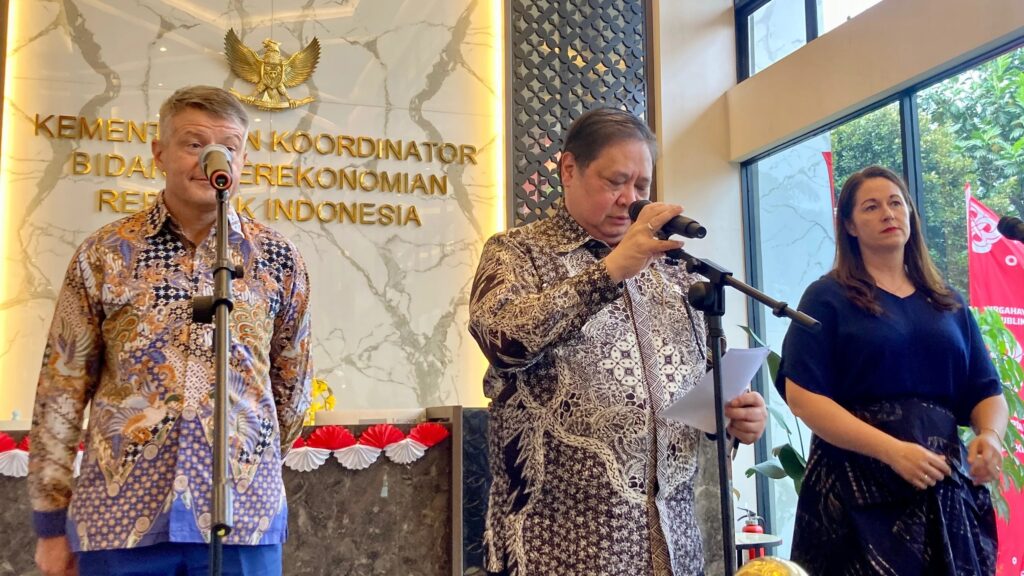
The European Union is deepening economic ties with Indonesia to diversify critical mineral and energy supply chains. Over the past five years, EU investment in Indonesia totaled USD13.6 billion, generating over 245,000 jobs. Priority sectors include electric vehicles, battery ecosystems, renewable energy, digital industry, advanced manufacturing, critical mineral processing, water management, and sustainable infrastructure. Indonesia and the EU aim to sign the IEU-CEPA agreement by October 2026. Coordinating Minister Airlangga Hartarto emphasized that economic security requires trusted, diversified partnerships — not fragmentation.

ASEAN-5 Trade Surplus Hits $156.6B Amid 8.3% CAGR Growth
Southeast Asia Supply Chain

ASEAN-5 Trade Surplus Hits $156.6B Amid 8.3% CAGR Growth

The ASEAN-5 bloc — Indonesia, Singapore, Malaysia, Thailand, and Vietnam — posted a $156.6 billion trade surplus in 2025, extending an 11-year growth streak. United Overseas Bank reports an 8.3% compound annual growth rate since 2014, with intra-ASEAN trade generating a $63 billion surplus. Driven by AI-related semiconductor and electronics demand, ASEAN’s total trade surged 13.7% in 2025. UOB revised its long-term forecast: trade is now expected to reach $6.6 trillion by 2030 and surpass $9.0 trillion by 2035 — up from prior estimates of $5.3 trillion and $7.1 trillion, respectively.

Indonesia Seeks Industrial Upgrading Amid China+1 Shift
Southeast Asia Supply Chain

Indonesia Seeks Industrial Upgrading Amid China+1 Shift

Indonesia is leveraging the global 'China Plus One' manufacturing diversification strategy to pursue industrial upgrading — not just low-cost assembly. The approach retains China as the core hub for R&D and complex components while expanding final assembly and volume production across partner countries. For Indonesia, success requires domestic supplier development, technology transfer, and full use of trade pacts like RCEP to secure tariff preferences. Without policies ensuring >15% domestic value added, investments risk delivering only re-labeling operations vulnerable to anti-circumvention sanctions. Critical infrastructure and regulatory reforms must be accelerated before 2026.

Welcome Back!

Login to your account below

Create New Account!

Fill the forms below to register

Retrieve your password

Please enter your username or email address to reset your password.

Scan to share via WeChat

Open WeChat and scan the QR code to share

QR Code

Add New Playlist