Skip to content

Southeast Asia Supply Chain

COSCO Shipping International expands in Vietnam, Indonesia; H1 revenue hits SGD96.8M

COSCO Shipping International, the Singapore-listed logistics subsidiary of China COSCO Shipping Corporation, is expanding operations in Vietnam and Indonesia. All of its consolidated revenue currently comes from Singapore and Malaysia—with 87% from Singapore—and its associated companies in Vietnam and Indonesia contributed roughly 25% of pre-tax profit in H1 2026. Revenue rose 6% to SGD96.8 million (US$76 million) in the first half of 2026, supported by logistics, ship repair, and marine engineering. The Jurong Island Logistics Hub Phase II, its largest Singapore investment, is set for completion in Q4 2026. President Jiang Kai emphasized enduring confidence in Southeast Asia’s logistics growth amid resilient regional manufacturing and recovering dry-bulk shipping demand.

Original source: Source information pending

COSCO Shipping International expands in Vietnam, Indonesia; H1 revenue hits SGD96.8M

According to e.vnexpress.net, COSCO Shipping International — the Singapore-listed logistics arm of China COSCO Shipping Corporation — is accelerating expansion into Vietnam and Indonesia amid robust manufacturing growth and recovering dry-bulk shipping demand across Southeast Asia.

Strategic Focus on Southeast Asia

Jiang Kai, President of COSCO Shipping International, stated:

“We are full of confidence in the Southeast Asian market.” — Jiang Kai, President of COSCO Shipping International

The company currently derives all of its consolidated revenue from operations in Singapore and Malaysia, with approximately 87% generated in Singapore alone. While it maintains equity stakes in logistics businesses in both Vietnam and Indonesia, these associated entities contributed about a quarter of the group’s profit before tax in the first half of 2026.

Resilient Regional Demand Drivers

Despite global trade turbulence—including U.S. tariffs and geopolitical conflicts in Ukraine and Iran—Jiang noted that manufacturing activity remains strong across Southeast Asia. He cited a recovery in the region’s dry-bulk shipping market, which transports key industrial inputs such as coal and iron ore, as well as rising demand for specialized cargo shipping of industrial machinery, automobiles, and new energy equipment.

“The growth in Southeast Asia’s shipping industry has similarly generated a stable increase in logistics demand.” — Jiang Kai, President of COSCO Shipping International

Revenue Growth and Domestic Investment

COSCO Shipping International reported revenue of SGD96.8 million (US$76 million) for the first half of 2026, reflecting a 6% increase year-on-year. This growth was driven by higher contributions from logistics services, ship repair, and marine engineering. In Singapore, the company is advancing the Jurong Island Logistics Hub Phase II, its largest investment in the city-state. The project features upgraded integrated logistics infrastructure and is scheduled for completion in the fourth quarter of 2026.

Geopolitical and Operational Context

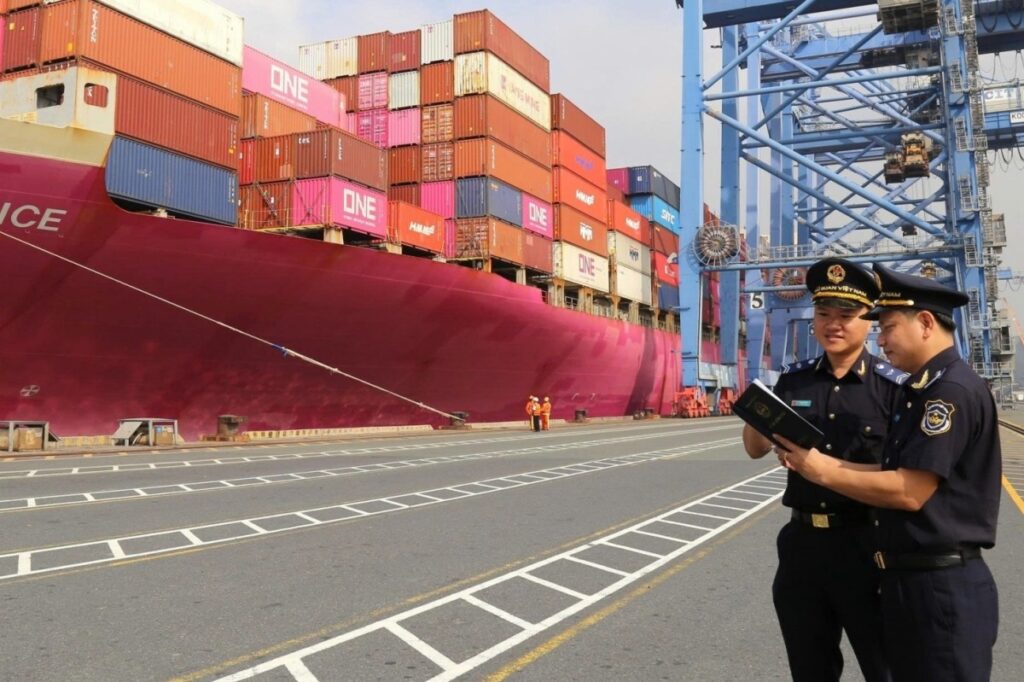
The firm’s regional push aligns with broader supply chain realignment trends. As some Chinese manufacturers prioritize Southeast Asia for overseas manufacturing bases, demand for end-to-end logistics solutions—including warehousing, customs brokerage, and multimodal transport—has intensified. COSCO Shipping International’s existing regional footprint includes not only logistics ventures but also a stake in a dry-bulk shipping associate operating across Southeast Asia. Its presence at the Port of Kaohsiung in Taiwan was documented on May 29, 2026, when a COSCO container vessel was docked alongside fishing vessels—a visual marker of its active port call frequency in the region.

Source: e.vnexpress.net

Compiled from international media by the SCI.AI editorial team.
Ask SCI.AI Finished reading? Continue with SCI.AI. Explore the related policy, route, company and historical context. Continue asking
Indonesia Seeks Industrial Upgrading Amid China+1 Shift
Southeast Asia Supply Chain

Indonesia Seeks Industrial Upgrading Amid China+1 Shift

Indonesia is leveraging the global 'China Plus One' manufacturing diversification strategy to pursue industrial upgrading — not just low-cost assembly. The approach retains China as the core hub for R&D and complex components while expanding final assembly and volume production across partner countries. For Indonesia, success requires domestic supplier development, technology transfer, and full use of trade pacts like RCEP to secure tariff preferences. Without policies ensuring >15% domestic value added, investments risk delivering only re-labeling operations vulnerable to anti-circumvention sanctions. Critical infrastructure and regulatory reforms must be accelerated before 2026.

Vietnam Farm Export Logistics Costs Surge 66.6%, Domestic Share Hits 17%
Southeast Asia Supply Chain

Vietnam Farm Export Logistics Costs Surge 66.6%, Domestic Share Hits 17%

Vietnam’s agricultural exports now reach over 200 countries, but soaring logistics costs threaten competitiveness. Container rates to the U.S. West Coast hit $7,072/FEU in July 2026 — up 66.6% monthly — while domestic logistics consumes 17% of total fruit and vegetable costs. Experts cite fragmented infrastructure, outdated inland transport (80% road-dependent), lack of certified data systems, and new EU rules like CBAM and EUDR as key constraints. Solutions include national cold-chain vessel development, digital supply chain authentication, and strategic port diversification — such as shifting from the Strait of Hormuz to UAE’s Fujairah and Khor Fakkan ports.

Ho Chi Minh City exports rise $9.9B in 7 months
Southeast Asia Supply Chain

Ho Chi Minh City exports rise $9.9B in 7 months

Ho Chi Minh City's import-export volume surged by 7.98% to 133.74 billion USD in the first seven months of 2026, driven by strong growth in electronics and machinery. Facing geopolitical headwinds and US tariff pressures, the city is accelerating logistics infrastructure reforms, including the establishment of the Cai Mep Ha Free Trade Zone, to enhance supply chain resilience and diversify international markets.

Welcome Back!

Login to your account below

Create New Account!

Fill the forms below to register

Retrieve your password

Please enter your username or email address to reset your password.

Scan to share via WeChat

Open WeChat and scan the QR code to share

QR Code

Add New Playlist