
Skip to content

Expert Columns

New Products: More Costly and More Important

Original source: forbes.com

New Products: More Costly and More Important

Ask SCI.AI about this story

New Products: More Costly and More Important

Reprinted with permission. Original by Lora Cecere · Source: Forbes(Lora Cecere 专栏) · Original article

Companies want to grow. At a corporate growth rate slightly higher than GDP, Consumer Packaged Goods (CPG) are struggling. There are three primary levers to pull: growth in emerging markets, mergers and acquisitions and success in new product introductions. With global expansion, growth in new markets is slowing and following a decade of aggressive M&A, the opportunities are also fewer. Here, I take a closer look at the progress in bringing new products to market.

The challenges are greater than three years ago. Today, it costs more to bring a new product to market. Product innovation is becoming more targeted while supply chain complexity is rising. Let's examine the challenges more closely.

The Cost to Bring a New Product to Market Is Rising
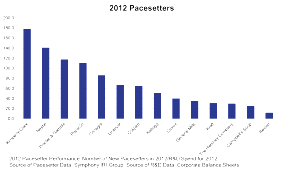
As shown in the attached figure, when you compare R&D annual spending to the number of New Product Pacesetters brought to market, there is a wide range of corporate performance. Revlon , over the period of 1997-2012, has the best performance and Kimberly-Clark's is the worst. While it is not prudent to compare a global competitor like P&G, Unilever or Nestle to a more regional player like General Mills or Kellogg , when you compare the companies based on geographic reach, there are clear patterns. For all, bringing a new product to market is more expensive (and this does not include the marketing and advertising spend or the extra sales support).

Let's start with some definitions. A New Product Pacesetter is a measure published by IRI/Symphony group. IRI is a syndicated data provider to the consumer products industry. IRI defines a New Product Pacesetter as a product that is able to reach $7.5 million in sales during the first year of introduction in the United States market. In 2012, based on the IRI reporting, 1900 new products hit the shelves. Seventy-seven products achieved New Product Pacesetter status. The average net new revenue of a New Product Pacesetter in the first year was $39.5 million. But, what was the cost? If I take the R&D budgets of companies for 2012 and divide them by the number of new products reaching New Product Pacesetter status, I find that the average cost of a New Product Pacesetter for the average CPG company in 2012 was $71 million.

The cost is growing. The cost to bring a new product to market (R&D/Number of New Product Pacesetter Products) for the period of 1997-2010 was $15 million. Today, the R&D investment to bring a new product to market is roughly 4X the cost of five years ago.

🔒

Sign up free to read the full article

Create a free account to unlock full access to all articles.

Sign Up Free

Already have an account? Sign in

Ask SCI.AI Finished reading? Continue with SCI.AI. Explore the related policy, route, company and historical context. Continue asking
Stay ahead of supply chain shifts

One email a week: the stories that matter and new risk events — in English, free.

Prefer RSS? Articles Risk events

How I vibe coded an S&OP app in 30 hours
Expert Columns Reprint 克努特·阿利克

How I vibe coded an S&OP app in 30 hours

How I vibe coded an S&OP app in 30 hours Reprinted. Original by Knut Alicke · Source: knutalicke.substack.com · Original article A personal experiment in AI-assisted supply chain planning “That’s cool,” she said politely when I opened the app. Then I clicked through the tabs, demand forecasting with manual overrides and natural language input, capacity […]

The Container That Learned to Swing
Expert Columns Reprint 克努特·阿利克

The Container That Learned to Swing

The Container That Learned to Swing Reprinted. Original by Knut Alicke · Source: knutalicke.substack.com · Original article A Comparison of Musical and Logistical Sequencing Problems Knut Alicke's avatar Knut AlickeJul 10, 2026 Music and logistics both live or die by their sequence, but judge it by opposite methods: one by ear, one by cost function. […]

The Rhino in the Room
Expert Columns Reprint 克努特·阿利克

The Rhino in the Room

The Rhino in the Room Reprinted. Original by Knut Alicke · Source: knutalicke.substack.com · Original article Why five years of shocks have not made us resilient, and the three numbers that would tell you whether you are. Knut Alicke's avatar Knut AlickeJul 17, 2026 Twenty percent of the world’s oil, forty percent of its helium, […]

Welcome Back!

Login to your account below

Create New Account!

Fill the forms below to register

Retrieve your password

Please enter your username or email address to reset your password.

Scan to share via WeChat

Open WeChat and scan the QR code to share

QR Code

Add New Playlist