How I vibe coded an S&OP app in 30 hours
A personal experiment in AI-assisted supply chain planning

Knut AlickeApr 25, 2026
PART 1: THE ROOM GOES QUIET
A few weeks ago I showed a colleague a demo of a supply chain planning application I had built. A sharp, experienced supply chain planner who has been navigating demand forecasting, capacity management, and supplier risk for over a decade. She is exactly the kind of person who should be excited about AI.
That reaction — the quiet before the questions — is something I have now seen several times. In boardrooms, in workshops, in informal conversations with supply chain professionals at every level. And the discussions that follow are always similar
“But how? I thought you needed a whole development team for something like this.”
“We’ve been using ChatGPT for writing emails. This is… completely different.”
“Do we still need that APS implementation we’ve been scoping for the last 6 months?”
“Can I show this to our Head of Supply Chain? To our COO? Today?”
The gap between what most people believe AI can do today and what it actually can do is enormous. I am not talking about theoretical futures or research papers. I am talking about right now. A planner with deep domain knowledge can build functional business applications in days, not months. I have to say: this genuinely blew my mind.
I want to be direct about one thing before we go further: the app I built does not replace a full-scale Advanced Planning System (APS). A production-grade SAP IBP, Kinaxis, or o9 implementation comes with years of validated data integration, enterprise-grade scalability, regulatory compliance, and dedicated change management. My 30-hour prototype does not have those things, and it is not trying to.
It is all about AI literacy
What I wanted to prove is what happens to the conversation when a supply chain leader or a planner has built something like this, even as a prototype. AI literacy fundamentally changes your ability to challenge software vendors, to ask hard questions about what genuinely requires a Mio EUR implementation versus what could be solved with a smart, purpose-built tool. The organizations that have spent years and fortunes on custom-specific APS configuration deserve better advocates in those rooms. People who understand what is actually hard — and what is not.
I built the test company in about 10 hours and the app itself in roughly 30 — all through conversation with an AI, no traditional coding. I will go into the full details in Part 3.
PART 2: FIRST, I NEEDED A SUPPLY CHAIN TO PLAN
You cannot build a planning application in a vacuum. You need a supply chain to plan.
So the first thing I did was create a fictional electronics manufacturer I called ElectroTech Industries. This part took around 10 hours. I designed and vibe-coded the structure of the company, including the BOM, historical demand, full P&L and validated the consistency in several interactive steps.
ElectroTech operates three plants — near Lyon, Karlsruhe, and Berlin — feeding two European distribution hubs and a portfolio of 10 finished goods across B2C and B2B channels. Smart home hubs, industrial controllers, power management modules. Products with real-world complexity: multi-level bills of materials, shared components, long-lead sub-assemblies, seasonal demand pattern and spare parts demand on finished product and component level.
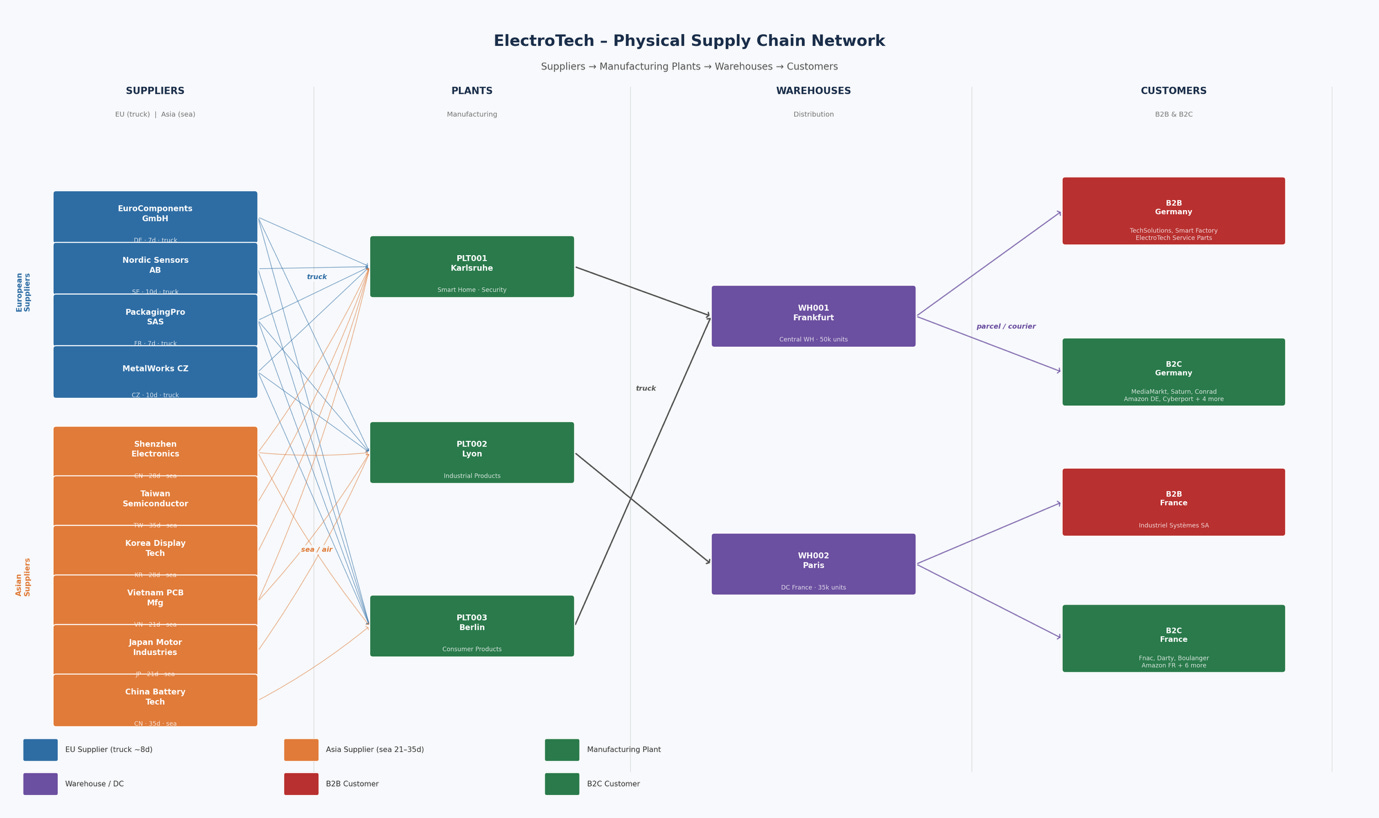
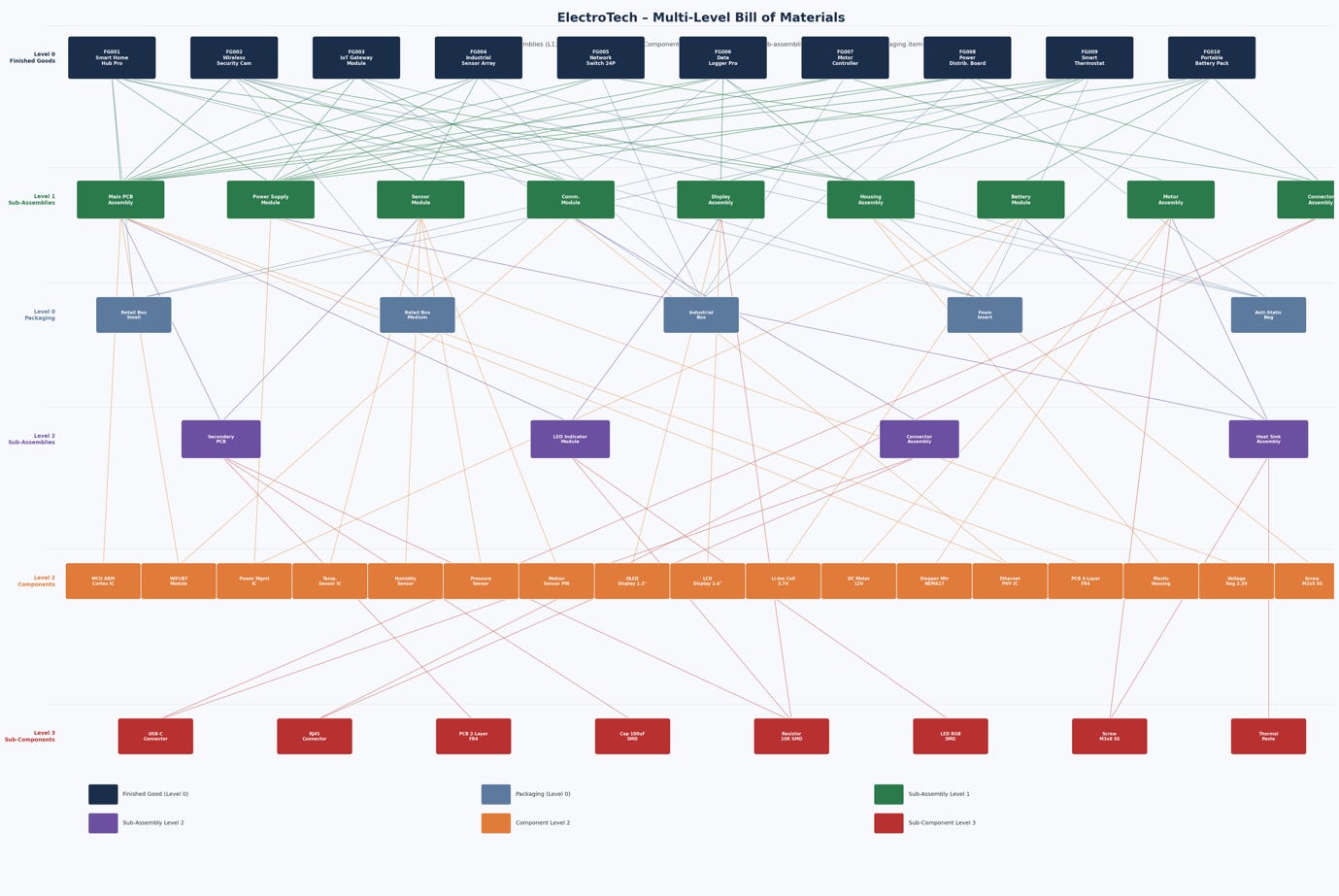
I vibe-coded realistic master data, products, resources, routings, suppliers, historical demand, inventory positions, cost rates, and structured it into a relational database. This became the foundation on which everything else was built.
What is S&OP, in plain language?
(For readers already fluent in supply chain, feel free to skip ahead.)
Sales & Operations Planning (S&OP) is the process by which a company aligns what it expects to sell with what it can actually produce and deliver. It brings together demand forecasts from Sales, production capacity from Operations, inventory positions from Supply Chain, and financial targets from Finance and asks: are we on track? Where are the gaps? What decisions do we need to make?
Sign up free to read the full article
Create a free account to unlock full access to all articles.
Sign Up FreeAlready have an account? Sign in