Skip to content

Southeast Asia Supply Chain

Analysis

Indonesia, Singapore Reaffirm Free Passage in Strait of Malacca

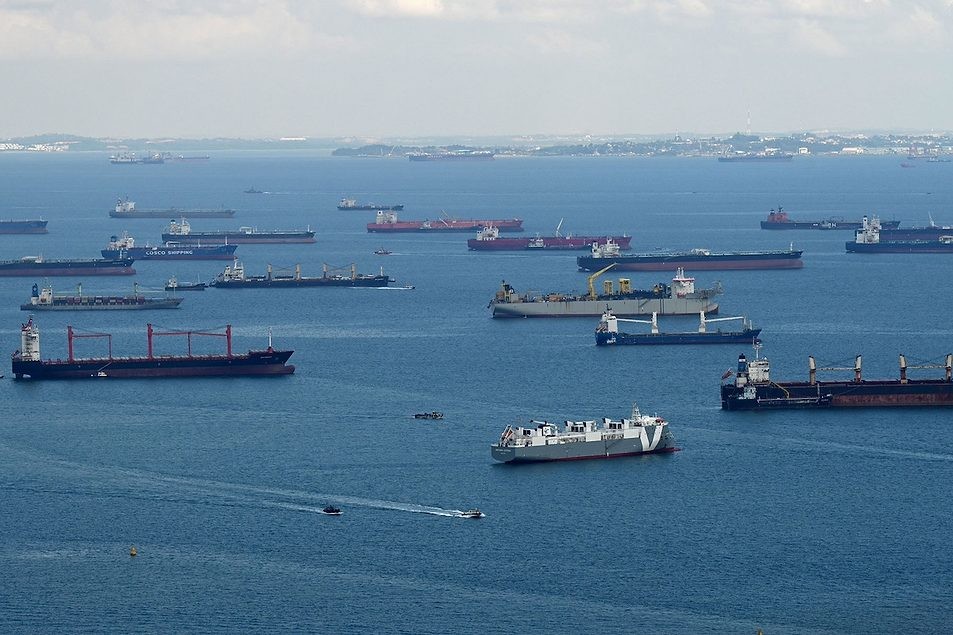
Indonesia and Singapore have jointly reaffirmed their commitment to free passage in the Strait of Malacca — a critical corridor handling 30% of global maritime trade. The agreement, reinforced in May 2024, includes integrated AIS databases by Q4 2025, joint patrols under the 2004 Trilateral Cooperative Arrangement, and digital infrastructure alignment with national logistics platforms. Over 80,000 vessels transit the strait annually, with 25% of global oil shipments and 37 million TEUs moving through Singapore’s Keppel Terminal in 2023. Patrols increased 22% between 2022 and 2024, covering 1,000 nautical miles.

Original source: supplychainbrain.com

Indonesia, Singapore Reaffirm Free Passage in Strait of Malacca

According to www.supplychainbrain.com, Indonesia and Singapore have jointly reaffirmed their commitment to ensuring unimpeded commercial navigation through the Strait of Malacca — a waterway that handles 30% of global maritime trade by volume.

Strategic Coordination on Maritime Security

The two nations formalized their coordination during a bilateral ministerial dialogue held in Singapore in May 2024. Officials from Indonesia’s Ministry of Transportation and Singapore’s Ministry of Transport emphasized interoperability between national maritime surveillance systems and pledged joint patrols to deter piracy and illegal fishing. According to the report, these measures build upon the 2006 Indonesia–Singapore Memorandum of Understanding on Maritime Cooperation, which remains in force and has been updated with real-time vessel tracking protocols.

Economic Dependence on the Strait

The Strait of Malacca connects the Indian Ocean to the South China Sea and serves as the shortest sea route between the Middle East and East Asia. Over 80,000 vessels transit the strait annually — including tankers carrying crude oil from the Persian Gulf to refineries in Indonesia, Singapore, and Japan. The source states that more than 25% of the world’s traded oil passes through this corridor, and container traffic through Singapore’s Port of Keppel alone accounted for 37 million TEUs in 2023.

Operational Integration and Digital Infrastructure

Both countries confirmed plans to integrate their national Automatic Identification System (AIS) databases by Q4 2025, enabling shared vessel position data across maritime authorities. This initiative aligns with Singapore’s Maritime Digitalization Roadmap and Indonesia’s National Logistics Ecosystem Platform, both launched in 2022. The source notes that the digital integration will reduce average port clearance time by up to 40% for vessels transiting under coordinated reporting frameworks.

Broader Regional Implications

The reaffirmation comes amid heightened regional attention to chokepoint resilience. Malaysia — the third littoral state of the Strait — participates in the Trilateral Cooperative Arrangement (TCA) with Indonesia and Singapore, established in 2004. Under the TCA, all three nations conduct joint air and sea patrols covering 1,000 nautical miles of the strait’s western approaches. According to the report, patrol frequency increased by 22% between 2022 and 2024, with over 1,200 coordinated operations conducted last year.

Source: Supply Chain Brain

Compiled from international media by the SCI.AI editorial team.

Ask SCI.AI Finished reading? Continue with SCI.AI. Explore the related policy, route, company and historical context. Continue asking
Ho Chi Minh City Targets 12.2% IIP Growth in 2026
Southeast Asia Supply Chain

Ho Chi Minh City Targets 12.2% IIP Growth in 2026

Ho Chi Minh City targets a 12.2% Industrial Production Index (IIP) increase for 2026, requiring 15–16% growth in Q4. Nine-month IIP rose 11.3% in September 2026, with processing and manufacturing up 12.2%. Three priority sectors — machinery (+14.1%), chemical-pharmaceutical-rubber-plastics (+12.8%), and food processing (+11%) — achieved double-digit growth. Electronics-ICT grew only 1.4% but shows recovery signs, with consumption up 12.7% and inventory down 31.7%. Local content targets aim for >30% in electronics and >15% in high-tech industry by 2030.

Haiphong Collects 88.4% of 2026 Central Budget Target in 9 Months
Southeast Asia Supply Chain

Haiphong Collects 88.4% of 2026 Central Budget Target in 9 Months

Haiphong collected 74,427.8 billion VND in state budget revenue through September 2026—88.4% of the central government’s target. September alone delivered 131.2% of its planned revenue, driven largely by the Customs Clearance Team (7,066.5 billion VND). Total declared trade value reached 13.9 billion USD in September, up 14.9% year-on-year, with imports at 7.7 billion USD and exports at 6.2 billion USD. The city is advancing SmartLog Haiphong and port-logistics integration to reinforce its role in regional supply chains.

Hai Phong Port Expands to 4.7M TEU, But Logistics Gaps Persist
Southeast Asia Supply Chain

Hai Phong Port Expands to 4.7M TEU, But Logistics Gaps Persist

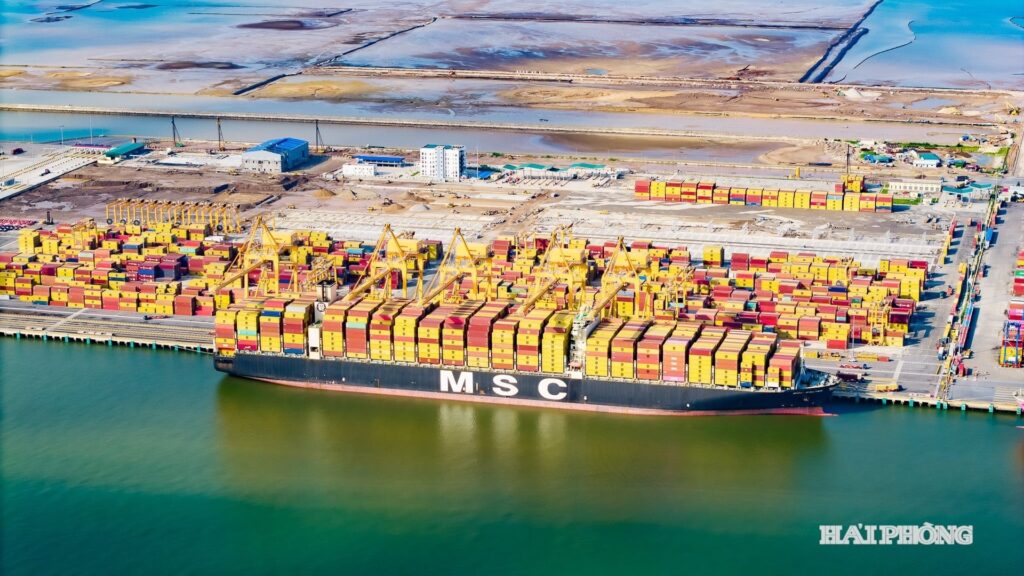
Hai Phong’s Lach Huyen deep-sea port now operates six berths with a design capacity of 4.7 million TEU/year, driving 10%+ annual logistics growth (2021–2025) and contributing 11.5% to city GRDP. Yet inland waterway use remains below 2.3%, road links are overburdened, and fragmented data hinder coordination. With $416.5 billion in regional trade volume (2025), integrated dry ports, digital interoperability, and end-to-end regulatory reform are critical to transform Hai Phong into a true supply chain orchestration hub.

Welcome Back!

Login to your account below

Create New Account!

Fill the forms below to register

Retrieve your password

Please enter your username or email address to reset your password.

Scan to share via WeChat

Open WeChat and scan the QR code to share

QR Code

Add New Playlist