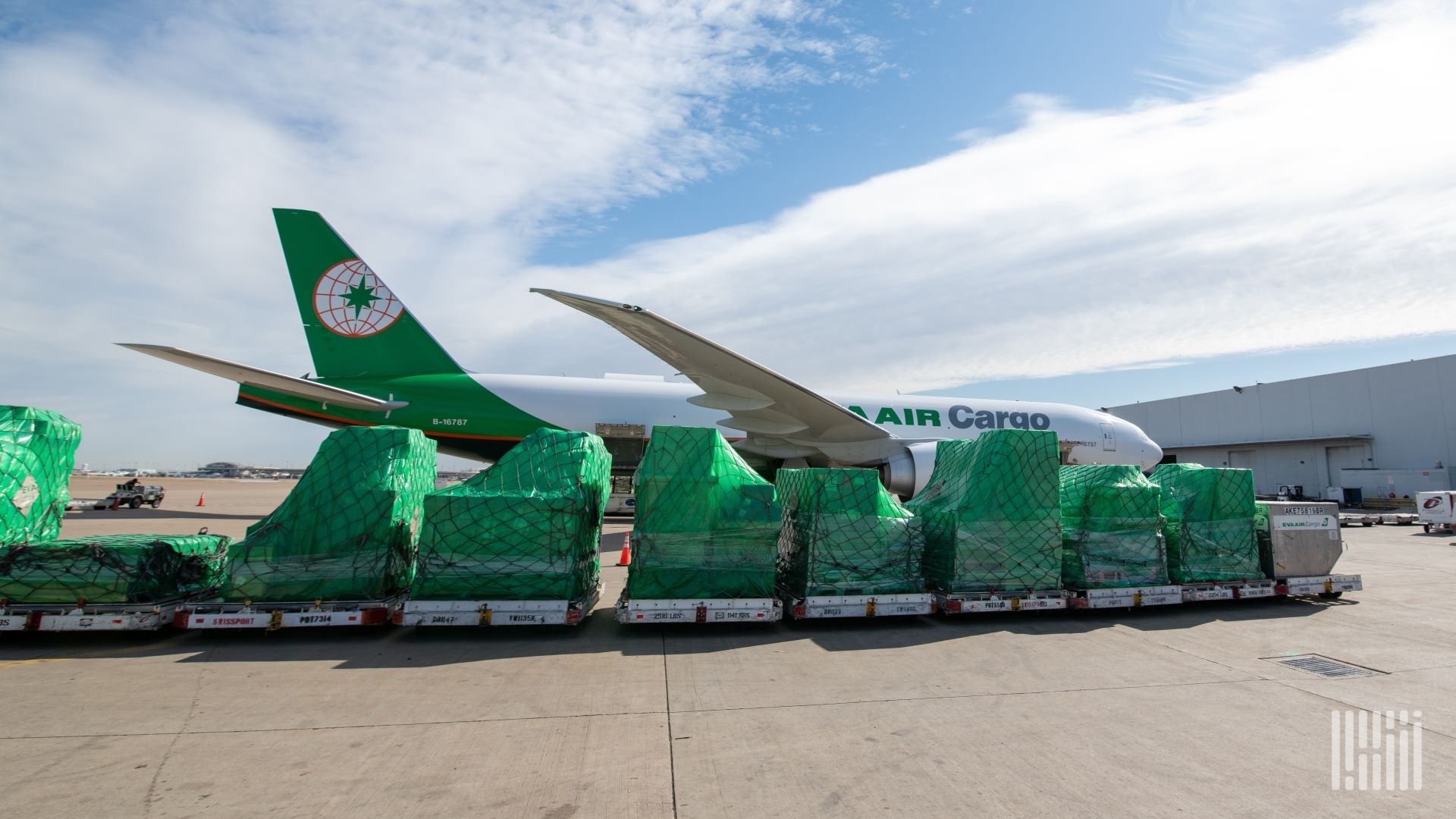
2026 air cargo rates are expected to rise 5% to 15% this year, instead of retreating, because the resumption of hostilities between Iran and the United States is once again reducing airline capacity through the critical Middle East corridor, freight analytics firm Xeneta said in a market outlook published on Friday.
Xeneta’s initial forecast at the start of the year was for contract rates to fall 5% to 10% in 2026. A large component of the price increase is tied to the spike in jet fuel costs. Strong demand for semiconductors and AI-related hardware helped push air cargo demand to 7% year-over-year growth in June. AI technology represents about 10% of total air cargo volume. The June volume growth was well ahead of expectations and supply, which grew 3% with the return of capacity suspended by the Middle East disruption. The demand-supply imbalance pushed aircraft utilization up 3 points to 62%, which influenced the higher rates.
Escalating conflict reshapes capacity landscape
But market dynamics since Xeneta’s monthly report on July 2 are quickly changing again after the United States and Iran broke a shaky ceasefire last week.
The start of the Iran war on Feb. 28 immediately forced more than 12% of global air cargo capacity — in passenger belly holds and freighter aircraft — out of service because of airspace and airport closures, flight cancellations and reduced frequencies, and longer transit times for rerouting to avoid war risk. Initial capacity reductions were close to 20%, Rotate. Over the same period demand grew 4%, ahead of the original 2% to 3% growth forecast for the full year, amid global economic resilience and disruption to ocean shipping services on Middle East lanes, Xeneta said. The combination of higher demand and shrinking supply pushed combined spot and long-term contract rates up 17% in the first half, compared to the same period last year, with rates for immediate delivery jumping 22% and long-term rates up 11%.
Airline spot rates soared 40% in the May-through-June period.
Airline revenue surges amid rate hikes
Higher yields were the biggest factor behind the 22.6% gain in cargo revenue at United Airlines (NASDAQ: UAL) during the second quarter. United Airlines said Wednesday that cargo revenue reached $527 million. For the first half of the year, the carrier generated $859 million in cargo revenue, up 10.5% year over year. Delta Air Lines last week reported cargo revenue of $291 million, a gain of 39% from the prior year.
The industry benchmarking agency now says it expects full-year demand growth toward the higher end of its forecast, published in December, while supply is expected to increase about 2%, down from the range of 2% to 3% published in the spring and the December estimate of 3% to 4% growth. Boeing, in its Commercial Market Outlook released late Friday, said international freighter capacity has increased 5% year-to-date. Rotate estimates capacity is up 3% year over year, with South America being especially strong.
A new source of capacity this year is AerCap, which is leasing the all-new Boeing 777-300 passenger-to-freighter aircraft converted by Israel Aerospace Industries.
The reduction in capacity was underscored Friday when Cathay Pacific announced it has postponed the resumption of its passenger and freighter services to Dubai and Riyadh, Saudi Arabia, adding to the supply chain volatility for shippers. Cathay Cargo said freighter service to Riyadh, scheduled to resume on Aug. 1, has been postponed indefinitely, while passenger services scheduled to restart Sept. 1 have been pushed back until late October.
AI offsets e-commerce decline
A key driver of air cargo growth in 2026 is the boom in artificial intelligence, which depends on semiconductor and hardware shipments. Global semiconductor sales more than doubled year over year in April. AI-related goods movement is heavily concentrated in the trans-Pacific corridor, Xeneta said.
At the same time, the price reporting agency said, demand for e-commerce, the air cargo sector’s main growth engine the past three years, has stalled after new rules ending duty-free access for low-value parcels in the United States and the European Union took effect. The U.S. removed the de minimis exemption last year and began applying regular duty rates to all goods. The European Union removed the duty-free threshold on July 1 and replaced it with a 3 euro fee line item, with a 2 euro handling fee expected to be mandated in November. China’s low-value e-commerce exports fell 7% year over year in May, the sixth consecutive monthly decline, Xeneta said.
“I cannot see the e-commerce growth engine being revived. There will always be a consumer demand for cheap goods manufactured in Asia, but the extraordinary demand growth of recent years will not be sustained. E-commerce was air freight’s single biggest growth pillar, but that is no longer the case,” said Xeneta’s Chief Airfreight Officer Niall van de Wouw, in a news release.
Xeneta data shows spot rates have plateaued, but have not fallen. The Freightos index shows air cargo rates are 25% higher than before the war.
Source: FreightWaves
Compiled from international media by the SCI.AI editorial team.