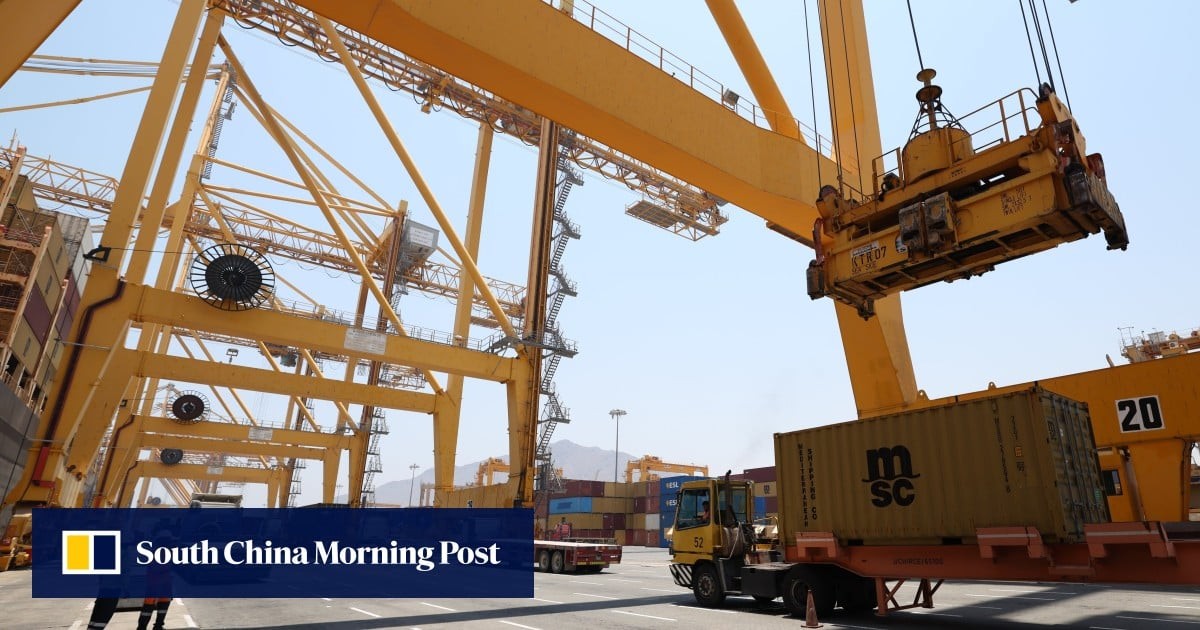
According to www.scmp.com, the United Arab Emirates is advancing a multi-billion-dollar infrastructure initiative to reduce its reliance on the Strait of Hormuz — a waterway through which flows nearly all of its US$1 trillion in annual non-oil trade.
Strategic imperative amid regional instability
With the United States and Iran locked in an intractable conflict, shipping routes through the Strait of Hormuz have become increasingly volatile. This geopolitical tension has prompted Asian exporters to reroute cargo away from the chokepoint — accelerating demand for alternative maritime gateways. Oman’s ports — Duqm, Salalah, and Sohar — are experiencing a renaissance, attracting new shipping lines and securing billion-dollar free-zone deals. The UAE, however, is pursuing domestic alternatives rather than ceding logistics leverage to neighboring states.
East-coast port expansion underway
The UAE government has identified three existing east-coast ports — Khor Fakkan, Fujairah, and Dibba — as priority investment zones, alongside plans for an entirely new terminal on the Gulf of Oman. These facilities sit outside the Strait of Hormuz, offering direct access to the Arabian Sea and Indian Ocean trade lanes. According to Thani Al Zeyoudi, Minister for Foreign Trade, the goal is to achieve zero Hormuz dependency — regardless of whether the strait remains open or closed.
“We’re moving towards having zero Hormuz dependency and that’s regardless of whether it’s open or not. It’s going to open and we hope that will happen quickly, but we will not stop the new plan.” — Thani Al Zeyoudi, Minister for Foreign Trade
Economic stakes and infrastructure scale
The strategic urgency stems from the outsized role of Hormuz-linked infrastructure in UAE trade: Jebel Ali and Khalifa ports — both located inside the Strait — collectively handle the vast majority of the nation’s US$1 trillion in annual non-oil trade. These two hubs anchor a critical logistics corridor stretching from Singapore to Europe. Their centrality makes redundancy difficult — yet essential. The UAE’s east-coast investment program includes upgrades across at least four locations and is expected to require more than $1 billion in committed capital, with construction timelines extending into 2026 and beyond.
- Khor Fakkan: Deepwater container terminal expansion underway
- Fujairah: Oil and dry-bulk port modernization, including new transshipment capacity
- Dibba: Industrial zone integration with maritime logistics infrastructure
- New east-coast facility: Greenfield development targeting full operational launch by Q4 2027
Limitations of concrete over diplomacy
Analysts caution that infrastructure alone cannot insulate trade from geopolitical risk. While new terminals provide physical insurance, long-term supply chain resilience depends on diplomatic stability. As noted in the source report, “securing trade ultimately relies on lasting peace, not just pouring concrete.” The UAE’s push reflects a broader regional trend: Oman has invested $12 billion since 2015 to develop Duqm as a strategic commercial and industrial hub, while Iran continues to assert military presence near Hormuz — underscoring the limits of engineering solutions in contested waters.
For supply chain professionals, the UAE’s east-coast pivot signals a shift toward geographic diversification within the Middle East logistics network — one that demands updated routing protocols, revised transit time estimates, and deeper engagement with Gulf of Oman port authorities. Unlike traditional nearshoring or reshoring models, this is “eastshoring”: relocating critical node capacity within the same geopolitical region but outside high-risk maritime corridors.
Source: South China Morning Post
Compiled from international media by the SCI.AI editorial team.