According to 3dprint.com, 36% of U.S. manufacturing leaders are actively pursuing reshoring domestically in response to shifting trade policy — a trend accelerated by additive manufacturing (AM) as a strategic enabler rather than just a production tool.
Reshoring’s Structural Barriers and AM’s Role
While demand for localized production is rising, structural hurdles persist. Hexagon’s 2025 research found that 28% of U.S. manufacturing leaders believe workforce shortages could slow or significantly delay reshoring efforts. At the same time, manufacturers face fragile supply chains, extended tooling timelines, geopolitical instability, and heightened concerns over intellectual property exposure. Simply replicating legacy production models on domestic soil fails to resolve these vulnerabilities.
What’s emerging instead is a new infrastructure paradigm — one that is more agile, digital-first, and less reliant on traditional tooling. Additive manufacturing is central to that shift.
From Scale-Dependent to Volume-Agnostic Production
For decades, manufacturing efficiency hinged on scale: molds, dies, casting systems, and fixtures justified high upfront investment only for high-volume output — still dominant in automotive manufacturing. But today’s reshoring drivers differ: low-to-medium volumes, short lead-time expectations, aging parts catalogs, and the need to retain sensitive designs domestically.
In aerospace and defense, production volumes are often small across broad component portfolios. In medical manufacturing, customization is increasingly standard. In industrial equipment, replacement parts may be needed years after original suppliers have exited the market. In such contexts, flexibility outweighs scale.
When volumes are limited and demand unpredictable, tooling becomes the bottleneck. Designing, validating, and deploying molds or fixtures can erode domestic production viability — especially when tooling may be used only a handful of times. Additive manufacturing removes that constraint. By moving directly from a validated digital model to physical part, manufacturers bypass lengthy tooling cycles and produce complex geometries without dedicated infrastructure.
Distributed Production and Strategic Control
The pandemic revealed deep dependencies on long, geographically dispersed supply chains — where routine components suddenly carried months-long lead times. Even as logistics stabilized, new pressures emerged: tariffs, evolving trade relationships, and national security considerations. Proximity alone isn’t the goal; strategic control is.
Keeping digital part definitions within secure domestic environments reduces external risk. Instead of transferring proprietary tooling or designs across international suppliers, companies can centralize or selectively distribute encrypted digital files within trusted networks.
Distributed production models are now operational: AM systems are deployed alongside production lines to manufacture custom jigs, fixtures, and tooling elements on demand. Mobile additive units are even being used in field environments — energy, mining, construction, and defense — to produce replacement components at or near the point of use, cutting downtime and logistics overhead.
The Digital Thread as a Resilience Lever
Reshoring is not merely about relocating physical production — it’s about securing the digital thread linking design, validation, and manufacturing. In traditional manufacturing, this thread is fragile: tooling may be stored in one location, design files elsewhere, and expertise in a third. When production moves, the entire ecosystem must be recreated.
Additive manufacturing simplifies that transition. The digital model is the master — securely stored, transmitted, and reproduced without physical tooling transfers. This enables parallel production capabilities across sites or rapid shifts between locations.
- Defense contractors use AM to produce legacy components for aging platforms, reducing reliance on foreign suppliers for discontinued parts.
- Medical device manufacturers produce patient-specific implants and surgical guides domestically, improving quality control and easing regulatory complexity.
- Industrial equipment providers build digital inventories of critical components, enabling on-demand production instead of maintaining large physical stockpiles.
Economic Realities Are Shifting
The reshoring conversation has long centered on labor costs. But labor represents a shrinking share of total manufacturing costs in advanced industries. Automation, energy, logistics, and inventory carrying costs now dominate. AM alters the cost structure in four key ways:
- Eliminates tooling costs for low-volume production
- Reduces material waste versus subtractive processes
- Enables consolidation of multiple components into single printed parts, lowering assembly time and complexity
- Supports lightweight designs that cut shipping costs and in-use energy consumption
When combined with reduced lead times, lower inventory requirements, and improved supply chain resilience, the total cost of ownership often favors localized AM — even if per-part cost appears higher initially.
Workforce Development Is the Critical Gap
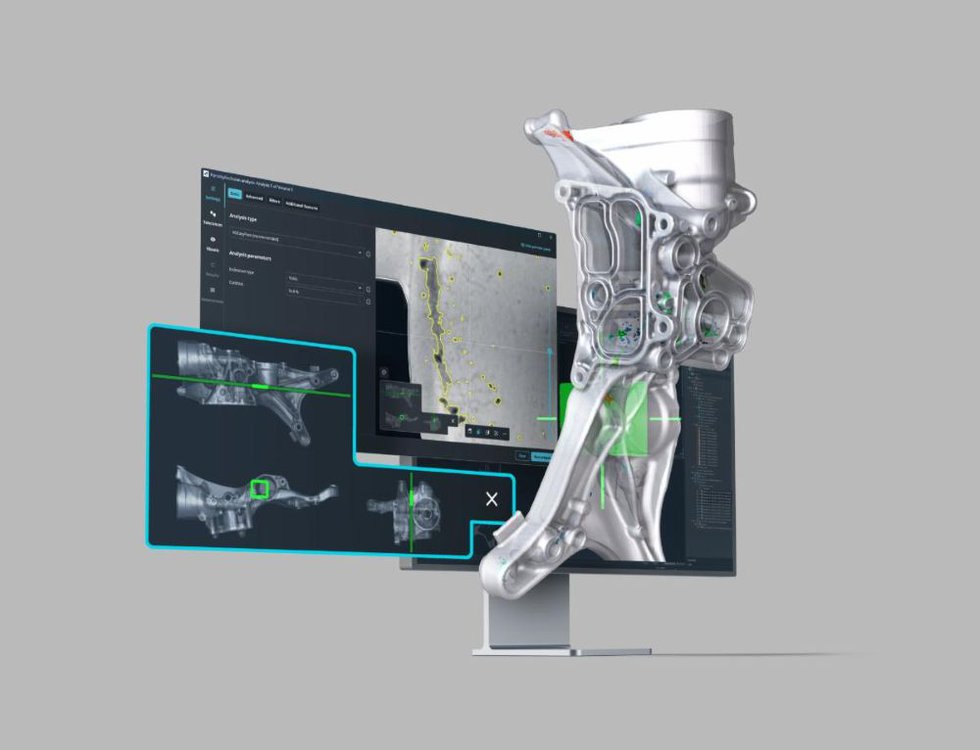
Technology alone doesn’t solve reshoring. As Hexagon’s research underscores, workforce shortages remain a major barrier. AM demands different competencies: digital design fluency, material science understanding, and mastery of process parameters. Quality assurance shifts from physical inspection to digital validation and in-process monitoring.
Educational institutions and training programs are adapting — but slowly. Companies investing in AM are frequently building internal training programs from scratch. That makes early planning essential: organizations delaying AM capability development will compete for a constrained talent pool.
Source: 3dprint.com
Compiled from international media by the SCI.AI editorial team.