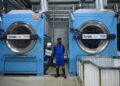
According to procurementmag.com, Microsoft has formally embedded environmental performance into its strategic sourcing for AI infrastructure — driving measurable outcomes including a 92% reuse and recycling rate for decommissioned servers and components in FY25 and diverting 90.5% of construction and demolition waste from landfills and incinerators.
Procurement as climate lever
Environmental product declarations (EPDs) now serve as mandatory inputs for contract awards across Microsoft’s data centre construction and hardware supply chains, per the company’s 2026 Environmental Sustainability Report. These standardized documents provide verified lifecycle carbon data, enabling procurement teams to compare suppliers and prioritize lower-carbon alternatives — a shift that creates market demand signals while maintaining technical compliance and supply chain resilience. In FY25, procurement decisions supported hybrid mass timber construction and multi-storey data centre designs, which reduce embodied carbon relative to conventional steel and concrete without compromising load-bearing capacity or fire safety.
Contractor agreements now include enforceable waste management specifications requiring recoverability and reuse of materials. This contractual integration helped achieve the 90.5% waste diversion rate — a figure cited jointly by Brad Smith, Vice Chair and President at Microsoft, and Melanie Nakagawa, Chief Sustainability Officer at Microsoft, in the report.
Circular procurement at scale
Microsoft operates seven Circular Centres globally — facilities dedicated to refurbishing cloud hardware for redeployment or disassembling end-of-life equipment to recover high-value components. Procurement specifications for new server hardware now mandate design features that facilitate disassembly and material recovery at end of life. Supplier agreements also require take-back commitments for retired hardware and recovery of rare earth elements from circuit boards — establishing closed-loop supply chains rather than linear disposal pathways.
The company achieved a 92% reuse and recycling rate for decommissioned servers and components for the second consecutive year — a milestone confirmed in the same joint statement by Brad Smith and Melanie Nakagawa. During FY25, procurement teams also negotiated increased recycled content in server packaging, eliminating single-use plastics in primary product packaging to just 0.07% by the end of calendar year 2025.
Water, energy, and supplier accountability
Procurement decisions directly influence water stewardship: Microsoft replenished more than 14.2 million cubic metres of water in FY25 — exceeding its total global withdrawals for the first time. This water-positive milestone was enabled by procurement of rainwater harvesting systems, filtration equipment selected based on local climate conditions, and cooling technologies that reduce freshwater demand without sacrificing thermal performance. Water usage effectiveness improved by 25% since 2022 through equipment procurement with strict efficiency specifications.
On energy, Microsoft matched 100% of its annual global electricity consumption with renewable energy in FY25. Its procurement investments extend to renewable diesel and emerging clean energy technologies — including long-term contracts for carbon dioxide removal projects that provide revenue certainty for scaling providers. Procurement specifications now require suppliers to publicly report their own emissions and set science-based reduction targets, cascading accountability into tier two and tier three suppliers.
Technology-enabled recovery
To increase material recovery rates, Microsoft is developing robotics and automation systems capable of disassembling data centre equipment more efficiently than manual processes. These systems aim to boost the volume of reusable components re-entering the supply chain. The company’s Project Natick team deployed the Northern Isles data centre 117 feet deep to the seafloor in spring 2018 — an early example of infrastructure innovation aligned with environmental constraints.
“Since setting our commitments in 2020, the rise of AI is accelerating innovation and creating new opportunities for economic and societal progress – but it is also increasing demand for energy, water, land and materials,” said Melanie Nakagawa on LinkedIn. “As a company at the forefront of this transition, Microsoft has a responsibility to help ensure that technology strengthens, rather than strains, the systems and communities on which it depends.”
“Across our cloud operations, we achieved 92% reuse and recycling of decommissioned servers and components for the second consecutive year, diverted 90.5% of construction and demolition waste from landfills and incinerators and expanded our Circular Centres to seven facilities globally.” — Brad Smith, Vice Chair and President at Microsoft, and Melanie Nakagawa, Chief Sustainability Officer at Microsoft
Microsoft achieved a global average Power Usage Effectiveness (PUE) of 1.17, a metric significantly influenced by procurement choices for cooling equipment and power-harvesting technologies.
Source: procurementmag.com
Compiled from international media by the SCI.AI editorial team.