The company selected Port Freeport to improve its transportation flows to Gulf and Midwest dealer partners.
Strategic port partnership launched
Mitsubishi Motors North America has entered an agreement with port operator AMPORTS and Port Freeport in Texas to gain greater access to the Gulf and Midwest areas, July 7 press release. Under the deal, the automotive company has selected Port Freeport to import additional automotive volumes from Japan to the Texas Gulf Coast.
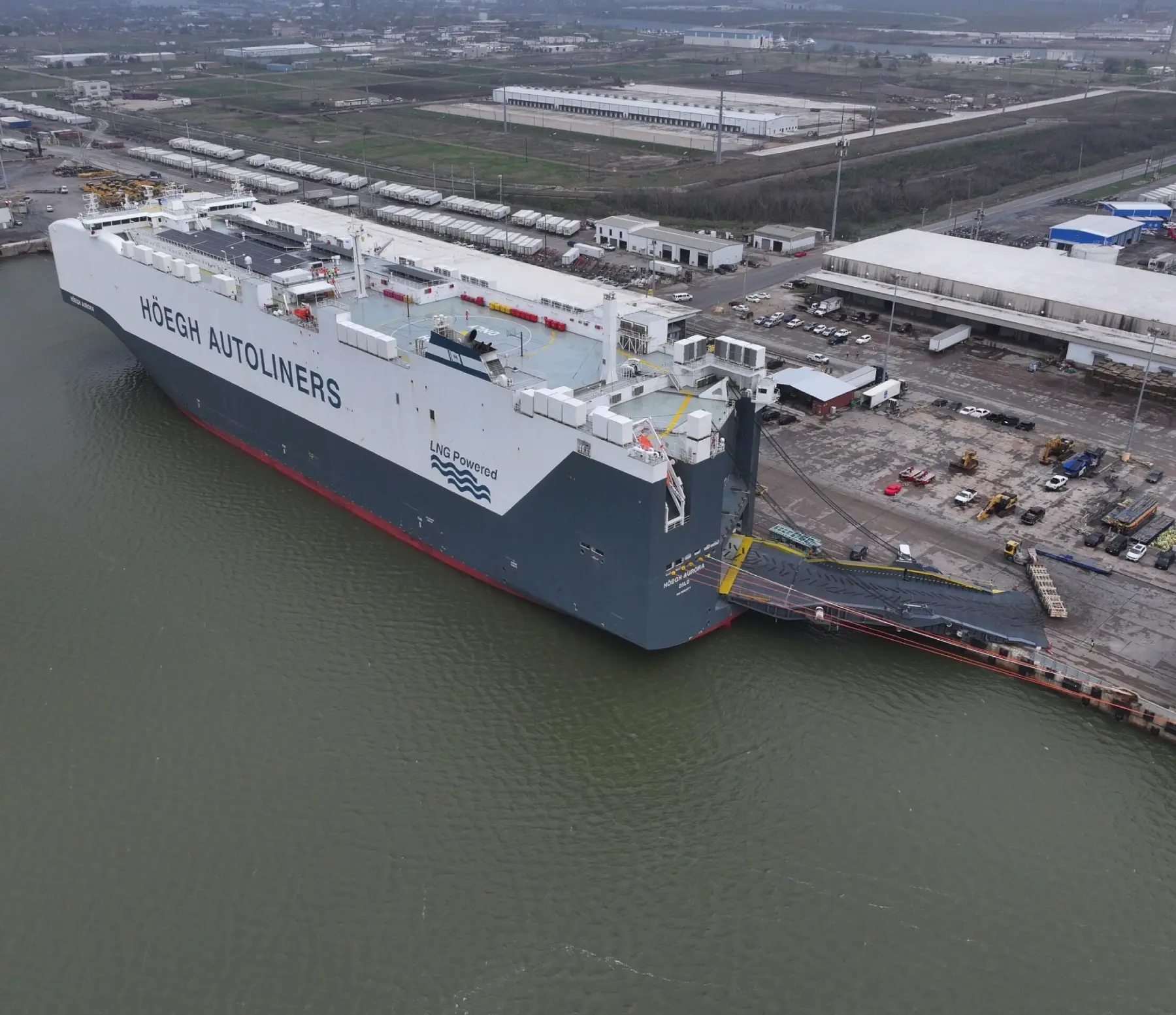
This initiative is designed to drive faster vehicle delivery to its dealer partners across the Gulf and Midwest regions. A Höegh Autoliners RoRo vessel carried Mitsubishi vehicles into Port Freeport in July 2026, confirming the operational launch of the new logistics corridor.
Operational execution and timeline
The first Mitsubishi vehicles arrived at Port Freeport via a Höegh Autoliners vessel in July 2026, as confirmed by imagery retrieved from Port Freeport’s official website on July 10, 2026. The port is located on the Texas Gulf Coast, offering direct maritime access to international shipping lanes and inland multimodal connections.
Jeremy Barnes, Mitsubishi Motors North America’s senior director of communications and events, told Supply Chain Dive that the move supports “faster vehicle delivery to our dealer partners” — a goal directly tied to reducing transit time between Japanese manufacturing facilities and U.S. retail points.
Logistics infrastructure and carrier alignment
Höegh Autoliners is the designated roll-on/roll-off carrier handling Mitsubishi’s trans-Pacific shipments into Port Freeport. The vessel pictured docked at the port is specialized for auto unit handling and represents the company’s established transport relationship with Mitsubishi.
The port operator AMPORTS manages terminal operations at Port Freeport under the new agreement. This collaboration enables Mitsubishi to bypass traditional East Coast ports and shorten inland distribution legs to dealers in states including Texas, Louisiana, Oklahoma, Kansas, and Missouri.
Geographic and supply chain impact
By shifting import volume to Port Freeport, Mitsubishi aims to reduce overland haul distances by up to 30% for dealers in the Gulf and Midwest regions compared to routing through Northeast or Southeast ports. This geographic optimization aligns with broader industry trends toward regionalized distribution networks and nearshoring of final-mile logistics.
The Texas Gulf Coast location provides rail and trucking connectivity to key automotive markets, with direct Class I rail service available to major freight corridors serving the Midwest. Mitsubishi’s decision follows similar moves by other OEMs evaluating secondary U.S. ports to mitigate congestion and increase supply chain resilience.
Source: Supply Chain Dive
Compiled from international media by the SCI.AI editorial team.