
Skip to content

Procurement · Supplier Management

Analysis

Ford, GM ink memory supply deals with Micron for EVs

Ford Motor Co. and General Motors signed memory and storage supply agreements with Micron Technology in July 2026 to support next-generation electric vehicles. Micron will supply LPDDR, NOR, and UFS NAND chips to GM, while Ford’s deal covers broad memory and storage technology. The partnerships include joint development of automotive-specific memory solutions, reflecting growing OEM involvement in semiconductor roadmaps. Micron’s automotive revenue rose 37% year-over-year in fiscal 2025, reaching $4.2 billion in total memory revenue, with automotive now accounting for 12% of that total.

Original source: supplychaindive.com

Ford, GM ink memory supply deals with Micron for EVs

Ask SCI.AI about this story

📋 本文要点

Ford Motor Co. and General Motors signed memory and storage supply agreements with Micron Technology in July 2026 to support next-generation electric vehicles. Micron will supply LPDDR, NOR, and UFS NAND chips to GM, while Ford’s deal covers broad memory and storage technology. The partnerships include joint development of automotive-specific memory solutions, reflecting growing OEM involvement in semiconductor roadmaps. Micron’s automotive revenue rose 37% year-over-year in fiscal 2025, reaching $4.2 billion in total memory revenue, with automotive now accounting for 12% of that total.

According to www.supplychaindive.com, Ford Motor Co. and General Motors each signed supplier agreements with Micron Technology in July 2026 to secure memory and storage components for next-generation electric and connected vehicles.

Strategic partnerships formalized this month

The agreements were announced publicly in early July 2026, with Micron confirming both deals in separate press releases dated July 1, 2026. General Motors’ agreement specifies that Micron will supply low-power double-data-rate (LPDDR) memory, NOR flash, and universal flash storage (UFS) NAND products — all critical for infotainment systems, advanced driver-assistance systems (ADAS), and vehicle-to-everything (V2X) computing platforms. Ford’s agreement covers memory and storage technology broadly, though the automaker did not disclose specific product categories in its public statement.

Supply chain resilience through vertical integration

These contracts reflect a broader industry shift toward securing semiconductor supply chains amid persistent shortages and geopolitical constraints. According to the report, Micron is one of only three U.S.-based manufacturers capable of producing advanced LPDDR5X and UFS 4.0 chips at scale — technologies required for the 2026 Chevrolet Silverado EV and upcoming Ford electric models. The 2026 model year marks a pivotal ramp-up phase for both automakers’ software-defined vehicle architectures, which rely on significantly higher memory bandwidth than legacy internal combustion engine platforms.

Collaboration extends beyond procurement

Beyond component supply, GM and Micron will jointly develop future memory and storage requirements tailored to automotive use cases — including thermal durability, functional safety compliance (ISO 26262 ASIL-B), and over-the-air update resilience. Phil Neuffer, Lead Editor at Supply Chain Dive, noted that such co-development arrangements are increasingly common among Tier 1 suppliers and chipmakers:

“Automakers are no longer just buyers — they’re technical partners shaping silicon roadmaps.” — Phil Neuffer, Lead Editor, Supply Chain Dive

Micron confirmed it has established dedicated automotive engineering teams in Boise, Idaho and Manila, Philippines to support these engagements.

Industry context and precedent

This move follows similar commitments by other OEMs: Tesla signed a multi-year NAND supply agreement with Kioxia in Q2 2025, while Stellantis partnered with SK hynix in May 2026 for LPDDR5X deployment across its European EV lineup. Micron’s automotive revenue grew 37% year-over-year in fiscal 2025, driven largely by design wins in ADAS and digital cockpit applications. The company reported $4.2 billion in total memory revenue for fiscal 2025, with automotive representing approximately 12% of that total — up from 7% in fiscal 2024.

Source: Supply Chain Dive

Compiled from international media by the SCI.AI editorial team.
Ask SCI.AI Finished reading? Continue with SCI.AI. Explore the related policy, route, company and historical context. Continue asking
Stay ahead of supply chain shifts

One email a week: the stories that matter and new risk events — in English, free.

Prefer RSS? Articles Risk events

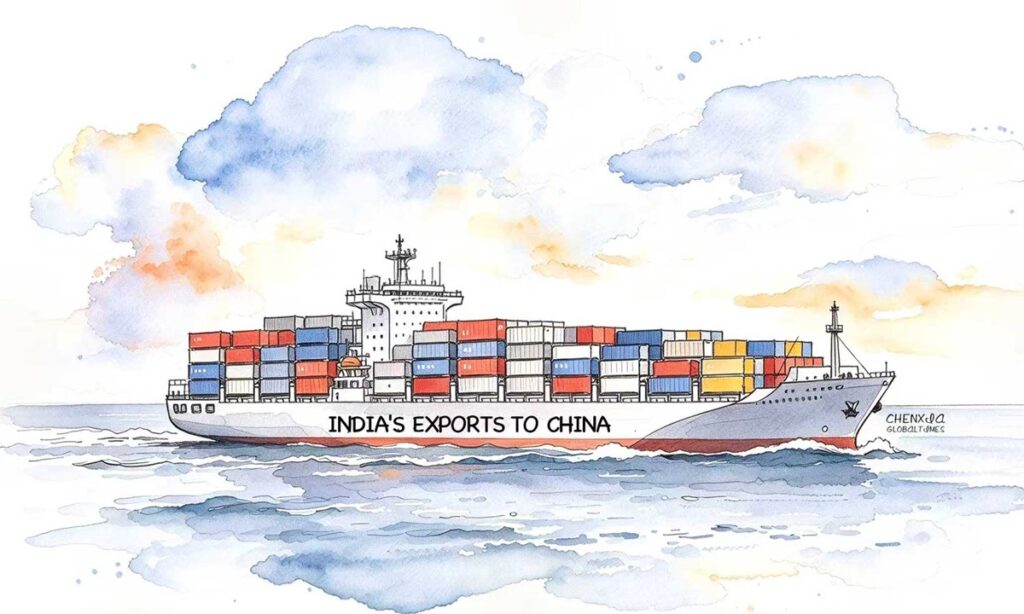
India eyes China export growth as shipments rise 36.62%
Supplier Management

India eyes China export growth as shipments rise 36.62%

India's exports to China rose 36.62 percent year-on-year to $19.47 billion in the 2025-26 fiscal year, with growth of about 36 percent continuing in the April-September period, according to a Global Times report. The article examines how supply chain complementarity could help India meet Commerce and Industry Minister Piyush Goyal's goal of becoming a major exporter to China and ASEAN. It notes China's imports grew more than 20 percent year-on-year from March through September 2026, with monthly imports topping 2 trillion yuan ($300 billion) in September for the first time.

C.H. Robinson: 5 external forces raise supply chain costs in 2027
Supplier Management

C.H. Robinson: 5 external forces raise supply chain costs in 2027

A 2027 Freight Market Outlook Report from C.H. Robinson—released Oct 14, 2026—identifies five external forces reshaping global supply chains in 2027: transportation regulations, legal and liability changes, capacity growth constraints, extreme weather (including a strong El Niño), and geopolitical tensions. These forces are projected to increase operating costs, disrupt ports and inland networks, and redirect freight flows. The report urges shippers to monitor supply-demand imbalances in real time and adapt strategies continuously. Full findings are available on C.H. Robinson’s website.

2027 Supply Chains Reshaped by Geopolitics, Weather, and 78% Fertilizer Cost Surge
Supplier Management

2027 Supply Chains Reshaped by Geopolitics, Weather, and 78% Fertilizer Cost Surge

C.H. Robinson’s 2027 Freight Market Outlook Report identifies geopolitical conflict, climate disruptions, and regulatory shifts as primary external forces reshaping global supply chains. Input costs have surged 78% for fertilizer and 66% for pesticides since 2020, forcing operational overhauls. The report highlights how conflict in key corridors, trade realignments, and extreme weather are testing long-held logistics assumptions. Bob Carpenter, CEO of GS1 US, noted that geopolitical tension and supply chain disruptions are compelling organizations to transform strategies. The 2024 startup awards drew 400 applications from 12 countries, reflecting growing innovation pressure.

Welcome Back!

Login to your account below

Create New Account!

Fill the forms below to register

Retrieve your password

Please enter your username or email address to reset your password.

Scan to share via WeChat

Open WeChat and scan the QR code to share

QR Code

Add New Playlist