According to www.asiabusinessoutlook.com, India’s average manufacturing growth rate climbed from 3.44% in the pre-pandemic period (2016–19) to 4.15% between 2022 and 2025, lifting it approximately two percentage points above the global average.
Supply Chain Vulnerabilities Drive Global Sourcing Shifts
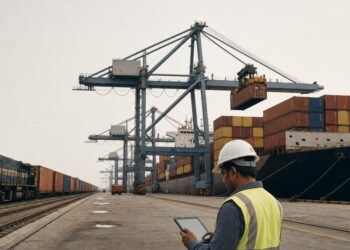
The past five years have exposed systemic weaknesses in lean, single-source supply chains. Geopolitical tensions, climate-related disruptions, port congestion, and evolving trade policies now force companies to prioritize resilience alongside cost efficiency. Maersk has warned that shipping congestion could intensify as vessels return to the Suez Canal while alternate routes remain active. Meanwhile, changing import rules in major markets compel businesses to reassess sourcing costs far more frequently than before.
According to PwC India, nearly half of Indian CEOs express concern about supply chain disruptions, while around two-thirds are already adjusting their sourcing strategies to mitigate geopolitical risks. Research cited in the article notes that more than 180 companies have announced supply chain relocations in recent years — with geopolitical concerns now outweighing labor-cost considerations as the primary driver.
India’s Structural Advantages Strengthen Its Sourcing Appeal
ASSOCHAM (The Associated Chambers of Commerce and Industry of India) analyzed the world’s ten largest manufacturing economies — which collectively produce close to 65% of global manufacturing output — and found India’s accelerated growth trajectory reflects broader structural improvements. Nirmal K. Minda, President of ASSOCHAM, stated:
“Companies are no longer looking at efficiency alone,” and are now weighing resilience and diversification alongside cost.
Three key enablers underpin this shift: First, infrastructure is catching up through government initiatives including the Production Linked Incentive (PLI) scheme, dedicated industrial corridors, and the PM Gati Shakti national logistics plan. Second, India’s addition to JPMorgan’s global bond index in 2025 signaled strengthened macroeconomic fundamentals to institutional investors — reinforcing confidence in long-term manufacturing investment. Third, India’s industrial base has broadened beyond electronics assembly and pharmaceuticals into specialty chemicals, auto parts, and precision manufacturing — enabling multinationals to treat India as a credible primary supplier across multiple categories.
From Diversification to Targeted Resilience
Simply adding India to a supplier portfolio without strategic integration risks fragmentation — increasing contract management burdens, quality oversight complexity, and compliance overhead. As PwC India’s supply chain research emphasizes, businesses are shifting from “just-in-time” to “just-in-case” models, deliberately building redundancy via additional inventory, spare production capacity, and multiple qualified suppliers.
This approach represents a calculated trade-off: while redundancy incurs added costs, its purpose is to withstand realistic, high-probability disruptions — not to prepare for every theoretical scenario. The report stresses that unstructured expansion can ironically weaken resilience, especially when low-volume suppliers deprioritize orders during crises.
Digital Twins and AI Enable Proactive Risk Response
Effective diversification depends on early disruption detection. Maersk’s supply chain resilience team monitors real-time developments — including port congestion, civil unrest, and regulatory changes — converting them into actionable risk signals based on actual supply chain impact rather than media volume.
As one Maersk resilience specialist observed:
“An incident dominating international headlines may have little effect on supply chains, while a relatively unnoticed regional disruption can significantly disrupt a major trade route.”
AI-powered control towers and digital twins bring enterprise-level visibility: a digital twin creates a virtual replica of the end-to-end supply chain, enabling planners to simulate port closures, tariff changes, or supplier outages in advance. Combined with predictive analytics that ingest shipment data, weather forecasts, and geopolitical intelligence, these tools compress response time from weeks to hours. Cybersecurity is now integral to this architecture: Verizon’s 2025 Data Breach Investigations Report documented a 34% year-on-year increase in global cyber incidents linked to software vulnerabilities — underscoring the need to secure the very platforms designed to enhance resilience.
Source: asiabusinessoutlook.com
Compiled from international media by the SCI.AI editorial team.