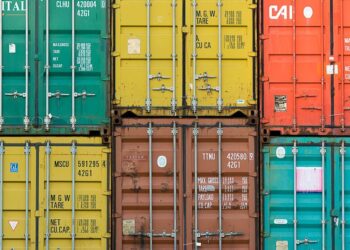
According to www.chrobinson.com, the C.H. Robinson Freight Market Update: April 2026 reports that North America truckload shipping costs are projected to rise 16–17% year over year, tightening faster than expected amid capacity constraints, carrier attrition, and rising operating costs—even during typically softer seasonal periods.
Key Market Signals
Geopolitics, linehaul and fuel costs, and capacity are identified as the three key freight signals for April 2026. Diesel fuel prices climbed from $3.72 to over $5.40 per gallon in March 2026, the highest level since mid-2022—introducing volatility into carrier margins, capacity decisions, and route planning.
North America Freight Modes
- Truckload: Markets are tightening rapidly; rate pressure persists despite seasonal softness.
- LTL: Showing early signs of firmer conditions, with modest gains in tonnage and shipments—and some freight shifting from truckload—but uneven demand and rising fuel costs sustain regional and margin pressure.
- Ocean freight: Conditions appear balanced on the surface, yet underlying disruptions—including rerouting, elevated fuel costs, and capacity adjustments—are extending transit times and increasing variability across major trade lanes.
- Air freight: Stabilizing post–Lunar New Year, but routing constraints, fuel costs, and regional imbalances continue to limit flexibility—particularly on India- and Gulf-linked corridors.
- Intermodal: Demonstrating early recovery, with rising demand and costs remaining competitive versus truckload; its cost advantage is expected to widen as truckload capacity tightens and fuel prices climb—especially on key long-haul lanes.
Ports, Cross-border & Regulatory Landscape
Port operations remain fluid across North America, though inland rail constraints, rising drayage costs, and shifting cargo flows are introducing localized variability. Execution risk is becoming increasingly lane-specific—even where capacity is available.
Cross-border markets are tightening: strong Mexico trade meets rising carrier costs and regulatory pressure, while Canada faces enforcement-driven capacity loss and muted seasonal relief. Fuel, labor, insurance, and compliance changes are raising pricing risk and execution complexity across key North American corridors.
Trade policy continues evolving, with the IEEPA refund process build-out, temporary Section 122 tariffs, and new Section 301 actions emerging. Though some stability is returning through trade deals, uncertainty remains high as compliance, costs, and global dynamics evolve.
Dalilah’s Law is unlikely to pass this congressional session; regulatory changes already address key provisions. Any impact on driver supply is expected to occur gradually through existing CDL renewal cycles—limiting near-term disruption to capacity.
Industry-Specific Impacts
The report highlights sector-specific pressures:
- Retail: Supply chains are shifting amid cost and channel changes.
- Automotive: Middle East disruption adds long-tail risk to auto supply chains.
- Energy: AI policy and geopolitics are shaping energy infrastructure planning.
- Healthcare: Oil price volatility is a hidden driver of healthcare supply chain costs.
Source: www.chrobinson.com
Compiled from international media by the SCI.AI editorial team.