According to www.mitsubishimanufacturing.com, manufacturers must embed resilience into every link of their value chain by 2026—not as a strategic option but as a fundamental requirement for operational continuity and competitive advantage.
Leveraging Digital Twins and IoT for End-to-End Visibility
A digital twin of the supply chain is described as a virtual replica that mirrors the physical flow of materials, production processes, inventory, and logistics in real time. It integrates data from IoT sensors deployed across factories, warehouses, transportation networks, and even supplier facilities—monitoring machine performance, production output, inventory levels, environmental conditions (temperature, humidity), and the precise location of goods in transit. This integration delivers an end-to-end, dynamic view enabling manufacturers to visualize bottlenecks, track schedule deviations, and identify potential failures before escalation. For example, an IoT sensor on a critical machine in a supplier’s factory could signal an impending maintenance issue; the digital twin would flag it as a potential delay, allowing proactive engagement, alternative sourcing, or schedule adjustment. The system also supports advanced simulation—testing impacts of port closures, demand surges, or raw material shortages without disrupting physical operations. When combined with AI and machine learning, it enables predictive maintenance insights, optimized inventory placement, and dynamic routing recommendations. Technical implementation requires robust data integration platforms, secure cloud infrastructure, standardized data protocols, and stringent cybersecurity measures.
Strategic Diversification and Regionalization of Sourcing
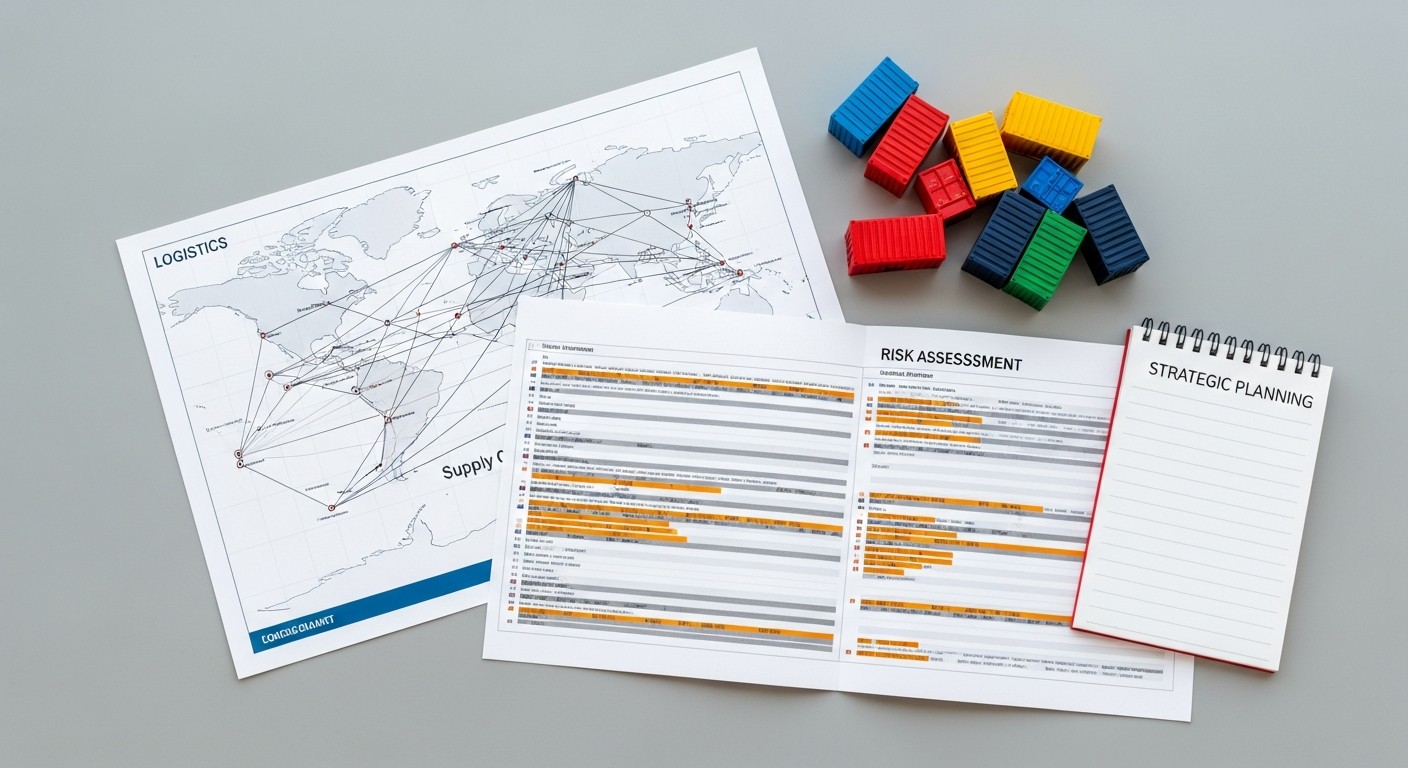
Over-reliance on single-source suppliers or geographically concentrated supply bases is identified as a critical vulnerability. To counter this, manufacturers must adopt aggressive diversification—establishing relationships with multiple suppliers for critical components—and regionalization, such as nearshoring and reshoring. Diversification involves actively splitting orders among several qualified vendors, even if unit costs rise slightly, because the strategic benefit of reduced risk and increased flexibility outweighs marginal cost differences. Regionalization reduces lead times, minimizes exposure to long-distance logistical disruptions (e.g., Suez Canal blockages, international shipping port congestion), and simplifies compliance with trade regulations. A European manufacturer might source components from within the EU rather than relying solely on Asian markets. Implementation requires analysis of total cost of ownership (TCO)—including procurement, inventory carrying costs, transportation, tariffs, quality control, and crucially, the cost of potential disruptions. Risk assessments should identify single points of failure and inform multi-tiered sourcing strategies: a primary supplier, a qualified secondary ready to scale, and a third-tier emergency option. Supplier relationship management (SRM) platforms are essential to manage communication, performance, and collaborative risk planning across the network.
AI-Powered Predictive Analytics and Risk Management
Traditional risk management is deemed insufficient for today’s dynamic challenges. AI-powered predictive analytics transforms resilience efforts by ingesting and processing vast quantities of heterogeneous data—from internal operational metrics (production rates, inventory levels) to external signals like geopolitical news feeds, weather patterns, economic indicators, social media sentiment, and global health data. According to the report, this capability allows manufacturers to anticipate risks and respond proactively rather than reactively.
“Manufacturers must move beyond reactive problem-solving to proactive, foresight-driven strategies that leverage advanced technology, foster agility, and build intrinsic robustness into every link of their value chain.” — James Nakamura, Manufacturing engineer and industrial writer covering production, quality control, and lean management
The report emphasizes that resilience in 2026 hinges on three interlocking pillars: technological enablement (digital twins, IoT, AI), structural adaptation (diversified and regionally aligned sourcing), and cultural and operational shift toward proactive, data-informed decision-making. Practitioners should prioritize interoperable data architecture, cross-tier supplier transparency, and TCO-based sourcing decisions—not just lowest unit price. Given widespread industry adoption of similar frameworks—such as Maersk’s AI-driven predictive logistics platform and DHL’s digital twin pilots for warehouse optimization—the Mitsubishi guidance reflects a converging global standard for manufacturing supply chain maturity. These approaches directly address documented pain points: the World Economic Forum’s 2025 Global Risks Report cites supply chain fragility as the top operational risk for 73% of global manufacturers, while Gartner notes that by 2026, 85% of large manufacturers will deploy at least one digital twin for supply chain modeling—a figure consistent with Mitsubishi’s emphasis on scalability and simulation readiness.
Source: www.mitsubishimanufacturing.com
Compiled from international media by the SCI.AI editorial team.