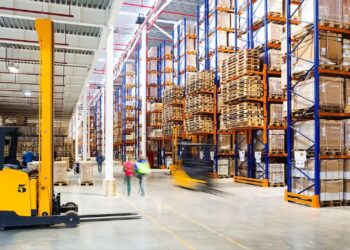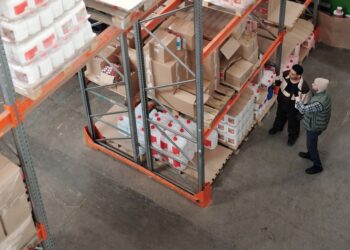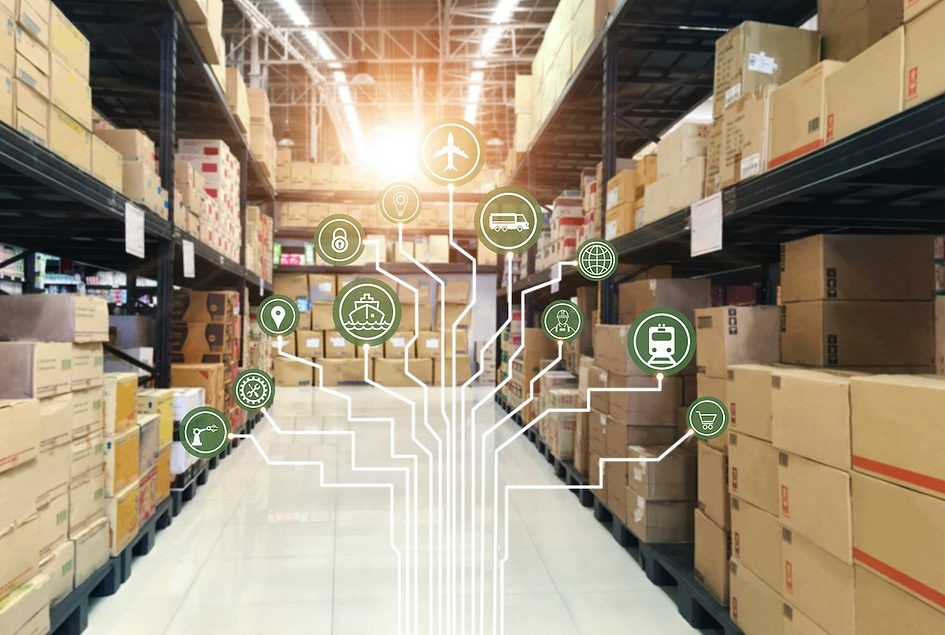
According to www.supplychainbrain.com, the National Retail Foundation (NRF) estimates American consumers will spend over $1 trillion in holiday shopping in 2025 — a roughly 4% increase since 2024 and the most expensive year to date. This surge places unprecedented pressure on retail supply chains heading into December and extending through January’s reverse logistics peak. The 2025 holiday season has served as a litmus test for supplier and retailer readiness — revealing that transformation is accelerating, especially through technology adoption that directly supports frontline consumer experiences.
Centralized Operations as the Supply Chain ‘Brain’
Supply chain professionals must now prioritize centralizing internal operations — not as a cost-cutting exercise, but as foundational infrastructure for agility. The source states companies are increasingly asking how to consolidate supply chain processes and teams, and how partners can accelerate this via supply-chain-as-a-service (SCaaS). A unified operating model integrates finance, procurement, planning, and logistics to standardize processes and eliminate inefficiencies. At its core lies the single “command center” — a centralized data hub consolidating customer demand, inventory levels, and supplier performance. This enables more accurate forecasting and faster, evidence-based decisions. As the source notes:
“Think of this centralized command center as the ‘brain’ of the supply chain operation, analyzing data to develop actionable strategies.” — Tanguy Caillet and Charisma Glassman, SCB Contributors
Algorithmic Supply Webs Replace Linear Models
The traditional linear supply chain is giving way to dynamic, adaptive networks — described by the source as “algorithmic supply webs.” These are constantly reconfiguring nodes responding to volatility in real time. Retailers simulate thousands of scenarios daily — rerouting shipments, adjusting transportation paths on the fly — especially in high-velocity sectors like grocery and fashion. The centralized command center feeds data-driven indicators to algorithms that determine optimal fulfillment locations based on demand, logistics capacity, fuel costs, and more. Crucially, the source emphasizes that AI alone is insufficient:
“The real value emerges when these tools are paired with process intelligence, using human expertise to fine-tune AI models and improve scenario planning.” — Tanguy Caillet and Charisma Glassman, SCB Contributors
Microfactories and Brick-and-Mortar as Fulfillment Hubs
Proximity to demand is now non-negotiable. Enabled by centralized data control, microfactories — producing items like 3D-printed fashion accessories, limited-run beauty products, and electronics near demand centers — minimize waste, navigate tariffs, speed delivery, and reduce landed costs. However, the source states these come with logistical complexities, upfront setup costs, and workforce specialization requirements — making strategic partnerships and modular implementation essential. Simultaneously, brick-and-mortar stores are evolving into active fulfillment nodes. With options like in-store pickup, same-day delivery via Instacart, and ship-from-store, shelf-level inventory visibility has become mission-critical. Retailers are treating in-store stock as a primary indicator of demand and replenishment need — requiring end-to-end inventory visibility across all tiers, from point-of-sale to regional distribution hubs.
Source: Supply Chain Brain
Compiled from international media by the SCI.AI editorial team.