According to www.maersk.com, European supply chains face compounding pressures in April 2026 — driven by Middle East geopolitical instability, severe weather across key ports, critical rail infrastructure failures, documentation-driven inland delays, and surging energy-related transport costs.
Ocean & Port Operations Under Strain
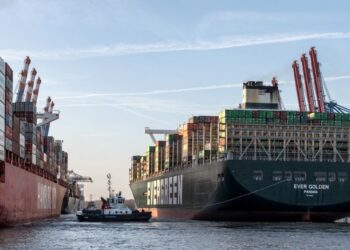
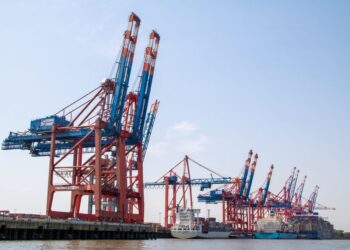
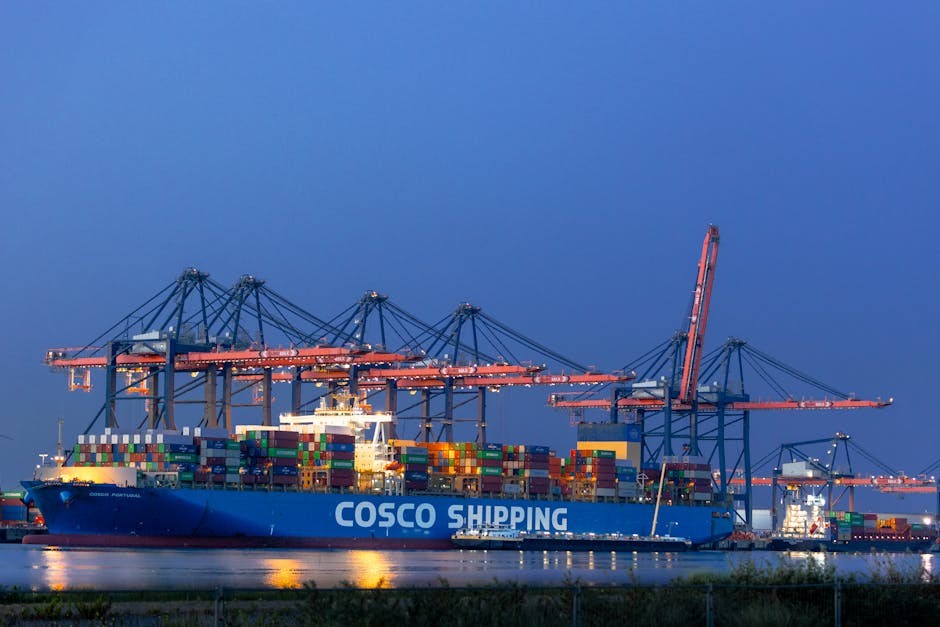
In Rotterdam, vessel delays compounded by storms and strong winds have pushed yard density to very high levels. Maersk urges customers to pick up import units as soon as possible after discharge to prevent terminal congestion. The upcoming Easter holidays — especially in Germany — are expected to reduce labour availability at terminals, prompting close coordination between Maersk teams and terminal authorities.
In the Western Mediterranean, severe winter weather since mid-January has triggered repeated terminal closures, port congestion, and rapidly rising yard density. To restore schedule reliability, Maersk has implemented a contingency package for the SAMBA service, including targeted port omissions. Affected sailings are detailed on Maersk’s dedicated advisory page.
Landside & Intermodal Pressures Mount
Global energy prices have surged due to the Middle East situation, with approximately 20% of global fuel passing through the Strait of Hormuz. This has created an unprecedented cost environment for landside and intermodal operations. In response, A.P. Moller–Maersk will implement temporary, cost-reflective energy/fuel price adjustments on landside transportation across multiple European countries — details available in Maersk’s Rate Announcements.
A major infrastructure disruption is affecting international rail services near Barcelona: Spanish rail infrastructure manager ADIF has closed the Rubí tunnel between Castellbisbal and Rubí starting 14 March 2026 at 00:00, with repairs expected to last 5 to 7 weeks. As a result, Maersk must temporarily suspend rail services on both the Barcelona–Toulouse (Fenouillet) and Barcelona–Lyon (Loire-sur-Rhône) corridors. Alternative routings are under active evaluation with partners.
Documentation Failures Trigger New Fee
In Rijeka, Croatia, Maersk reports a growing number of containers bound for Serbia arriving with late, incomplete, or incorrect mandatory documentation. These inaccuracies cause border delays, disrupt carrier haulage and train delivery flows, increase coordination burdens with authorities, and generate unplanned operational costs. To address this, Maersk will introduce a Destination Coordination Fee of EUR 65 per container, effective 16 April 2026, for containers failing to meet documentation requirements and timelines.
Air Freight Capacity Squeezed
Asia–Europe air freight markets remain under sustained pressure: roughly one-third of normal Asia–Europe air capacity is routed through the Middle East, and ongoing disruptions have significantly reduced uplift availability and increased operational unpredictability. Maersk’s alternative solutions include secured lift via non-Gulf gateways, controlled airfreight through Muscat and Salalah, Sea-Air combinations via Colombo and Oman, and expanded landbridge connections across Saudi Arabia, the UAE, and the wider Gulf region.
E-commerce Expectations Rising Amid Cross-Border Friction
The Middle East situation is also amplifying challenges for global e-commerce — extending transit times, forcing route diversions, and driving up surcharges across air and sea networks. In Europe, customer expectations now hinge on delivery speed, reliability, tracking, returns, and proactive service. Customer experience roles are shifting from reactive to predictive, while AI-powered predictive service raises the bar further. Meanwhile, Chinese e-commerce platforms are reshaping logistics norms by deploying forward-positioned inventory and localised operations — lowering customs friction and enabling faster, lower-cost delivery at scale.
Customs & Strategic Sourcing Shifts Accelerate
Geopolitical developments — particularly in the Middle East — are prompting European companies to reassess supplier concentration and exposure across long-haul trade lanes. This is leading to greater variability in lead times, changes in transport costs, and a stronger push toward diversified sourcing and nearshoring. Many firms are now mapping critical flows, exploring alternative routings, and integrating geopolitical risk into procurement and logistics planning.
Source: www.maersk.com
Compiled from international media by the SCI.AI editorial team.