According to en.ilsole24ore.com, the United Arab Emirates and India have launched a joint $11.5 billion aluminium supply chain initiative anchored in Odisha state, eastern India.
Integrated industrial ecosystem
Adani Enterprises and the UAE-based International Holding Company (IHC) are co-investing $11.5 billion to build an integrated aluminium ecosystem in Odisha. The project includes a 4 million metric tonnes per annum alumina refinery, a 2-million-tonne smelter, and a 1-million-tonne downstream industrial park. Energy infrastructure will comprise 4,000 megawatts of captive capacity and 400 megawatts of green energy.
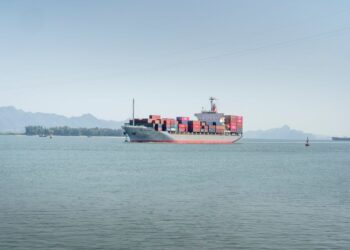
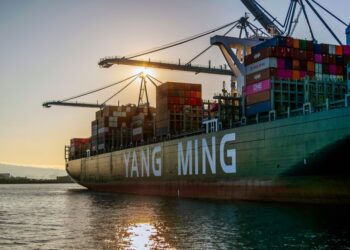
The choice of Odisha reflects its concentration of bauxite reserves, availability of industrial land, and direct sea access via ports such as Paradip and Visakhapatnam — critical for exporting finished aluminium products globally. According to the report, this geographic advantage allows the hub to shorten lead times, reduce freight costs, and mitigate exposure to geopolitical trade bottlenecks affecting traditional routes.
Strategic partnership rationale
The collaboration leverages complementary strengths: IHC brings long-term capital and strategic patience, while Adani contributes deep local infrastructure expertise across energy, logistics, and raw materials. Gautam Adani, chairman of Adani Enterprises, founded the multinational conglomerate headquartered in Ahmedabad.
The initiative aligns with the Comprehensive Economic Partnership Agreement (CEPA) signed between India and the UAE in 2022, which lowered tariffs on over 90% of traded goods. It also advances broader regional integration goals under the India-Middle East-Europe Economic Corridor (IMEC), announced in 2023 and formally endorsed by G20 leaders in New Delhi.
“This is not merely industrial news,” the source states. “It signals a major realignment in the sector of raw materials required for advanced manufacturing and, consequently, for the energy transition.” Aluminium is essential for lightweight electric vehicles, solar panel frames, high-voltage transmission infrastructure, aerospace components, and sustainable packaging — all sectors facing accelerated global decarbonisation mandates.
Energy and security dimensions
Aluminium production is among the most energy-intensive industrial processes, consuming roughly 13–15 kilowatt-hours per kilogram of metal produced. The Odisha hub’s hybrid energy model — combining thermal generation with 400 megawatts of green energy — aims to balance operational reliability with compliance readiness for EU Carbon Border Adjustment Mechanism (CBAM) rules taking effect in 2026.
Cybersecurity is embedded as a core design requirement. As the source notes, modern smelters rely on interconnected control networks, automation systems, and remote monitoring platforms — making them potential targets for cyber-sabotage or industrial espionage. Physical port linkages also introduce maritime security dependencies, particularly through the Strait of Hormuz and the Red Sea — both identified in recent industry risk assessments as high-consequence chokepoints.
The project timeline spans multiple fiscal years, with phased commissioning expected to begin in 2027 and full operational capacity targeted by 2030. Regulatory approvals, environmental clearances, and grid interconnection agreements remain pending — each subject to timelines governed by India’s Ministry of Environment, Forest and Climate Change and the Odisha State Industrial Infrastructure Development Corporation.
Supply chain implications
For global supply chain professionals, the Odisha hub represents a tangible shift toward ‘resource-anchored’ manufacturing — where production clusters near raw material sources rather than near end markets. This reduces dependence on long-haul bauxite imports from Guinea or Australia and cuts processing time from mine-to-market by an estimated 30–40%, according to industry benchmarks cited in the report.
Such vertical integration also reshapes procurement strategies: instead of sourcing primary aluminium ingots from China (which accounted for 58% of global output in 2024), manufacturers in Europe and North America may increasingly contract directly with Odisha-based producers offering lower carbon intensity and shorter lead times. That shift could accelerate adoption of ISO 28000-certified security protocols across the value chain — especially given the project’s emphasis on cyber-physical system resilience.
Source: en.ilsole24ore.com
Compiled from international media by the SCI.AI editorial team.