Explore

  • Trending
  • Latest
  • Tools
  • Browse
  • Subscription Feed

Logistics

  • Ocean
  • Air Cargo
  • Road & Rail
  • Warehousing
  • Last Mile

Regions

  • Southeast Asia
  • South Asia
  • Central Asia
  • Japan & Korea
  • Middle East
  • Europe
  • Russia
  • Africa
  • North America
  • Latin America
  • Australia
SCI.AI
  • Supply Chain
    • Strategy & Planning
    • Logistics & Transport
    • Manufacturing
    • Inventory & Fulfillment
  • Procurement
    • Strategic Sourcing
    • Supplier Management
    • Supply Chain Finance
  • Technology
    • AI & Automation
    • Robotics
    • Digital Platforms
  • Risk & Resilience
  • Sustainability
  • Research
  • Expert Columns
  • English
    • Chinese
    • English
No Result
View All Result
  • Login
  • Register
SCI.AI
No Result
View All Result
Home Procurement

Tariff-Adjusted Landed Cost Rises as Key Sourcing Metric

2026/05/16
in Procurement, Strategic Sourcing
0 0
Tariff-Adjusted Landed Cost Rises as Key Sourcing Metric

Fotis Konstantinidis, SCB Contributor

Traditional Sourcing Metrics Under Pressure

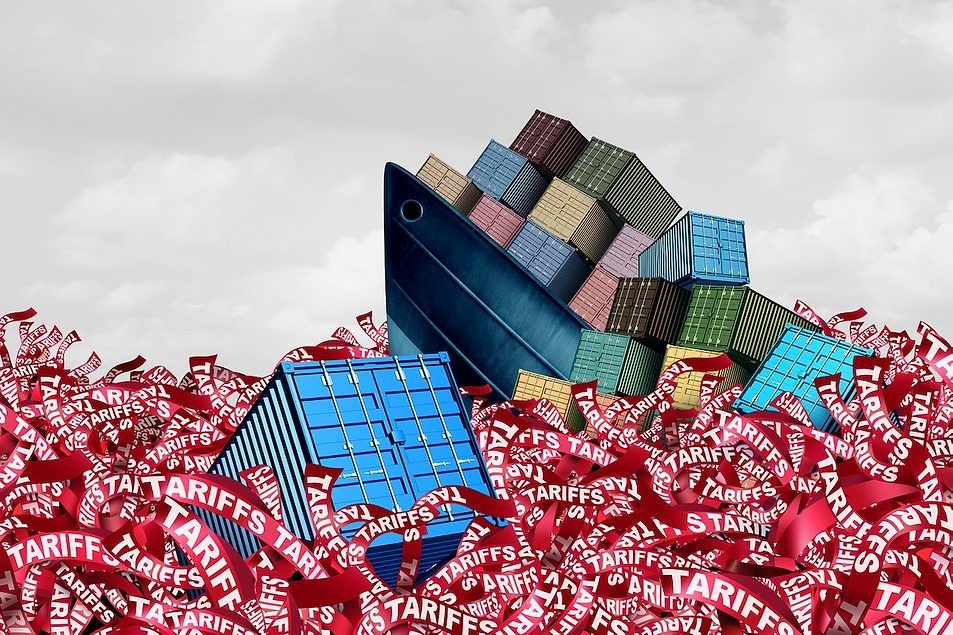
For decades, procurement decisions relied on a single metric: the lowest unit cost. According to SupplyChainBrain, this approach is now obsolete. The U.S. effective tariff rate reached approximately 17% in 2025, the highest sustained level since the 1930s, rendering static cost comparisons unreliable for contract awards and supply network design.

Dynamic Tariff Environment Increases Complexity

U.S. customs authorities collected about $287 billion in tariff revenues and associated fees in 2025—a 192% year-over-year increase. Tariff rates shifted rapidly, with Chinese import duties rising from 10% to 20% within weeks. A 10% baseline duty was introduced in April 2025, and steel and aluminum tariffs doubled by midsummer. Section 301 tariffs continued to add costs on top of reciprocal rates in specific product categories. Bilateral negotiations with the EU, South Korea, India, and Brazil each produced distinct, evolving rate structures.

“A sourcing model built on a single, fixed set of duty rates is not just imprecise, but is also structurally unable to capture the actual cost exposure of a purchase decision.” — Fotis Konstantinidis, SCB Contributor

Emergence of Scenario-Weighted Landed Cost Models

Organizations are shifting toward tariff-adjusted landed cost models that incorporate multiple trade-policy scenarios. These models use probability-weighted assessments across 3 to 5 discrete scenarios—such as a baseline, negotiated reduction (e.g., South Korea’s tariff drop from 25% to 15% in late 2025), escalation (e.g., Chinese tariffs expected to rise to 44% by November 2026), and retaliatory tariffs. Each scenario is assigned a likelihood based on geopolitical intelligence and legal analysis.

Procurement teams must now integrate HS-code-level tariff classification, country-of-origin data extending to sub-tier suppliers, and freight, insurance, and compliance costs into a unified model. However, a Gartner survey from early 2025 found that while 92% of supply chain executives cited increased tariffs as a top concern, only 39% were actively re-evaluating supply locations. Additionally, 74% of procurement leaders acknowledged their data was not ready for AI-driven sourcing or scenario modeling.

Operational Impact and Decision Speed

When the U.S. imposed 100% duties on Chinese electric vehicles in mid-2025, firms that had modeled escalation scenarios activated alternative sourcing plans within days. Those without such models were forced into reactive, often more expensive, responses. The shift from static spreadsheets to dynamic, rerunnable models—capable of updating in hours after a new executive order—has become essential for operational resilience.

According to the report, organizations must now treat customs duties not as a fixed input but as a variable range informed by continuous scenario analysis. This capability enables faster, more informed decisions across volatile trade environments. The model’s core principle is minimizing expected cost across a probability distribution, not optimizing for a single assumed tariff rate.

Organizational and Data Challenges

Adopting tariff-adjusted landed cost as a primary metric requires more than new software. It demands cross-functional alignment among procurement, trade compliance, finance, and operations—each of which currently owns parts of the landed-cost puzzle but lacks a shared model or data integration. The lack of clean, granular data remains the primary bottleneck. Without accurate HS-code-level tariff classification and reliable origin data, even the most advanced models fail.

Only a small fraction of organizations currently possess the analytical infrastructure to support dynamic, scenario-based sourcing. The ability to run simulations in real time, update duty rate feeds, and integrate supplier-specific cost breakdowns remains rare. As a result, most companies are still operating with outdated assumptions, exposing themselves to significant cost volatility.

Source: Supply Chain Brain

Compiled from international media by the SCI.AI editorial team.
More on This Topic

  • Freight Surge Drives 6.4% Van, 77% Flatbed Demand — FreightWaves (May 16, 2026)
  • DHL Launches 3,000kg Heavy Weight Express Service — Logistics Business (May 16, 2026)
  • Dollar Tree Opens 1M-Sq-Ft DC to Boost Supply Chain Resilience — Supply Chain Dive (May 15, 2026)
  • GM Powers 100% US Operations with Renewable Energy — Supply Chain Dive (May 15, 2026)
  • 4 Re-shoring Freight Lanes for Small Carriers — FreightWaves (May 15, 2026)
ShareTweet

Related Posts

Freight Surge Drives 6.4% Van, 77% Flatbed Demand — FreightWaves
AI & Automation

Freight Surge Drives 6.4% Van, 77% Flatbed Demand — FreightWaves

May 16, 2026
0
DHL Launches 3,000kg Heavy Weight Express Service — Logistics Business
AI & Automation

DHL Launches 3,000kg Heavy Weight Express Service — Logistics Business

May 16, 2026
0
Dollar Tree Opens 1M-Sq-Ft DC to Boost Supply Chain Resilience — Supply Chain Dive
AI & Automation

Dollar Tree Opens 1M-Sq-Ft DC to Boost Supply Chain Resilience — Supply Chain Dive

May 15, 2026
1
GM Powers 100% US Operations with Renewable Energy — Supply Chain Dive
AI & Automation

GM Powers 100% US Operations with Renewable Energy — Supply Chain Dive

May 15, 2026
1
4 Re-shoring Freight Lanes for Small Carriers — FreightWaves
AI & Automation

4 Re-shoring Freight Lanes for Small Carriers — FreightWaves

May 15, 2026
0
AI-Driven Warehouse Automation Breakthrough — Logistics Business
AI & Automation

AI-Driven Warehouse Automation Breakthrough — Logistics Business

May 15, 2026
0

Leave a Reply Cancel reply

Your email address will not be published. Required fields are marked *

Recommended

SE Asia Freight Rates Double Amid Middle East Supply Chain Shifts

SE Asia Freight Rates Double Amid Middle East Supply Chain Shifts

20 Views
April 22, 2026
South Korea Semiconductor Exports Surge 152% in April’s First 10 Days

South Korea Semiconductor Exports Surge 152% in April’s First 10 Days

21 Views
April 16, 2026
Hormuz Crisis Deepens: Aluminum, Plastics, and Fertilizer Supply Chains Face Systemic Collapse Risk

Hormuz Crisis Deepens: Aluminum, Plastics, and Fertilizer Supply Chains Face Systemic Collapse Risk

7 Views
April 4, 2026
Bleckmann Unveils AutoStore DC in Roosendaal — Logistics Business

Bleckmann Unveils AutoStore DC in Roosendaal — Logistics Business

5 Views
May 14, 2026
Show More

SCI.AI

Global Supply Chain Intelligence. Delivering real-time news, analysis, and insights for supply chain professionals worldwide.

Categories

  • Supply Chain Management
  • Procurement
  • Technology


  • Risk & Resilience
  • Sustainability
  • Research

© 2026 SCI.AI. All rights reserved.

Powered by SCI.AI Intelligence Platform

Welcome Back!

Sign In with Facebook
Sign In with Google
Sign In with Linked In
OR

Login to your account below

Forgotten Password? Sign Up

Create New Account!

Sign Up with Facebook
Sign Up with Google
Sign Up with Linked In
OR

Fill the forms below to register

All fields are required. Log In

Retrieve your password

Please enter your username or email address to reset your password.

Log In

Scan to share via WeChat

Open WeChat and scan the QR code to share

QR Code

Add New Playlist

No Result
View All Result
  • Supply Chain
    • Strategy & Planning
    • Logistics & Transport
    • Manufacturing
    • Inventory & Fulfillment
  • Procurement
    • Strategic Sourcing
    • Supplier Management
    • Supply Chain Finance
  • Technology
    • AI & Automation
    • Robotics
    • Digital Platforms
  • Risk & Resilience
  • Sustainability
  • Research
  • Expert Columns
  • English
    • Chinese
    • English
  • Login
  • Sign Up

© 2026 SCI.AI