Explore

  • Trending
  • Latest
  • Tools
  • Browse
  • Subscription Feed

Logistics

  • Ocean
  • Air Cargo
  • Road & Rail
  • Warehousing
  • Last Mile

Regions

  • Southeast Asia
  • North America
  • Middle East
  • Europe
  • South Asia
  • Latin America
  • Africa
  • Japan & Korea
SCI.AI
  • Supply Chain
    • Strategy & Planning
    • Logistics & Transport
    • Manufacturing
    • Inventory & Fulfillment
  • Procurement
    • Strategic Sourcing
    • Supplier Management
    • Supply Chain Finance
  • Technology
    • AI & Automation
    • Robotics
    • Digital Platforms
  • Risk & Resilience
  • Sustainability
  • Research
  • English
    • Chinese
    • English
No Result
View All Result
  • Login
  • Register
SCI.AI
No Result
View All Result
Home Risk & Resilience Geopolitics

Asia-Pacific Supply Chain Shock: 5 Critical Disruption Impacts

2026/03/28
in Geopolitics, Logistics & Transport, Trade & Tariffs
0 0
Asia-Pacific Supply Chain Shock: 5 Critical Disruption Impacts

According to news.un.org, escalating hostilities near the Strait of Hormuz — a maritime chokepoint carrying around a quarter of global seaborne oil trade — have triggered immediate, cascading disruptions across Asia-Pacific supply chains, with sharp increases in transport costs, energy and fertilizer prices, currency pressures, and financial market volatility.

Chokepoint Closure and Energy Market Fallout

The Strait of Hormuz remains central to the crisis. Its constrained transit capacity has pushed Brent Crude oil prices well above $100 per barrel, while elevated marine insurance premiums and rerouted shipping lanes are inflating freight costs across container, bulk, and tanker segments. These cost surges directly impact landed costs for imported feedstocks, finished goods, and raw materials throughout the region.

Critical Input Shortages Threaten High-Tech & Agri-Production

Supply chain professionals face acute material constraints beyond fuel. Shortages of helium and specialised gases from the Gulf have created a ‘near-immediate crisis’ for semiconductor and advanced electronics production. Simultaneously, disruptions to petrochemical feedstocks threaten manufacturing in major Asian economies including South Korea, Japan, Vietnam, and India. Fertilizer shortages are raising urgent concerns about future crop yields across South Asia — home to nearly two billion people — with ripple effects on food security and import dependency.

National-Level Responses Across the Region

Several Asia-Pacific governments have implemented emergency measures:

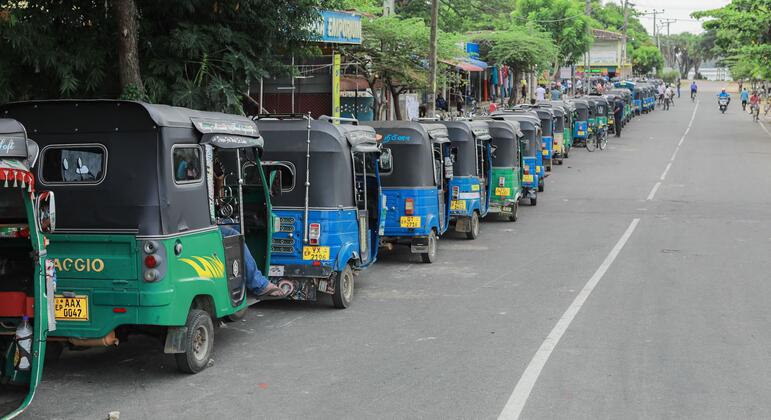
  • In Sri Lanka, where petroleum accounts for about a quarter of total imports, authorities introduced fuel rationing, cut back public events, shifted schools to a four-day week, and scaled down public sector operations.
  • In Pakistan, fuel and grocery prices surged overnight; long queues formed at petrol stations, prompting a four-day work week, school closures, and mandatory work-from-home policies.
  • In Nepal, over 1.7 million migrant workers — more than 65% of overseas labour migration — are employed in the Gulf. Remittances from the region constitute more than a quarter of Nepal’s GDP and support nearly 6 in 10 households. At least one migrant worker has been killed and dozens injured, with tens of thousands stranded.

Economic Forecasts and Humanitarian Risks

The UN Economic and Social Commission for Asia and the Pacific (ESCAP) warns that growth across developing Asia-Pacific economies could slow to around 4.0 per cent in 2026, down from 4.6 per cent in 2025. This deceleration risks exacerbating poverty, food insecurity, inequality, job losses, and possible displacement of migrant workers. The disruptions also impair delivery of humanitarian assistance and essential goods — a concern amplified by concurrent Red Sea shipping challenges and overlapping climate-related port congestion.

Source: news.un.org

This article was AI-assisted and reviewed by our editorial team.

More on This Topic

  • Japan’s Semiconductor Resurgence: 3 Strategic Shifts (Mar 28, 2026)
  • China Threatens Mexico with 50% Tariffs Over Trade Barriers (Mar 28, 2026)
  • Saudi Arabia Launches 7-Point GCC Logistics Upgrade (Mar 28, 2026)
  • How Logistics is Transforming North America’s Trade Landscape: 3 Strategic Shifts (Mar 28, 2026)
  • ASEAN Cargo to US Up 23% as Supply Chain Shifts Accelerate (Mar 28, 2026)

Related Posts

Japan’s Semiconductor Resurgence: 3 Strategic Shifts
Geopolitics

Japan’s Semiconductor Resurgence: 3 Strategic Shifts

March 28, 2026
0
China Threatens Mexico with 50% Tariffs Over Trade Barriers
Logistics & Transport

China Threatens Mexico with 50% Tariffs Over Trade Barriers

March 28, 2026
0
Saudi Arabia Launches 7-Point GCC Logistics Upgrade
Logistics & Transport

Saudi Arabia Launches 7-Point GCC Logistics Upgrade

March 28, 2026
1
How Logistics is Transforming North America’s Trade Landscape: 3 Strategic Shifts
Geopolitics

How Logistics is Transforming North America’s Trade Landscape: 3 Strategic Shifts

March 28, 2026
2
ASEAN Cargo to US Up 23% as Supply Chain Shifts Accelerate
Geopolitics

ASEAN Cargo to US Up 23% as Supply Chain Shifts Accelerate

March 28, 2026
1
Logistics Tech Boom in SEA: $223.6B to $360B by 2034
AI & Automation

Logistics Tech Boom in SEA: $223.6B to $360B by 2034

March 28, 2026
2

Leave a Reply Cancel reply

Your email address will not be published. Required fields are marked *

Recommended

Saudi Arabia’s Logistics Renaissance: How Vision 2030’s Pragmatic Pivot Is Reshaping Middle East Supply Chains

Saudi Arabia’s Logistics Renaissance: How Vision 2030’s Pragmatic Pivot Is Reshaping Middle East Supply Chains

7 Views
February 21, 2026
State of AI in Procurement 2026: 94% Use GenAI Weekly, but Only 4% Achieve Scale

State of AI in Procurement 2026: 94% Use GenAI Weekly, but Only 4% Achieve Scale

12 Views
February 18, 2026

JD.com and DHL Forge Strategic Partnership to Help German Brands Enter China and Reshape Europe E-commerce Logistics

2 Views
February 28, 2026
US Tariff Policy Adjustment: China Commerce Ministry Response and Supply Chain Strategies

US Tariff Policy Adjustment: China Commerce Ministry Response and Supply Chain Strategies

15 Views
February 27, 2026
Show More

SCI.AI

Global Supply Chain Intelligence. Delivering real-time news, analysis, and insights for supply chain professionals worldwide.

Categories

  • Supply Chain Management
  • Procurement
  • Technology


  • Risk & Resilience
  • Sustainability
  • Research

© 2026 SCI.AI. All rights reserved.

Powered by SCI.AI Intelligence Platform

Welcome Back!

Sign In with Facebook
Sign In with Google
Sign In with Linked In
OR

Login to your account below

Forgotten Password? Sign Up

Create New Account!

Sign Up with Facebook
Sign Up with Google
Sign Up with Linked In
OR

Fill the forms below to register

All fields are required. Log In

Retrieve your password

Please enter your username or email address to reset your password.

Log In

Add New Playlist

No Result
View All Result
  • Supply Chain
    • Strategy & Planning
    • Logistics & Transport
    • Manufacturing
    • Inventory & Fulfillment
  • Procurement
    • Strategic Sourcing
    • Supplier Management
    • Supply Chain Finance
  • Technology
    • AI & Automation
    • Robotics
    • Digital Platforms
  • Risk & Resilience
  • Sustainability
  • Research
  • English
    • Chinese
    • English
  • Login
  • Sign Up

© 2026 SCI.AI