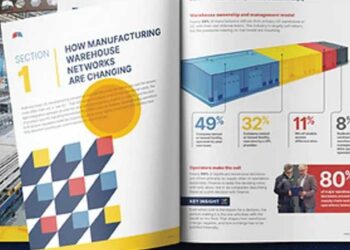
According to made4net.com, the Logistics Management 2026 Automation Study—conducted by the Peerless Research Group in partnership with Modern Materials Handling—surveyed over 120 professionals directly involved in purchasing decisions for material handling solutions. The findings reveal structural shifts reshaping warehouse operations globally.
The Scale and Drivers of Automation Investment
Global investment in warehouse automation reached approximately $21 billion in 2023, and that figure is projected to exceed $90 billion by 2033—a 329% increase over a decade. According to the report, these figures reflect genuine structural pressures: the e-commerce boom has reset customer expectations around speed and accuracy; persistent labor shortages have forced operations teams to seek scalable alternatives to headcount; and ongoing cost-reduction mandates have elevated automation from a strategic differentiator to a baseline operational requirement.
Where Automation Is—and Isn’t—Deployed
The source states that full automation is most advanced at the periphery of the fulfillment cycle: labeling (24%), reporting (18%), and packaging (13%). In contrast, core functions remain largely manual: picking (12%), storage (11%), and retrieval (3%). More than a third of respondents report their picking operation is mostly or fully manual—with no current plans to change it—and roughly 30% say the same about storage and packaging.
Equipment Adoption and Near-Term Intent
Conveyors and sortation systems lead current deployment at 49%, with 51% planning upgrades or implementation within 24 months. Goods-to-person picking solutions mirror this pattern (48% in use, 51% planning). Weighing, cubing, and dimensioning equipment stands at 43% current use, with 57% planning expansion.
Emerging technologies show wider intent gaps:
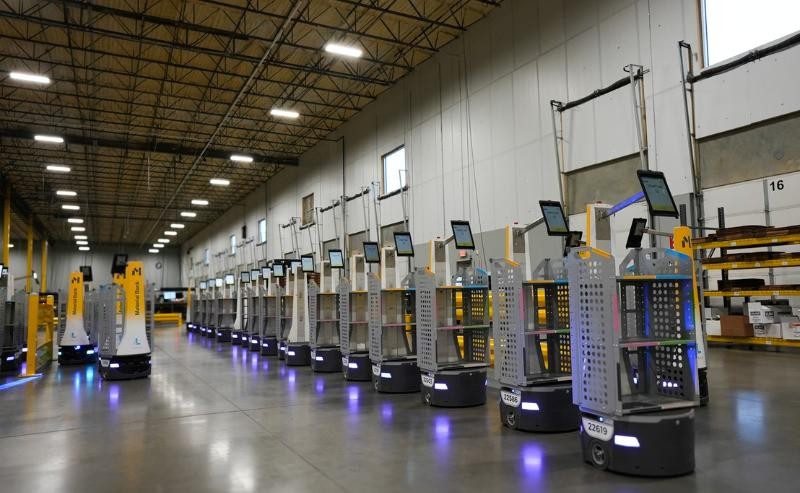
- Mobile collaborative robotics: 30% in use, 70–74% planning implementation
- Robotics-picking: 31% in use, 69% planning
- Automated storage and retrieval systems (AS/RS): 36% in use, 65% planning
- Pocket sortation: 41% in use, 59% planning
Decision Criteria Driving Purchasing
When evaluating automation investments, 95% of respondents rated service and support response time as very important—the highest-ranked factor—while 92% cited durability and reliability. Total cost of ownership (TCO), ROI, and maintenance costs were rated very important by 77%, nearly matching purchase price at 78%. Integration capability was rated very important by 68%, underscoring that automation is no longer assessed in isolation.
The Critical Role of Software Orchestration
The source states that 57% of respondents currently use a warehouse management system (WMS), with 43% planning to upgrade or implement one in the next 24 months. As emphasized in the report: “Without the software layer to orchestrate [automated equipment’s] activity, physical automation investments quickly hit a ceiling.”
Source: made4net.com
Compiled from international media by the SCI.AI editorial team.