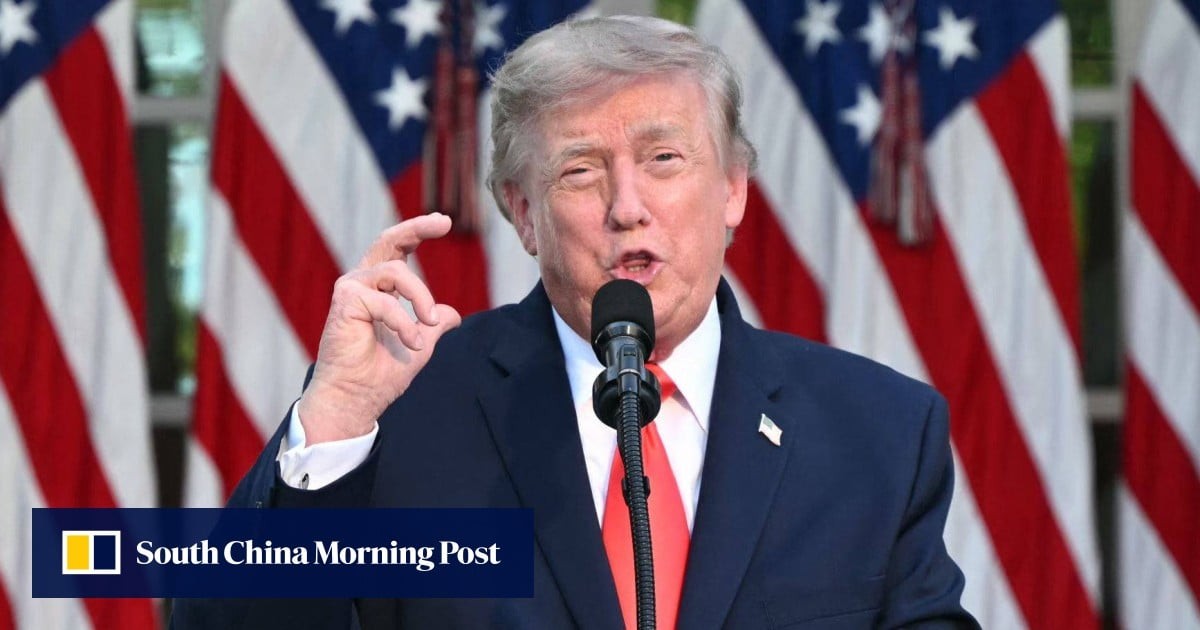
According to www.scmp.com, former U.S. President Donald Trump threatened to impose a 100% tariff on all imports from any country that enacts a digital services tax targeting American technology companies.
Direct Threat Against Digital Taxation
In a social media post published on 27 June 2026, Trump declared:
“Please let this statement serve to represent that any Country that imposes such a Tax will immediately be met with a 100% TARIFF on any and all Goods sent to the United States of America.” — Donald Trump, former U.S. President
He emphasized that the penalty would take effect immediately upon implementation of the tax and would override all existing trade agreements.
The threat specifically names European nations as targets, citing their “imminent” plans to levy digital services taxes. According to the report, multiple EU member states have advanced legislation to tax revenues generated by U.S.-based tech firms—including Google, Meta, and Amazon—within their jurisdictions. These efforts reflect broader fiscal strategies to capture revenue from digitally enabled economic activity increasingly dominated by American multinationals.
Escalating Trade Leverage Tactics
This is not Trump’s first use of tariff threats against digital taxation. The source states he issued a similar warning in August 2025, declaring that digital taxes and regulatory measures “are all designed to harm, or discriminate against, American Technology.” That earlier post laid groundwork for the current escalation, reinforcing a consistent policy stance across two distinct timeframes.
Trump’s approach aligns with longstanding U.S. opposition to unilateral digital levies. The Office of the U.S. Trade Representative (USTR) has previously initiated Section 301 investigations into digital service taxes enacted by France, the UK, Italy, Spain, and Austria—each proposing rates between 3% and 7.5%. While those investigations led to negotiated suspensions under the OECD/G20 Inclusive Framework agreement, the Trump administration rejects multilateral compromises in favor of direct, bilateral pressure.
Supply Chain and Trade Implications
From a supply chain perspective, the proposed 100% tariff would trigger immediate cost shocks for import-dependent sectors—including electronics, pharmaceuticals, luxury goods, and automotive components—many of which rely on European-sourced inputs. A sudden tariff imposition could disrupt just-in-time logistics networks and force rapid reevaluation of sourcing footprints across the EU.
Practitioners managing cross-border procurement must now assess contingency plans for dual-sourcing, tariff engineering, and bonded warehouse strategies. The threat also introduces new geopolitical risk variables into long-term contracts: clauses governing force majeure, tariff pass-through, and jurisdictional arbitration may require urgent revision. As the 2026 midterm election cycle intensifies, such trade-policy volatility is expected to influence nearshoring decisions—not only in North America but also in Southeast Asia and Mexico, where firms seek tariff-resilient alternatives.
Notably, the U.S. Chamber of Commerce reported in early 2026 that over 72% of surveyed manufacturers cited “unpredictable trade policy” as a top-three barrier to investment planning—a figure up from 58% in 2024.
Source: South China Morning Post
Compiled from international media by the SCI.AI editorial team.