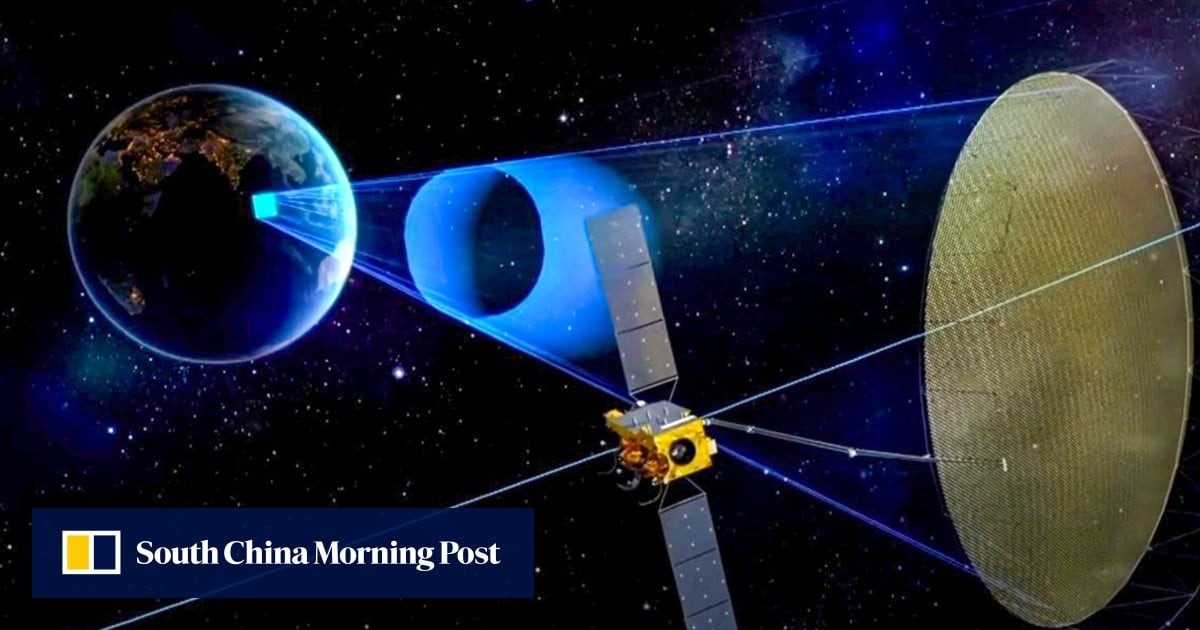
According to www.scmp.com, China has deployed a three-satellite synthetic aperture radar (SAR) network capable of long-term tracking of moving maritime targets from geosynchronous orbit (GEO), marking the first known achievement of its kind.
Breakthrough in GEO-SAR Capability
Last month, Chinese authorities released undated radar images of the vessel Towa Maru, confirming sustained tracking by a GEO-based SAR satellite. The source states this represents the first time a geosynchronous orbit synthetic aperture radar satellite has successfully achieved long-term tracking of a moving maritime target — a milestone that validates both the technical feasibility and operational readiness of China’s new surveillance architecture.
AI Advances and Regional Economic Pressures
A separate highlight notes that a Peking University–led team developed a Chinese artificial intelligence framework that autonomously solved an open mathematics problem originally posed over a decade ago by a US mathematician — with no human intervention required. According to the report, the AI resolved the challenge in hours.
Hong Kong’s Imported Inflation Risk
The source links rising global energy costs to mounting supply chain cost pressures in Hong Kong. With the territory facing the world’s highest petrol and diesel prices, economists and business leaders warn the Middle East war–driven oil crisis will trigger imported inflation. The report specifies that price increases are expected across diverse categories:
- toilet paper
- laundry services
- asphalt
- travel-related expenses
These impacts reflect how energy volatility propagates through input costs, logistics services, and finished goods — directly affecting procurement planning, landed-cost modeling, and margin forecasting for supply chain professionals operating across Greater China and ASEAN corridors.
Source: South China Morning Post
Compiled from international media by the SCI.AI editorial team.